UPSC Mains Answer Practice — GS 3: Rising public debt in advanced economies and Montreal Protocol (Week 177)
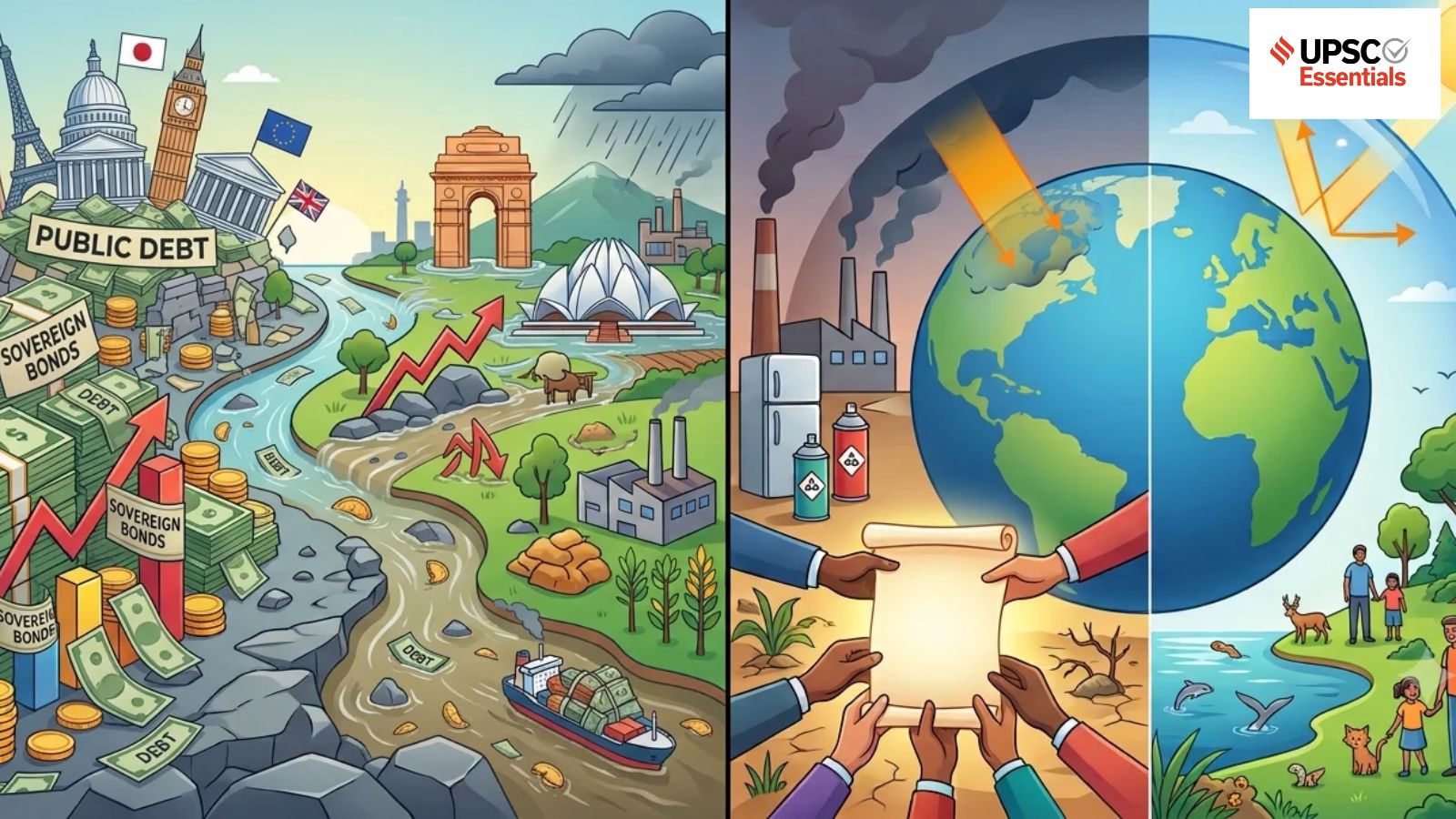
Rising public debt in advanced economies can have significant spillover effects on developing countries. Transmission mechanisms and implications for India explain how these fiscal developments influence capital flows, exchange rates, and borrowing costs in emerging economies like India. The International Monetary Fund warns that global public debt nearing 100% of GDP by 2030 could strain the budgetary headroom of developing nations.
Higher government borrowing rates may increase debt servicing costs for Indian bonds, discourage investment, and lead to capital outflows from emerging markets. A stronger US dollar could weaken the rupee, increasing the cost of imported goods and inflation. Higher borrowing costs may raise interest rates in India, making fresh borrowing more expensive and forcing difficult choices between debt servicing and spending on key sectors.
Though India cannot influence fiscal changes in advanced economies, smart fiscal management, a resilient financial market, and increased productive capacity are essential to mitigate risks from global financial spillovers.
Written by urgent.news from The Indian Express's reporting — not their text. Machine-written — may contain errors; check the original before relying on it.