„Trumpflation“: Immobilienkredite so teuer wie seit 2009 nicht mehr
Der von US-Präsident Donald Trump begonnene Iran-Krieg treibt die Inflation, und in deren Gefolge die Kreditzinsen. Die negativen Folgen spüren Eigenheiminteressenten und Wohnungsbau.
The surge in inflation and interest rates triggered by the Iran war is making home loans in Germany as expensive as they were in 2009, according to a report. The average annual rate for 10-year loans currently stands at nearly 4.5 percent, as reported by funding intermediary Interhyp. Previously, in May, the average rate was 3.9 percent.
This surpasses the previous peak of 4.4 percent at the end of 2023, reminiscent of the peak observed during the 2009 financial crisis. Similar high rates were last recorded during the 2009 financial crisis, according to data from the Federal Bank on residential building loans for private households. The recent increase is primarily due to the resurgence of the Iran conflict and the resulting inflation concerns, as stated by Interhyp CEO Jörg Utecht.
Consequently, the European Central Bank raised the discount rate to curb inflation, which in turn led to a chain reaction affecting construction loans. Only if there is a lasting resolution to the Iran conflict will inflation pressures ease, and construction rates will noticeably drop, according to Utecht. However, this does not seem likely at the moment.
Higher interest rates are quickly eating into advantageous home prices, as a recent rise in interest rates means nearly 200 euros more in monthly payments for an average financing. This is leading to increased reluctance among some customers. Nonetheless, homebuyers still have some options in the current market. The most important lever is negotiations with the property owner.
"Many sellers still have the highest prices from 2021/2022 in mind," says Dirk Wohltorf, President of the Real Estate Association of Germany (IVD), the umbrella organization for German real estate agents. Internet listing prices are often the sellers' wish prices and far from the actual accepted values. "When interest rates rise significantly, prices have to come down," says Wohltorf.
Many sellers are forced to accept price cuts, a trend confirmed by Interhyp CEO Utecht: "We are seeing an increasing willingness among sellers to lower prices in our advisory dialogues. Especially with existing stock, price reductions can be achieved through negotiations." Despite this, the overall atmosphere remains gloomy. Real estate agents are currently closing fewer purchase agreements than in previous years, according to IVD President Wohltorf.
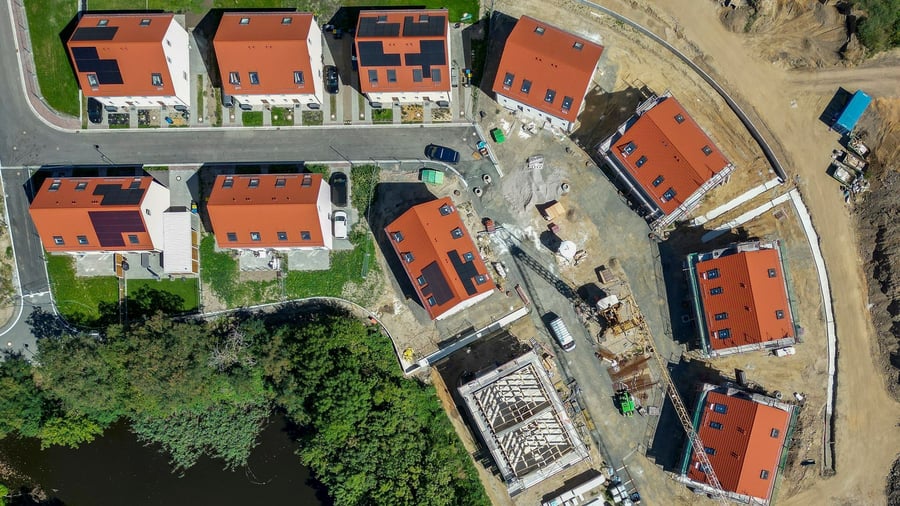
"The buyer side is anxious and reluctant." The residential construction sector is also suffering. "The inflation and interest rate developments hit the residential construction sector particularly hard," stated a spokesperson for the Bavarian Builders' Association. "In Bavaria, we have calculated a -3.2 percent order deficit for residential construction for July 2026 compared to the already weak previous year.
This equates to an 8.2 percent order deficit in July alone. The order deficit for July is thus significantly larger than in previous years. Many construction companies now have almost no residential construction orders left, and those that exist date back to before the inflation and interest rate surge. Consequently, we expect further declines in completed residential construction projects in 2026."
Not only homebuyers are affected by higher real estate interest rates. "The impact of the interest rate increase is somewhat mitigated for customers of savings banks," says a spokesperson for the Landesbausparkasse Süd in Stuttgart. "The high current costs of a home purchase are primarily caused by rising material and labor costs in the construction sector, high ancillary costs, and excessive state regulation, rather than by the mortgage rate itself," says the spokesperson.
This will primarily impact young people and families who have difficulty accumulating sufficient equity. The impact extends to renters as well. "The effect of the interest rate increase is a bit diluted for us because we build with subsidies," says Hans Maier, Director of the Bavarian Association of Housing Companies (VdW). Members of VdW and its sister organizations throughout Germany are primarily co-op housing societies and municipal entities that already own affordable housing.
"But we will certainly feel it," says Maier. Higher real estate interest rates are increasing the cost of construction. "Then the rent might be a euro higher," says Maier. The VdW boss predicts that demand for government housing subsidy funds from the private sector will increase, and this trend is likely to spread beyond Bavaria.
Written by urgent.news from Handelsblatt's reporting — not their text. Machine-written — may contain errors; check the original before relying on it.
This story
This is one outlet's version. Read the fullest account.
- "Trumpflation": Mortgage loans as expensive as since 2009 not more handelsblatt.com