They Fled Trump’s America. Now They Regret it
The internet told them Europe was a social paradise. Turns out the trains are awful, the health care isn’t free, and people can be really mean.
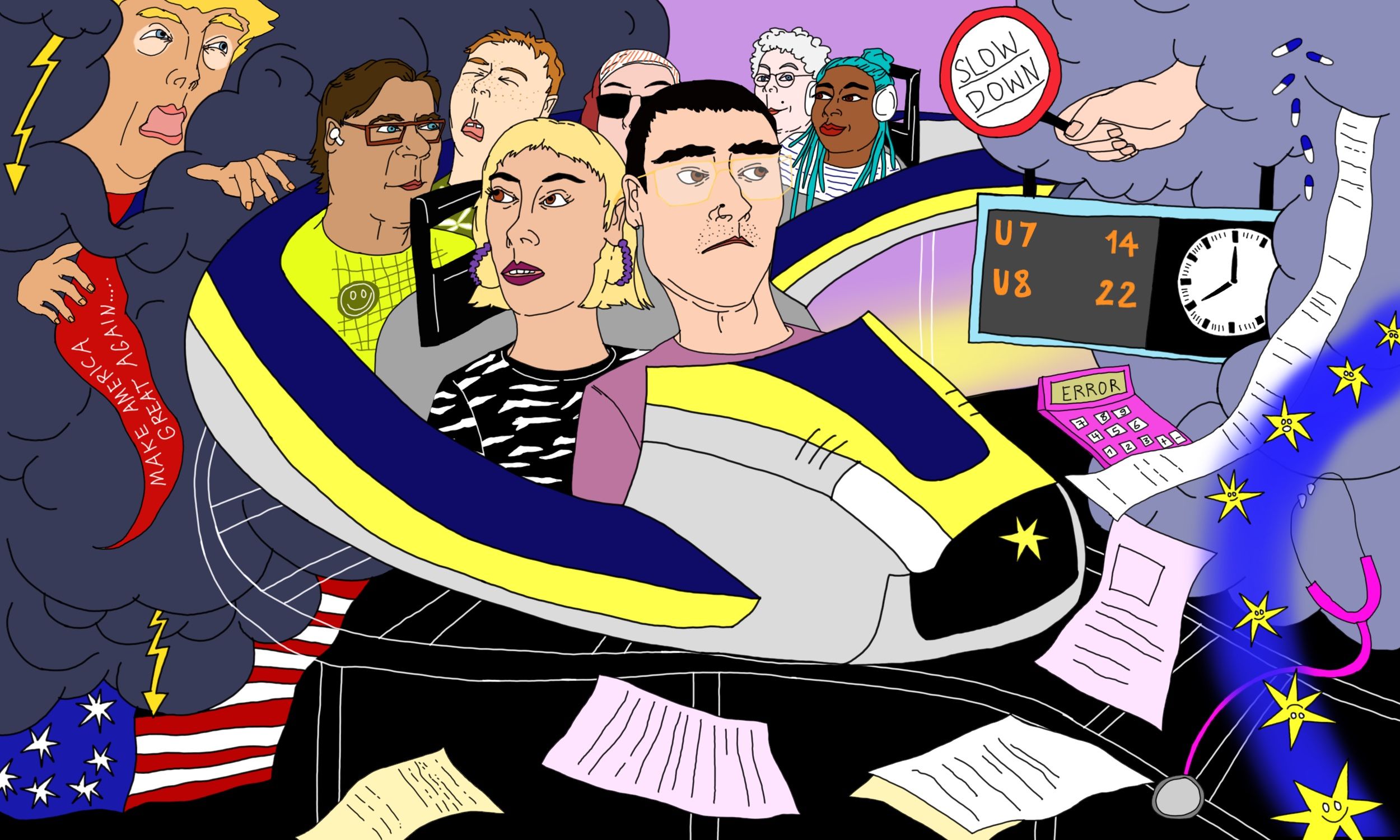
Annie, whose real name she refused to disclose, moved to the United Kingdom after doing extensive research on social media. She was enticed by tales of charming life in British suburbs, with benefits like small-town living just a short train ride away from major cities. She eagerly anticipated the UK's healthcare system, social culture, and European transportation.
However, her expectations were quickly dashed upon her arrival. Annie, like many others, felt the reality of life in the UK was vastly different from what she envisioned.
Annie cited several issues, including challenges with the National Health Service's maternity care, lower salaries, and a lower quality of life compared to the United States. She observed that what is considered luxury in the US, such as a dishwasher and dryer, are commonplace in the UK. Moreover, Annie encountered a significant amount of anti-American sentiment, particularly in the workplace, where people mocked her accent and culture.
She commented that the UK's "it is what it is" mentality contrasts with the American ethos of always striving for improvement.
Annie, along with thousands of other Americans, has relocated to Europe over the past few years, driven by a mix of desires for adventure, a slower lifestyle, and political refuge from the policies of President Trump. However, for many, these initial motivations were merely a bonus to escape the political turmoil of Trump's second term in office. Concerned about potential backlash for publicly criticizing their experiences, Annie and others chose to remain anonymous.
Other Americans who left the US for political reasons, like Annie, expressed their regret at living abroad. Some, including celebrities Ellen DeGeneres, Portia de Rossi, and Rosie O'Donnell, cited similar reasons for their migration. Courtney Love, for instance, applied for UK citizenship in early 2025, describing the domestic political climate as 'frightening'. The easing of digital nomad visas in countries like Spain, Greece, and Portugal has made the transition more accessible.
The number of US migrants to Europe has doubled in the first quarter of 2025 compared to 2024, with Spain recording a 'record high' number of American residents in 2026, according to the National Statistics Institute. The Financial Times reported a 63% increase in American applications for Ireland's citizenship path in 2025 compared to 2024. The UK Home Office also reported a surge in residency applications from the US between January and March 2025, the highest since records began in 2004.
Private data from the expatriation company, Expats, revealed that 71% of 58,000 respondents cited the political climate in the US as their primary reason for relocating. Despite the political climate in the US being a major factor for these expatriations, online posts indicate a growing number of Americans planning to return home, many of them quietly and apologetically.
Journalists and consultants like Sarah Wood González, who recently returned to New York after three years in Spain and Edinburgh, share similar sentiments. While she initially had few expectations and was pleasantly surprised by the educated and intellectually curious nature of people in Scotland, she found the American work style, which she valued, lacking in the slowness and ease of collaboration in Europe.
Similarly, Josh, another anonymous American immigrant, faced difficulties in finding work and endured bureaucratic hurdles in Berlin, missing the friendlier people, freedom of speech, and ease of daily life in the US.
Written by urgent.news from Wired's reporting — not their text. Machine-written — may contain errors; check the original before relying on it.