The new economics of enterprise AI
Imagine your company just discovered electricity. At first only a few machines run on it, and nobody worries about efficiency — consumption is low and the value is obvious. But once electricity becomes infrastructure, every process depends on it, and the question changes from “can we use it?” to “how efficiently are we using it?”…
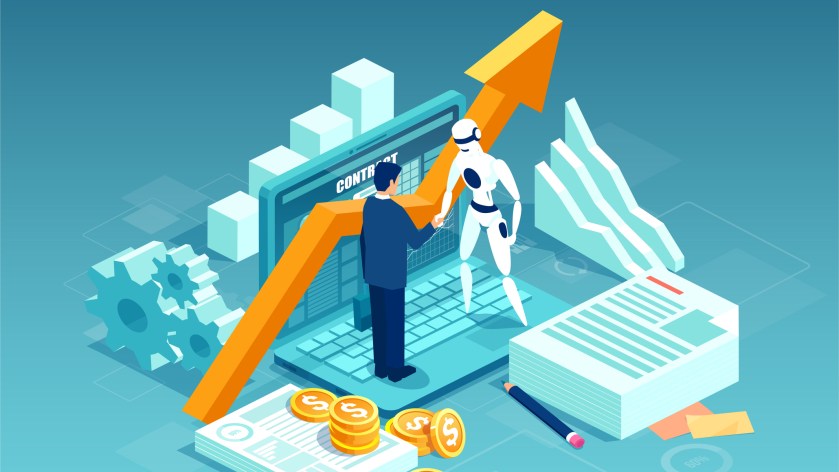
Picture a business uncovering electricity for the first time. Initially, only a few devices run on it, and the value is easily perceived. Yet, as electricity becomes an integral part of operations, the focus shifts from mere availability to optimal usage. Enterprise AI is undergoing a similar transformation. What once started as isolated chatbot and copilot trials is now an essential core of business processes, with models, agents, and data tightly integrated within production environments.
The pivotal question transitions from the cost of tokens or GPU-hours to the efficiency with which AI infrastructure converts paid capacity into tangible business results. This leads to a metric worth monitoring: effective cost per useful outcome, encompassing the total expenses for platform, model, operations, and capacity needed to complete work with actual business value.
Three strategies emerge for optimizing AI utilization: a bespoke stack, on-demand consumption from hyperscalers, or an integrated private AI platform. The bespoke approach involves provisioning infrastructure and controls in-house, offering flexibility but demanding constant maintenance to align with evolving models and policies.
On-demand consumption provides a reduced setup burden and aligns with low or unpredictable demand, albeit at increasing costs as prompt or agent usage rises. Conversely, an integrated private AI platform combines owned or dedicated resources with a vetted stack. The advantage lies not in free inference but in the control it offers over efficiency factors such as scheduling, model selection, GPU partitioning, and efficient cache management.
The optimal model hinges on the workload. APIs are suitable for experimentation or sporadic demand. However, as workloads mature into sustained and critical business functions, enterprises must evaluate not just consumption but the efficiency of their AI systems. Owning infrastructure is akin to purchasing an advanced race car - it provides the potential for competitive advantage, but the organization still requires skilled drivers, maintenance staff, and track time to justify the investment.
Similarly, AI infrastructure becomes economically advantageous only when teams have sufficient demand and operational prowess to keep resources productive. The most economically efficient infrastructure isn't merely a reference architecture or a custom build-out; it is a fully integrated, qualified stack that enables teams to allocate tasks to the least expensive models meeting quality benchmarks, effectively reducing wasted capacity while sustaining responsiveness.
Without these practices, committed resources may become stranded capital. With them, increased demand translates to improved economics as fixed costs are distributed across a larger volume of productive work, which is particularly critical in agentic systems where overall efficiency significantly impacts economics rather than individual prompts.
HPE Private Cloud AI presents a production-ready foundation, encompassing infrastructure, software, models, tools, governance, and services to simplify the integration of private AI at scale. Its architecture empowers teams to oversee scheduling, model selection, GPU partitioning, and cache management as operational levers, aligning capacity and service levels with the specific requirements of each workload.
Additionally, the platform includes a 90-day engagement with forward-deployed engineers to assist customer teams in deploying initial use cases and establishing consistent operating procedures. Independent tests commissioned by HPE reveal that an integrated platform servicing multiple workloads at high utilization results in a lower effective cost per token compared to repeatedly renting equivalent capacity.
However, the actual outcomes may vary based on workload composition and utilization rates. Enterprises currently employing private AI should assess the maturity of their utilization practices and anticipate how workload volumes will evolve over the next 12 to 18 months. Those in earlier stages should embed these practices from the outset to align their strategies with anticipated growth, ensuring the system remains unencumbered by demand bottlenecks.
For businesses with low-volume, unpredictable demand, an API or hyperscaler may remain the prudent choice. Nevertheless, as AI becomes a continuous production capability, enterprises face a growing incentive to manage utilization, amortize fixed costs, and treat the environment as a long-term operational asset.
The strategic question extends beyond whether enterprises will incur costs for AI; it centers on whether they will comprehend and ultimately manage the underlying economics. HPE Private Cloud AI offers a comprehensive solution for enterprises seeking to operationalize AI effectively. For more information, visit HPE.
Written by urgent.news from MIT Technology Review's reporting — not their text. Machine-written — may contain errors; check the original before relying on it.