SpaceX will attempt 1st-ever double Starship rocket catch on next test launch, a 'profound technology milestone,' Elon Musk says
SpaceX will try to recover both Starship stages during the megarocket's next test flight, which is expected to take place in November, according to Elon Musk.
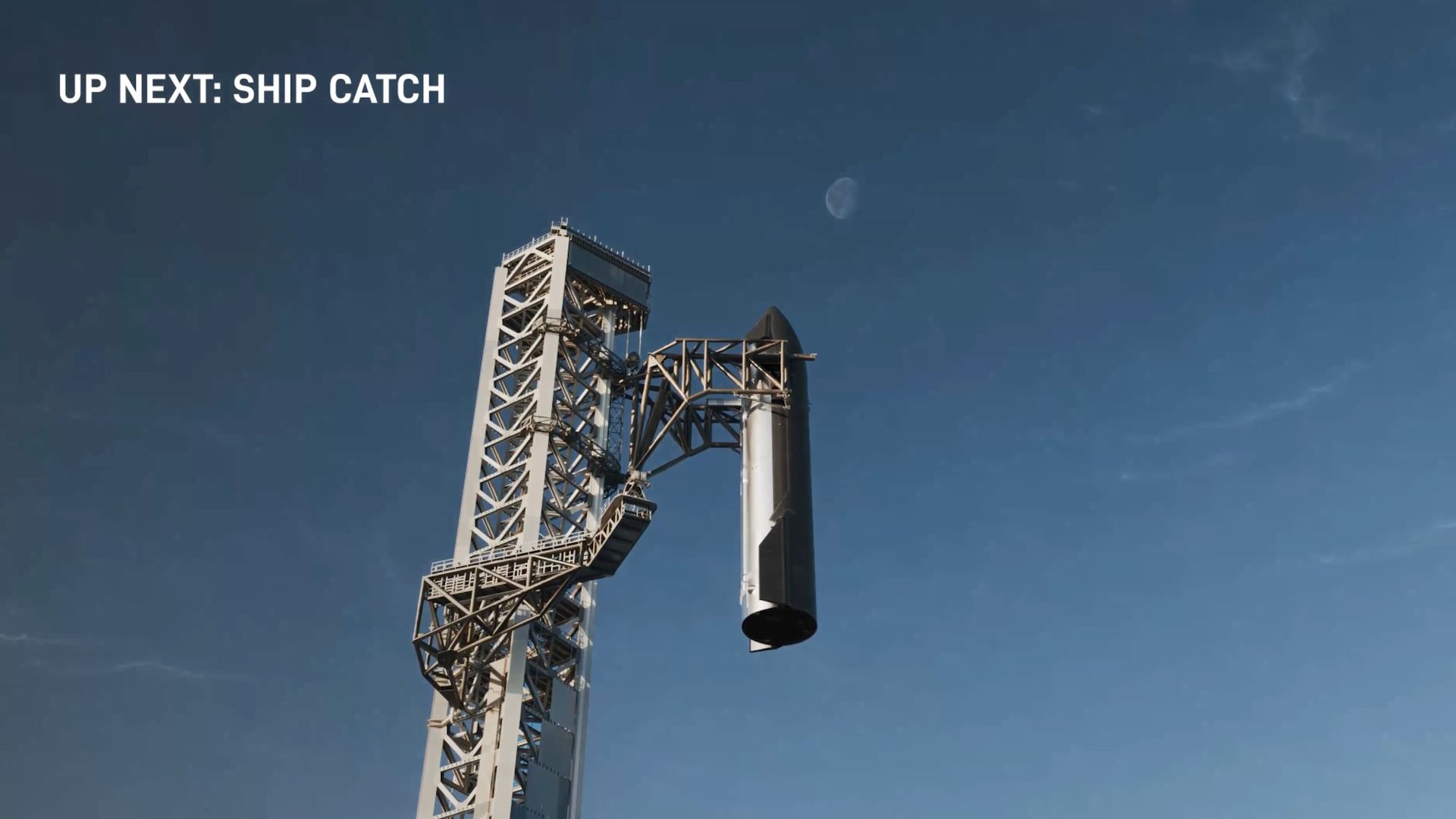
SpaceX aims to achieve a groundbreaking feat with its Starship rocket during an upcoming test launch next month, according to CEO Elon Musk. The company plans to catch both stages of the megarocket - the Super Heavy booster and Ship spacecraft - which would be the first time an orbital launch vehicle has been fully recovered. Musk emphasized that the ability to fully reuse an orbital launch vehicle is crucial for extending human consciousness beyond Earth and making Mars settlement and other space exploration endeavors economically viable.
Starship, the largest and most powerful rocket ever built, stands over 400 feet tall when fully assembled and is designed for rapid reusability. Unlike SpaceX's Falcon 9 and Falcon Heavy rockets, which have expendable upper stages, Starship will attempt to land itself back at its launch tower using chopstick-like arms. This recovery method allows for quicker inspection, refurbishment, and reuse of the rocket.
While Starship has completed 14 test flights so far, with three successful chopstick catches, the Ship stage poses a greater challenge due to its higher, farther, and faster trajectory. Musk expressed confidence in SpaceX's ability to successfully catch the Ship stage on the first attempt, despite not providing a specific date for the test flight.
The upcoming test launch, tentatively scheduled for next month, will mark a significant milestone for SpaceX if successful.
Written by urgent.news from Space.com's reporting — not their text. Machine-written — may contain errors; check the original before relying on it.