See pieces of Halley's Comet fall to Earth this week as the Orionid meteor shower peaks
The Orionid meteor shower peaks overnight on Oct. 21-22. Here's how to see "shooting stars" from Halley's Comet.
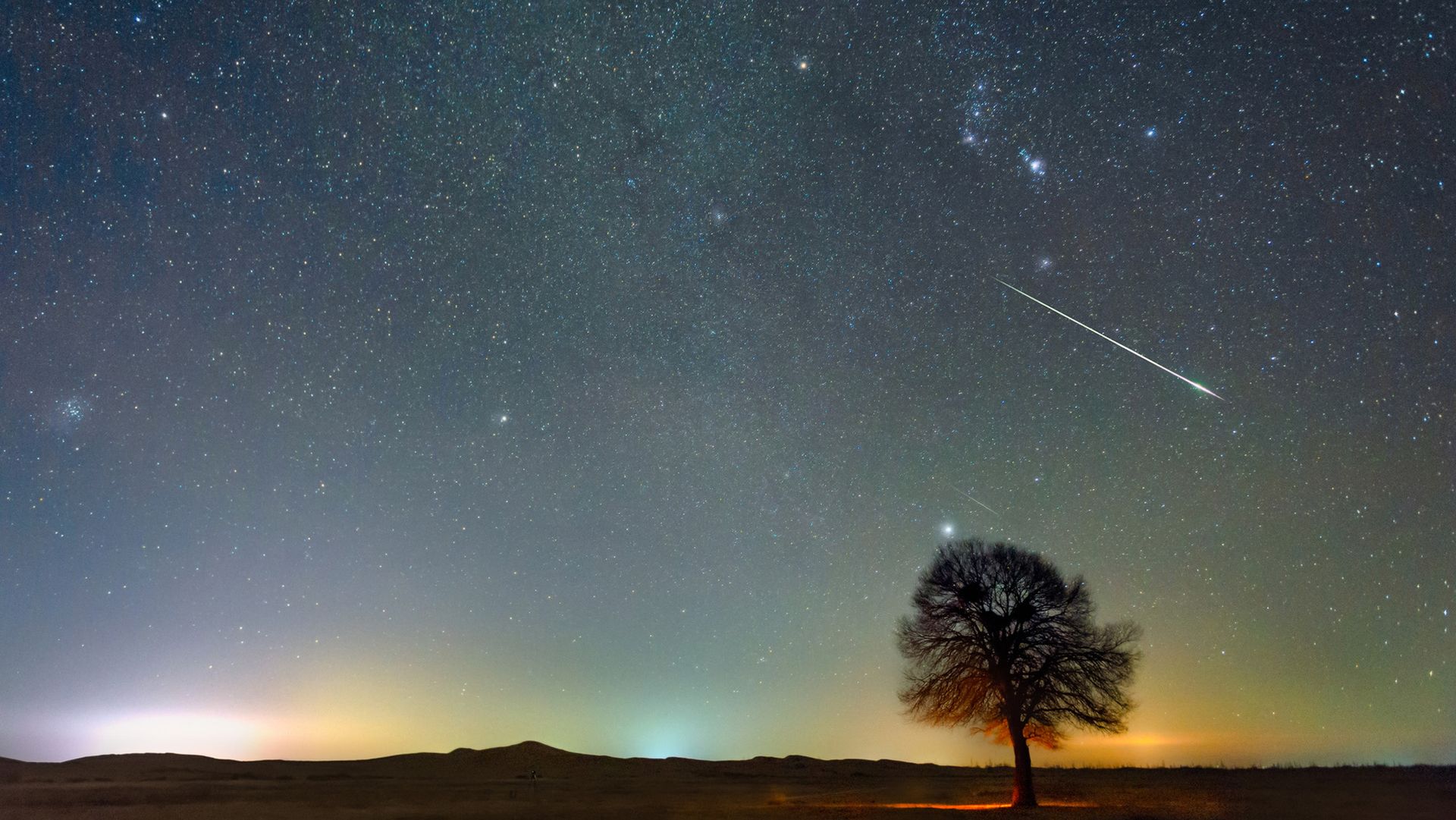
This week, the Orionid meteor shower will reach its peak, bringing a spectacle of shooting stars to Earth's atmosphere. Known for its fast-moving meteors, this shower is caused by Earth passing through debris left by Halley's Comet, which last visited the inner solar system in 1986 and will return in 2061. Even though Halley's Comet is currently beyond Neptune's orbit, it still generates these meteor showers by shedding dust and rocky particles along its orbital path.
Every time the comet passes through the inner solar system, heat from the sun causes it to release these particles, which then vaporize upon entering our planet's atmosphere.
With the Orionid meteor shower peaking overnight Wednesday, October 21, through Thursday, October 22, skywatchers can expect to see around 20 meteors per hour under a dark sky. These meteors are particularly fast, traveling at approximately 41 miles per second (66 kilometers per second), and can create bright streaks, fireballs, and persistent trails.
To observe the Orionid meteor shower, it is recommended to use the naked eye, but binoculars or a small telescope could enhance the experience. Although a 71% illuminated, waxing gibbous moon will brighten the night, making it challenging to spot meteors, the moon will set early Thursday morning, providing a window of darkness before dawn.
This makes the predawn hours the best time to watch the meteor shower. Additionally, Orion will be high in the sky during these hours, making it easier to locate the radiant point of the meteors, which is the famous red supergiant star system Betelgeuse in the constellation Orion. However, meteors seen farther from the radiant can also produce longer streaks across the sky.
Written by urgent.news from Live Science's reporting — not their text. Machine-written — may contain errors; check the original before relying on it.
This story
This is one outlet's version. Read the fullest account.
- Comet Halley is parent of 2 meteor showers earthsky.org