Saudi Arabia braces for heavy thunderstorms, widespread rain until October 28
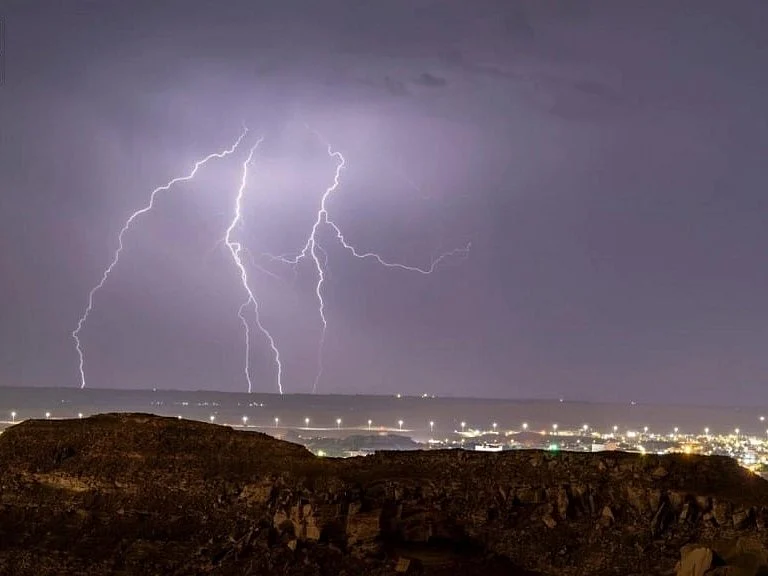
Dubai: Saudi Arabia is bracing for widespread rainfall and heavy thunderstorms across several regions until October 28, with some areas expected to experience exceptionally intense downpours, according to the National Centre for Meteorology (NCM). The forecast covers a 10-day period beginning Monday, with rain of varying intensity expected across much of the Kingdom, particularly the southwestern…
Researchers have mapped tens of thousands of burial tombs across the UAE, Oman, and Saudi Arabia, offering new insights into the lives of ancient people in the region. The Arabiancairns project, initiated in 2022 and funded by the French National Research Agency, has documented tombs on various terrains, providing evidence of agriculture and tracing trading links. Initially funded for four years, the project has been extended until 2027, with more fieldwork planned.
The focus of the project is on protohistoric Arabia, spanning from around 5500 BCE to 300 CE, which includes the Bronze Age and Iron Age. Researchers are analyzing the distribution of tombs in relation to the landscape, architecture of sites, and how they changed over time. Chemical analysis aids in understanding the age of sites, diets, and movement patterns of the people buried there.
In central Oman, around Bisya, about 5,500 tombs have been mapped within 4,700 square kilometers. Dr Olivia Munoz of the CNRS Trajectories Lab and Paris 1 Panthéon-Sorbonne University noted that these tombs were built at different times and were often reused long after their construction. Some tombs contained multiple burials, with the remains of people of various ages, including children.
This suggests that some communities might have been close-knit, although it cannot confirm kinship. The abundance of tombs indicates that people lived in or visited the region over a long period, rather than indicating a large population at any given time.
The project has also uncovered trading links to distant regions, such as Mesopotamia, Iran, and Balochistan. Import and export goods included copper, dried or salted fish, animal hides, dates, palm products, textiles, grain, oils, and ornamental shell beads. While the presence of imported vessels might suggest some travel, it does not necessarily mean direct contact between Bisya and these distant sites.
Overall, the studies highlight shared cultural elements and trade exchanges among different communities in Arabia, without any indication of a single political identity.
Written by urgent.news from The National UAE's reporting — not their text. Machine-written — may contain errors; check the original before relying on it.
This story
This is one outlet's version. Read the fullest account.
- Saudi Arabia executes man over crimes allegedly committed as a child middleeasteye.net
- UK mission to defend Saudi Arabia adds Typhoon jets thenationalnews.com
- Britain says it will carry out defensive air missions over Saudi Arabia freemalaysiatoday.com
- Qatar says Iran-US talks ongoing, backs Saudi Arabia in defending sovereignty thepeninsulaqatar.com
- Britain says it will carry out defensive air missions over Saudi Arabia brecorder.com
- UK to deploy fighter planes to help Saudi Arabia’s defence against Houthis scmp.com
- Britain says it will carry out defensive air missions over Saudi Arabia al-monitor.com
- UK to fly RAF missions defending Saudi Arabia against Houthi attacks - report jpost.com