‘Reverse-Engineer Anything’ Is the New Wild West of AI
Decompiled, cloned, and modified software is going viral and might slopify everything.
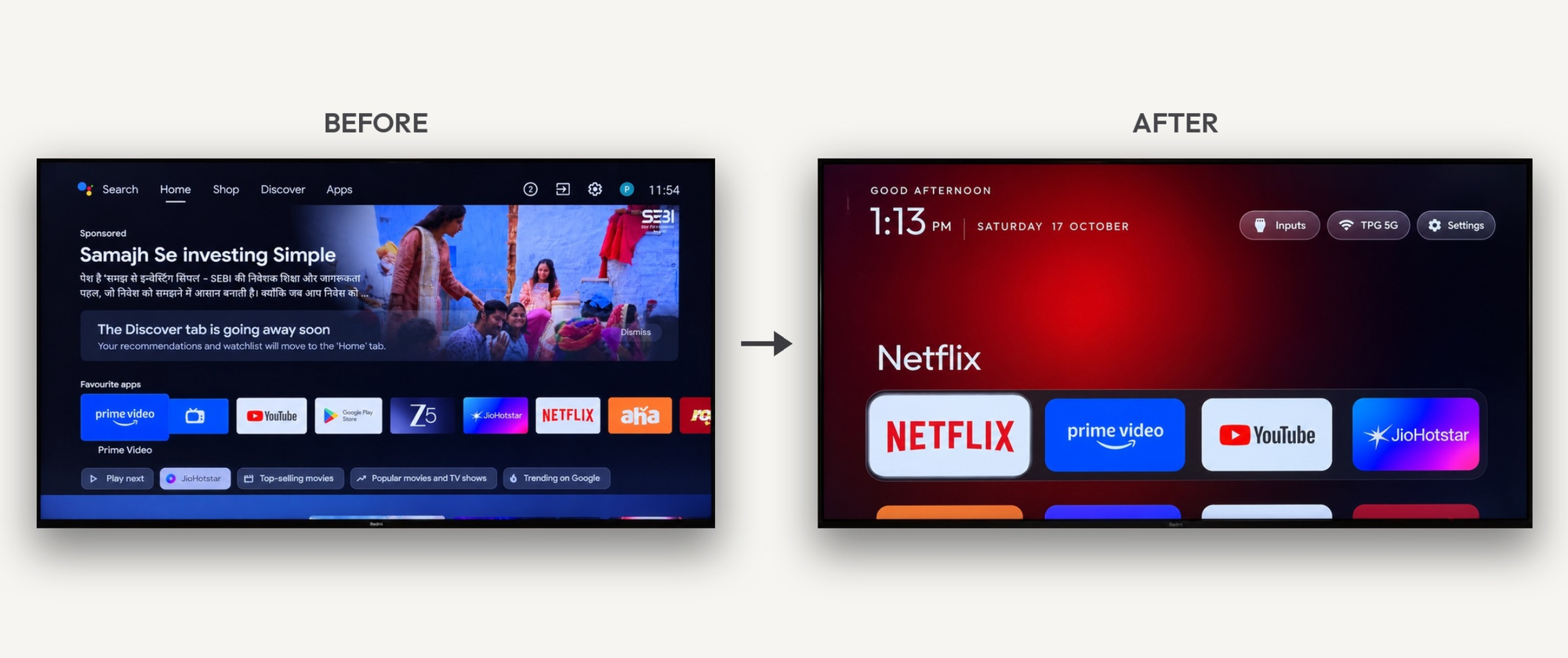
Over the weekend, it became trendy to use artificial intelligence to replace smart TVs' operating systems with AI-generated or reverse-engineered versions, aiming to make them less bloated and free of clutter. People have taken ownership of proprietary internet-of-things devices that were abandoned by their creators, using AI to hack them and install new software, bestowing functionality that was previously absent.
Recently, I have witnessed people hacking smart picture frames to transform them into AI-powered smart calendars, eliminating ads from baby monitors, and reviving bricked Lululemon mirrors with new software. Dozens and dozens of TVs have been transformed with AI-driven software that eliminates bloatware, ads, and simplifies the user interface.
This represents a new frontier of "vibe coding," where, instead of creating something from scratch, people are leveraging AI to take an existing piece of software and replicate its features or outright clone it. In some instances, AI is utilized to install open-source software on proprietary hardware. This is a blend of "decompiling," "reverse-engineering," "hacking," "vibe coding," AI-generated content, and theft.
This development is likened to a plagiarism machine that not only replicates but also adds its own unique twist. Software engineers are expressing concern that software-as-a-service is becoming obsolete as a business model, as AI makes it increasingly simple to replicate desired functionalities. Mike Nolan, who investigates open-source software politics, remarks, "The barrier for recreating this stuff has lowered, so a lot of people are doing it for fun.
But there may be a lot of instances where the software may not be reliable enough to use—I'm unsure how many companies will adopt these clones." One user on X shared, "Vibe coded my parents' TV this afternoon! It was displaying sponsored ads before you could even get to Netflix. Used Claude Code the model number, it found the TV on wifi, removed 25 Xiaomi packages and wrote a new launcher."
The post has allegedly been viewed over 6 million times. "Looks like an Apple TV now lol." The notion that this can be accomplished using open-source, human-coded repositories has been possible for a considerable amount of time. Communities of people have spent hundreds of hours bringing bricked IoT hardware back to life or uncovering vulnerabilities that enable device modification or repair.
However, the emergence of a project named "Reverse Engineer Anything" has propelled this concept to new heights, amassing more than 342,000 stars on GitHub as of the time of writing. This project uses AI to dissect features from other software, allowing users to replicate them. The idea is to easily clone and modify others' products, much like the recent, AI-driven clones of Adobe's Creative Cloud software, Microsoft Office, and the decompilation of numerous video games.
This technique is not limited to software that runs on your computer but is also used to reverse-engineer and modify embedded software on physical devices. For instance, a guitar pedal maker claimed on Hacker News that he used AI to clone the effects algorithms of three of his competitors in just 72 hours. It's not necessarily the case that everyone will start writing and running software themselves, or that Adobe or Microsoft are doomed.
Nonetheless, this "decompiling" or "reverse-engineer anything" craze is expected to have real-world implications for software companies, coding communities, and open-source projects. The criticism of AI-powered decompilations being of low quality, riddled with bugs, or not functioning correctly is one of the main issues at hand.
The use and integration of AI-generated software will inevitably have a sloppifying effect on society, whether one chooses to vibe code software or not.
Written by urgent.news from 404 Media's reporting — not their text. Machine-written — may contain errors; check the original before relying on it.