Nothing’s brand chief is fed up of ‘boring and generic’ smartphone ads—he shares his marketing strategy for taking on Samsung and Apple
The brand chief at London-based tech group Nothing explains how he plans to take on Apple and Samsung by rejecting marketing formulas and inviting the customer into the boardroom.
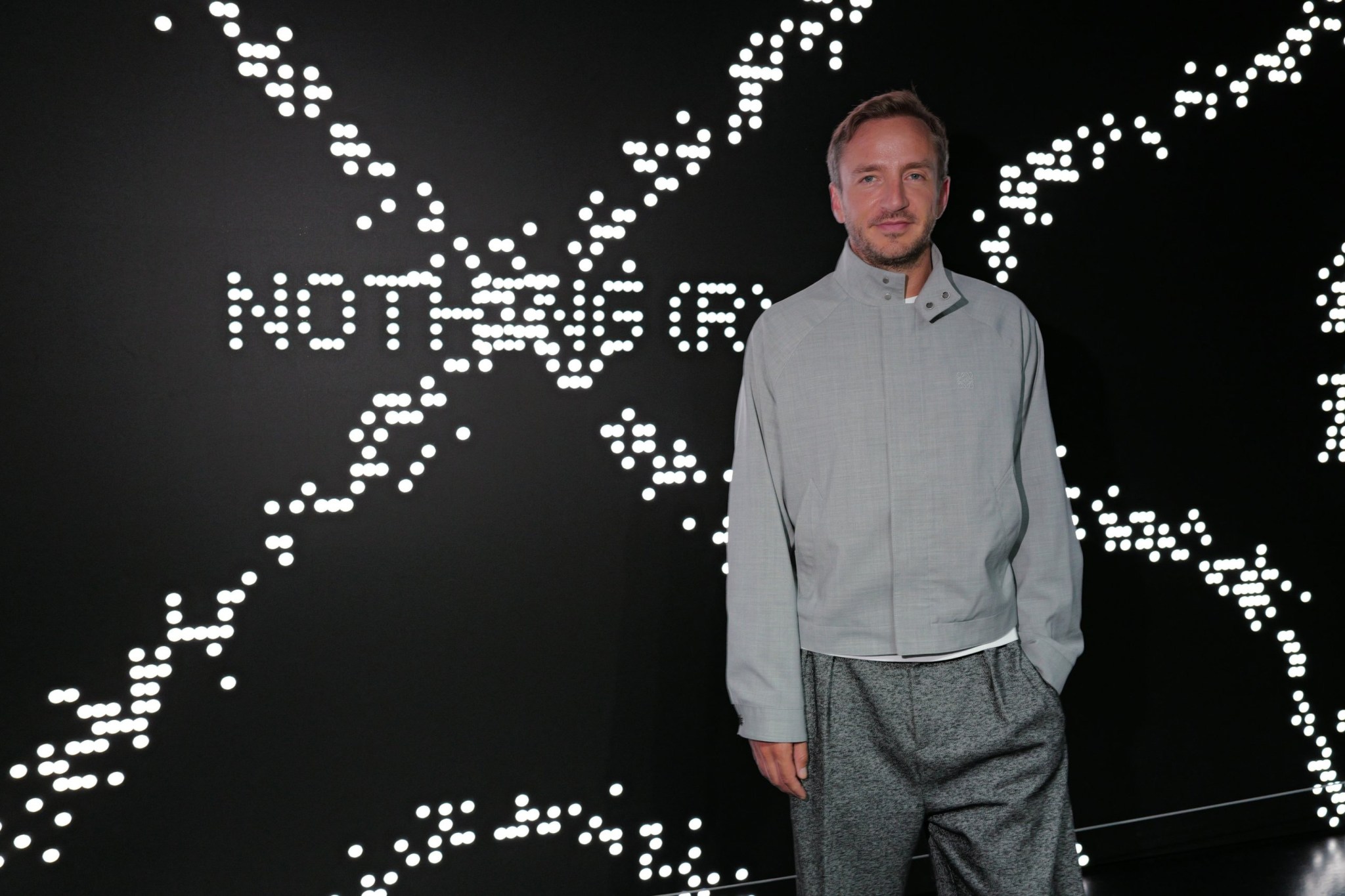
Nearly two decades after the debut of the first iPhone, many modern smartphones still adhere to Apple's template. Charlie Smith, chief brand officer at Nothing—a London-based startup seeking to break from the norm—remarks, "Consumer tech's becoming pretty boring." "Everyone just copied the success of Apple, which was about minimalism, aluminum, and glass," Smith explains.
"It really lost a lot of its personality." To combat this, Smith employs a "retro futuristic" design philosophy. Numerous Nothing smartphones and headphones boast transparent casings that reveal certain internal components.
Founded in 2020 by OnePlus co-founder Carl Pei, Nothing's valuation reached $1.3 billion after a $200 million Series C round in 2025. Smith envisions Nothing as the next British consumer "super brand" akin to Dyson. Adam Bates, former head of design at Dyson, now serves as Nothing's design director. Smith, who assumed his role in January after seven years of marketing at LVMH-owned fashion house Loewe, faces a formidable challenge.
According to Counterpoint Research, global smartphone shipments declined by 20% in Q3 2026, the weakest third quarter since 2012, as rising memory-chip costs led to higher phone prices. Both Apple and Samsung maintain dominance in the smartphone market, with Samsung's share increasing from 19% to 23% and Apple's from 18% to 22%.
To distinguish themselves in a saturated market, Smith adopts a distinct approach to branding. Most smartphone advertisements, Smith asserts, rely on "glossy renders" and focus on camera upgrades and other specifications. "There’s no real community building or emotional hook," he notes. "Sometimes brands really see marketing as a formula, almost like a mathematical equation, and that’s what produces really boring, generic results."
Rejecting this marketing formula, Smith emphasizes the importance of building a community and creating an emotional connection. He argues that formulaic marketing prioritizes immediate results, such as clicks and sales, over the long-term process of brand development. This tendency toward safe, proven ideas often leads to advertisements that blend together, he contends.
Smith points out that in some instances, organic sharing of remarkable ideas can offset the costs associated with paid media campaigns. Smith cites Nike's 2018 'Nothing Beats a Londoner' campaign as an example of embracing cultural nuances and allowing local teams to shape messages rather than deploying uniform ads globally. Smith believes that boldness and a willingness to take risks can set a brand apart.
At Nothing, he challenges his team with the question, "What's the opposite of what we would be expected to do here?" At a smaller company, Smith contends, creative risk is already ingrained within the culture, allowing for greater control over branding decisions. Smith also encourages employees from non-marketing backgrounds to contribute ideas, fostering an environment where innovation can flourish.
Furthermore, Smith emphasizes the significance of authenticity when collaborating with external creators or music collectives. He asserts, "Are you genuinely adding something to this culture, or are you just taking from it?" To maintain authenticity, Smith stresses the importance of showcasing the individuals behind the product.
In the face of rising AI-generated content skepticism, audiences have become increasingly wary of brands utilizing AI in their advertisements. According to an IAB survey, 30% of Gen-Z consider brands employing AI in their ads as "inauthentic." Smith believes that emphasizing the people who bring the product to life is crucial for capturing audiences' attention.
At Nothing's March launch at Central Saint Martins, a London art school, over 300 students interacted with the company's industrial design team and had hands-on experiences with the products. At Loewe, Smith showcased the manufacturing process, filming craftspeople at work and encouraging content creators to produce raw, unpolished TikToks that deviate from luxury's "perfect" standards.
Written by urgent.news from Fortune's reporting — not their text. Machine-written — may contain errors; check the original before relying on it.