NASA Welcomes Uzbekistan as Newest Artemis Accords Signatory
The Republic of Uzbekistan became the 77th signatory of the Artemis Accords during a ceremony in Samarkand on Monday, committing to the practical principles that guide safe, transparent, and responsible civil space exploration. “Uzbekistan joins the Artemis Accords at a pivotal moment,” said NASA Deputy Administrator Matt Anderson. “President Trump has directed NASA to build […] The post NASA…
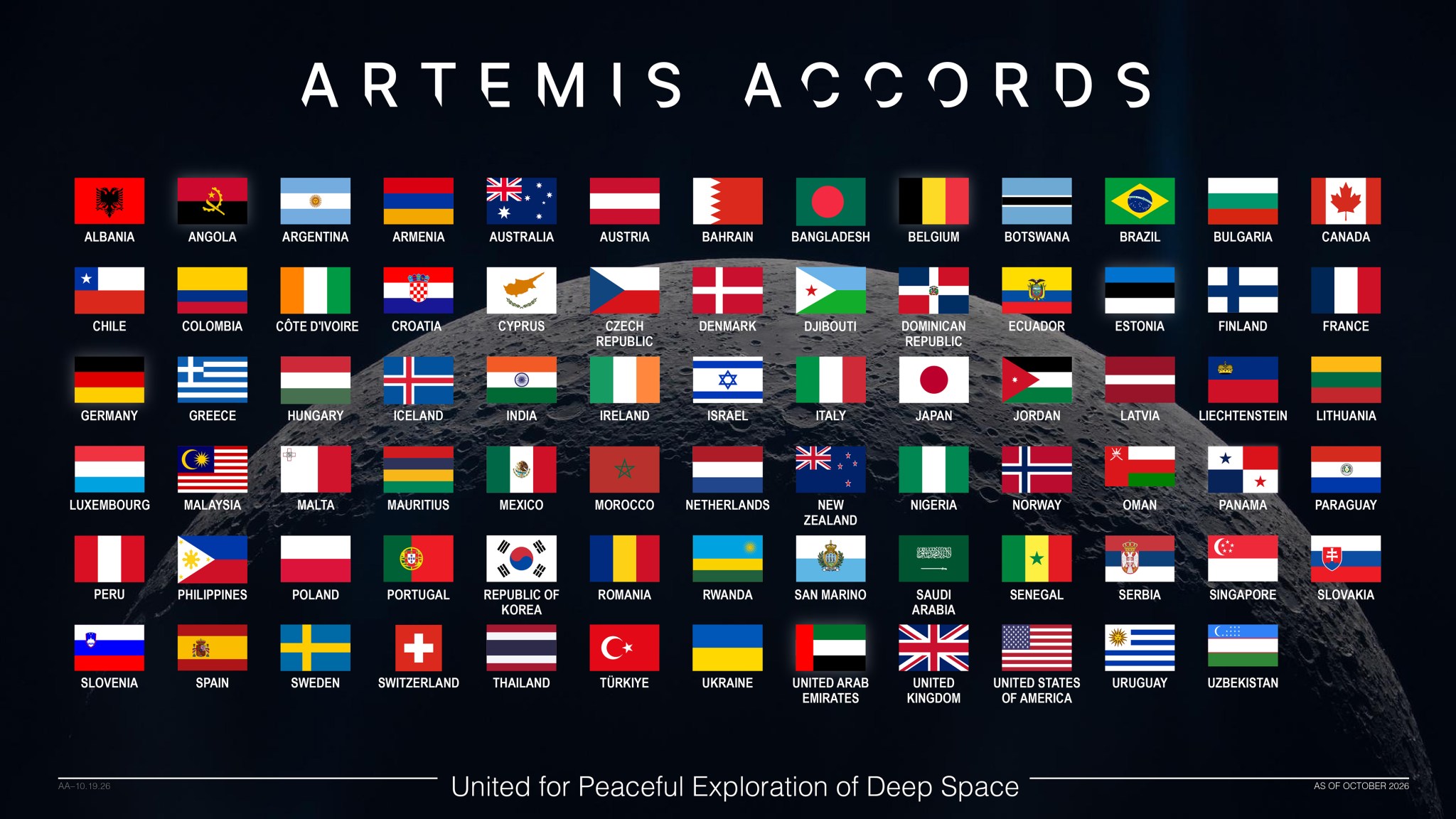
The Republic of Uzbekistan officially joined the Artemis Accords on Monday in Samarkand, marking its commitment to the principles of safe, transparent, and responsible civil space exploration. NASA Deputy Administrator Matt Anderson expressed his enthusiasm, stating that Uzbekistan's addition comes at a critical juncture, especially as the U.S. aims to build a lunar base.
This move not only enriches international cooperation but also broadens opportunities for nations to collaborate on lunar endeavors. Uzbekistan's Minister of Foreign Affairs, Bakhtiyor Saidov, signed the accord on behalf of the country during the visit of U.S. Secretary of State Marco Rubio. Uzbekistan's involvement in space exploration has been growing, with the nation developing a space program and aiming to launch its first CubeSat by 2028.
Earlier this year, NASA officials met with Uzbek representatives at the 2026 International Astronautical Congress to explore further collaborations. Uzbekistan is set to host the annual global space event in 2028. The Artemis Accords, established in 2020 by the U.S. and six other nations, set out guidelines for peaceful and transparent lunar exploration, fostering scientific data sharing and preservation of historical sites. More signatories are anticipated to join as NASA works towards a sustainable future in space.
Written by urgent.news from NASA Science's reporting — not their text. Machine-written — may contain errors; check the original before relying on it.