JAXA's Martian Moons eXploration Mission is on its Way to Mars and Phobos
JAXA successfully launched its Martian Moon eXplorer on its way to Mars and Phobos. It'll reach Mars in about six months, and will orbit the planet for about a month before transferring to an orbit around Phobos. It will deploy a small lander, which will help select a sample-gathering location for the main part of the mission. By 2031, the regolith sample from Phobos should be back on Earth.
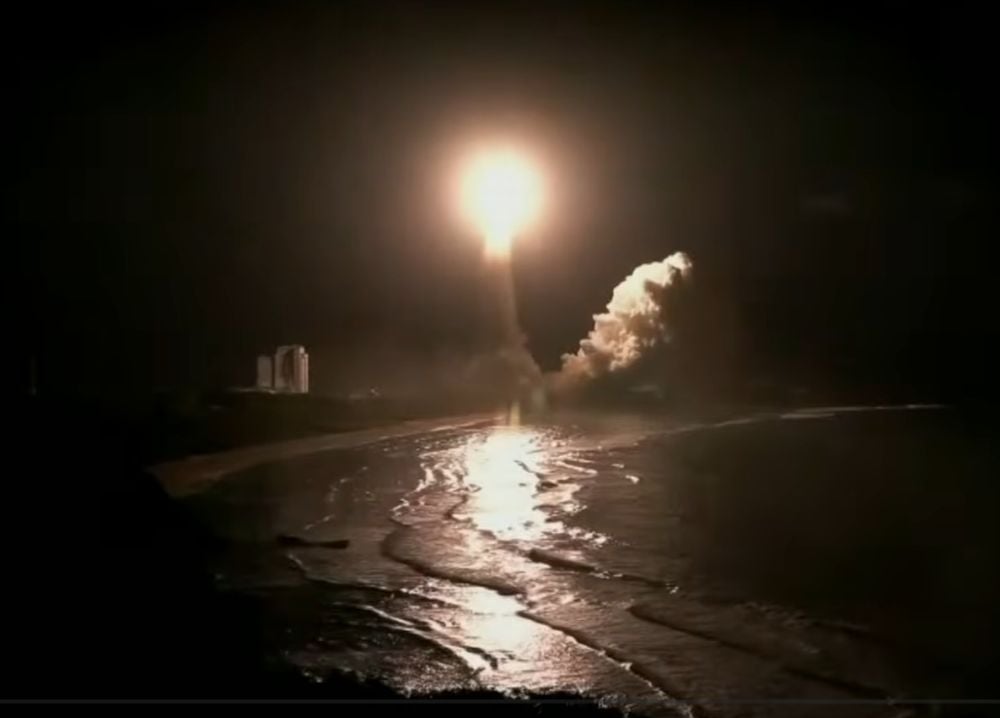
Japan's space agency JAXA has successfully launched its Martian Moons eXploration (MMX) mission on October 20, 2026 from Tanegashima Space Center in Japan. In a matter of minutes, the MMX spacecraft separated from its launch vehicle and commenced its voyage towards Mars and Phobos, the largest of Mars' two moons.
By August 2027, MMX is expected to reach Mars and enter its orbit. Following a month-long period, the spacecraft will shift its focus to orbiting Phobos. The spacecraft comprises a main orbiter and a small lander named Idefix, developed jointly by Germany and France.
Idefix will be deployed on Phobos' surface, where it will conduct scientific operations and identify a suitable site for the MMX mission's primary objective: sample collection. Due to Phobos' weak gravitational pull, Idefix will be dropped from a height of between 40 to 100 meters onto the moon's surface. After landing, it will autonomously correct its orientation and commence its mission.
In 2030, MMX will land on Phobos, either once or twice, to gather regolith samples, aiming to collect at least 10 grams. Once the sample is collected, MMX will execute flybys of Mars' other moon, Deimos, before sending the sample back to Earth. Upon successful retrieval, the sample should reach Earth by 2031.
Notably, JAXA has previously accomplished two sample return missions: Hayabusa, which returned a sample from Asteroid 25143 Itokawa in 2010, and Hayabusa 2, which brought back a sample from Asteroid 162173 Ryugu in 2020. JAXA's past successes lend credibility to the MMX mission. The sample return capsule will travel inside the MMX's Return Module and separate from the Exploration Module upon reaching Earth.
The Exploration Module, containing the lander's legs, rover deployment system, and scientific instruments, will remain in space. The capsule carrying the samples will be directed to the Woomera Prohibited Area in South Australia for retrieval, while the Return Module will burn up upon re-entry into Earth's atmosphere.
Written by urgent.news from Universe Today's reporting — not their text. Machine-written — may contain errors; check the original before relying on it.