HPE Spaceborne Computer 4 to launch AI straight to the Moon aboard Astrolab’s FLIP rover
Mystery silicon and mirrored SSDs set to touch down before year's end
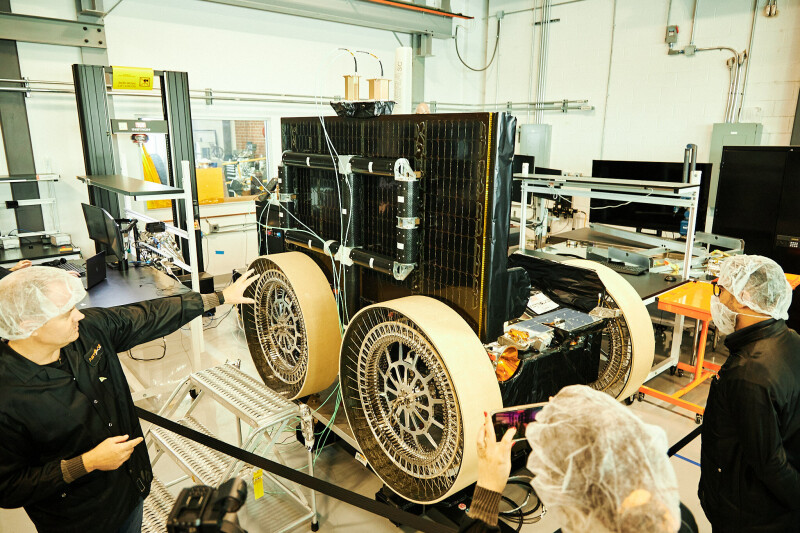
Hewlett Packard Enterprise (HPE) will launch its fourth-generation Spaceborne Computer, known as SBC4, to the Moon by the end of the year. SBC4 will operate aboard Astrolab’s Flex Lunar Innovation Platform (FLIP) rover as part of NASA’s Commercial Lunar Payload Services (CLPS) program. Deployed near the Moon’s south pole by the Voyager Technologies Griffin-1 lander, FLIP will serve as a test bed for various emerging technologies, including SBC4.
SBC4 is equipped with a low-power central processing unit, a graphics processor, and two mirrored Kioxia SSDs with a combined capacity of 1 TB. Despite its modest size, measuring 5x10 inches and about an inch thick, the system is powerful enough to support artificial intelligence (AI) and high-performance computing (HPC) experiments during its year-long mission on the lunar pole.
NASA plans to conduct a series of tuned AI tests, including a retrieval augmented generation (RAG) system for interpreting onboard documents and running machine learning algorithms against camera and LiDAR data.
HPE has invested heavily in software-based redundancy and recovery to harden SBC4 for the Moon's extreme conditions. The rover and SBC4 must contend with harsh vibrations during launch and landing, wild temperature swings, and cosmic rays and solar radiation. To address these challenges, SBC4 is primarily assembled from off-the-shelf components, including solid-state drives, with a software RAID 1 setup ensuring data protection.
Written by urgent.news from The Register Science's reporting — not their text. Machine-written — may contain errors; check the original before relying on it.