How to study a swiftly melting climate disaster
Andrew Haverdink, a tall grad student in a rain bib and rubber boots, wrenched a double-handed drill from the frozen soil that underlies much of Alaska’s Denali National Park and then unclipped the hollow barrel from the end of the bit. He knelt in front of a blue tarp, lined the barrel up with a…
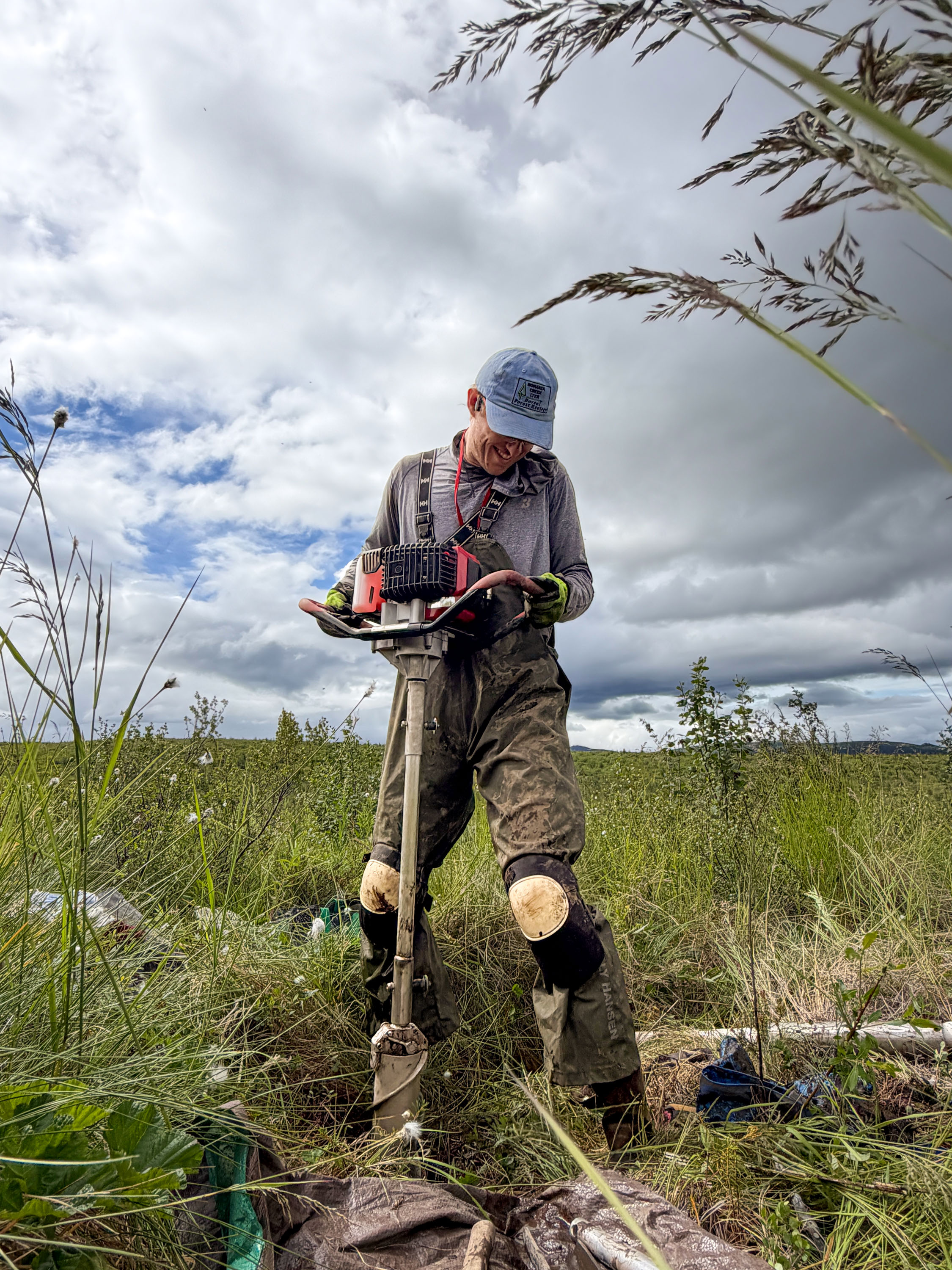
Andrew Haverdink, a graduate student, used a drill to extract frozen soil cores from Denali National Park in Alaska. These cores were collected during a research project investigating the effects of wildfires on permafrost and its contribution to climate change. The fire in this area in 2013 burned through much of the vegetation and into the topsoil, exposing the frozen soil, or permafrost, which stores a significant amount of carbon.
This carbon is released into the atmosphere when the permafrost thaws. The research team found that the fire caused the thawed soil layer, known as the active layer, to extend deeper in areas where it burned intensely. This is a sign of deep permafrost thawing. The study, led by Xanthe Walker from Northern Arizona University, aims to understand the impacts of these fires on vegetation, carbon, and permafrost.
The carbon stored in permafrost is about 1.5 trillion tons, approximately twice the amount currently in the atmosphere. As permafrost thaws, it releases greenhouse gases, primarily carbon dioxide and methane, which exacerbate climate change. While some studies suggest that increased plant growth in the Arctic could offset these emissions, new evidence indicates that abrupt thawing of permafrost may release more carbon than previously estimated, potentially doubling the emissions and offsetting the carbon uptake from plant growth.
Written by urgent.news from MIT Technology Review's reporting — not their text. Machine-written — may contain errors; check the original before relying on it.