Haze may ease by month-end as monsoon rains arrive - Academic
ARAU: The haze affecting Malaysia is expected to gradually improve by the end of this month as the country enters the monsoon transition phase, which could bring more rain and changes in wind direction and speed.
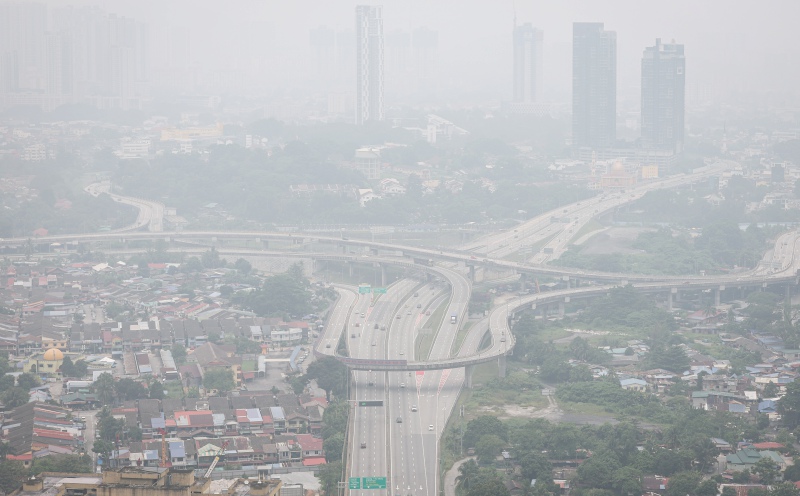
Haze impacting Malaysia is anticipated to gradually diminish by the end of the current month as the nation transitions into the monsoon season, potentially ushering in additional rainfall and shifts in wind patterns, according to Dr Norazian Mohamed Noor, an associate professor at Universiti Malaysia Perlis' Faculty of Civil Engineering and Technology. Factors such as these could aid in reducing atmospheric pollutant levels and curbing the cross-border dispersal of smoke originating from Indonesia.
The Malaysian Meteorological Department (MetMalaysia) projects that most regions of the country will receive rainfall near their historical averages from this month through March 2027. For instance, Selangor is expected to receive between 220mm and 330mm of rain this month, and between 250mm and 380mm in November, while Kuala Lumpur is forecasted to receive between 240mm and 360mm of rain in October, and between 300mm and 450mm in November.
While this forecast suggests a promising outlook for improved air quality in Malaysia, the improvement might not be uniform across all areas. Haze is not solely influenced by rainfall in Malaysia; it also depends on fire activity, rainfall distribution in the regions producing the pollution, and wind direction. Dr Norazian emphasized that rainfall in Malaysia alone is insufficient to guarantee the end of transboundary haze if fires persist at their source in Indonesia.
Furthermore, an analysis conducted by Indonesia's Meteorology, Climatology, and Geophysics Agency (BMKG) on October 13 revealed that certain parts of southern Sumatra, West Kalimantan, Central Kalimantan, and South Kalimantan are projected to receive sparse rainfall, less than 50mm over specific 10-day periods this month. This situation could heighten the risk of forest and peatland fires, particularly in areas enduring prolonged dry spells.
The BMKG forecast, however, also indicates heightened rainfall in several areas of Sumatra and Kalimantan in November and December, with some regions potentially receiving over 300mm of rain monthly. If this rainfall is sustained and covers fire-affected areas, it may help decrease fire activity and smoke emissions.
Written by urgent.news from New Straits Times's reporting — not their text. Machine-written — may contain errors; check the original before relying on it.