Ghanaian researchers use AI to develop more efficient, affordable solar panels
Ghanaian researchers are using artificial intelligence (AI) to identify materials that could make solar panels more efficient, affordable, and environmentally friendly, potentially expanding access to renewable energy. The research, supported by the French Embassy in Ghana, uses AI-powered computational methods to identify suitable material combinations for photovoltaic cells, which convert…
Ghanaian researchers are leveraging artificial intelligence (AI) to discover materials that could enhance the efficiency, affordability, and environmental friendliness of solar panels, potentially broadening access to renewable energy. This groundbreaking research, backed by the French Embassy in Ghana, employs AI-driven computational techniques to pinpoint suitable materials for photovoltaic cells, which transform sunlight into electricity.
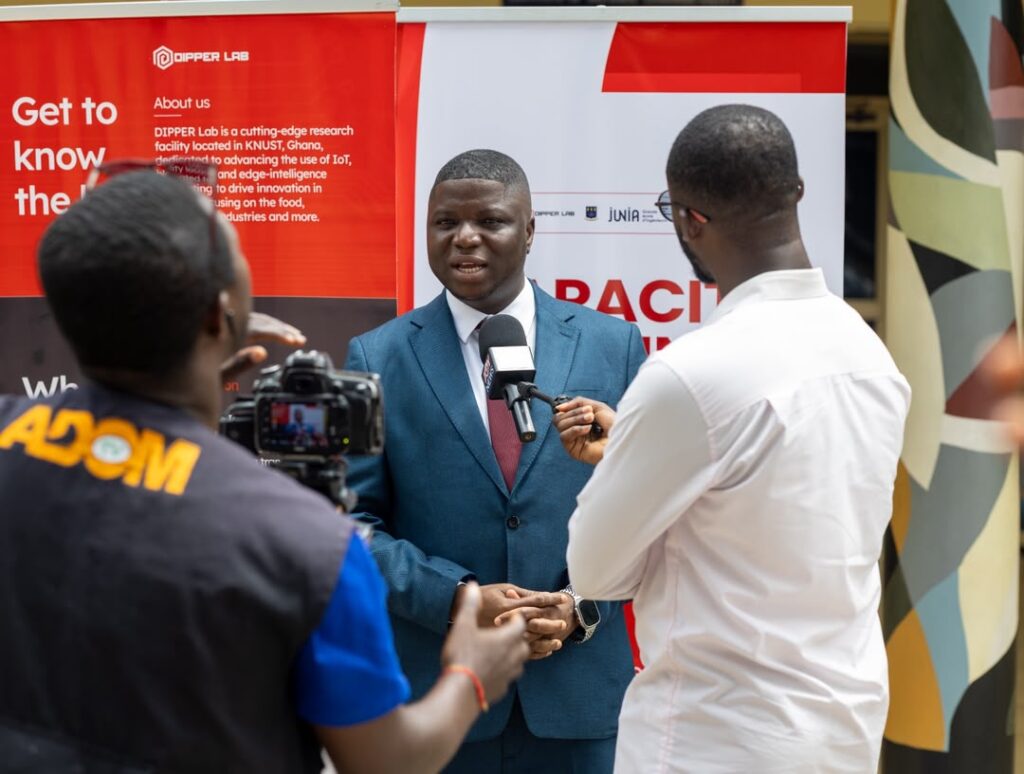
The ultimate aim is to boost solar-cell conversion efficiency from the current 22% to between 25% and 30%, while simultaneously building local expertise in solar technology development. Prof. Eric Tutu Tchao, the Head of the DIPPER Lab at the Kwame Nkrumah University of Science and Technology (KNUST), highlighted that AI could substantially reduce the time and resources needed to identify promising material combinations from thousands of possibilities.
By honing in on the most viable pairs, researchers anticipate to enhance solar-cell performance and lower costs for homes and businesses. The gains could be especially significant for rural communities grappling with limited access to reliable electricity. "Higher-efficiency solar panels could enable households to generate more power from smaller installations, possibly reducing the expense of powering homes and essential equipment," explained Prof. Tchao.
The project is currently under way at a one-day capacity-building workshop on Generative AI for Stable Lead-free Perovskites and High Performance Organic Solar Cells, organized under the NKABOM initiative, funded by the French Embassy in Ghana. This workshop, attended by early-career researchers and specialists in various fields, aims to translate the research into practical applications within the next one to two years.
In addition to material development, the project also explores flexible photovoltaic technologies and methods to minimize the toxicity of solar-cell production materials. Dr. Joseph Asare, a Senior Lecturer at the University of Ghana’s Department of Physics, noted that conventional solar panels, typically made with rigid glass structures, can be challenging to integrate into curved surfaces, wearable devices, and innovative architectural designs.
Flexible photovoltaic materials could enable solar technology to be incorporated into a wider range of items and structures, enhancing their design and reducing environmental risks. AI could further accelerate the discovery of suitable materials and streamline the laboratory testing process, according to Dr. Asare. Dr. Bruno Grandidier of the Department of Physics at JUNIA-ISEN emphasized that AI's role in energy transition extends beyond solar materials.
By optimizing electricity generation, distribution, and consumption, AI could aid countries in minimizing energy waste and expanding power access. However, Dr. Grandidier cautioned that AI heavily relies on substantial computing power, particularly for intricate research and extensive simulations. He highlighted the necessity of investing in computing infrastructure to enable researchers to effectively develop and deploy AI-driven energy solutions.
While acknowledging AI's potential to bolster Ghana's capacity to develop renewable energy technologies locally, the researchers acknowledge that the project's impact will hinge on the successful testing, affordable manufacturing, and widespread deployment of the proposed materials.
Written by urgent.news from MyJoyOnline Ghana's reporting — not their text. Machine-written — may contain errors; check the original before relying on it.