France protests: Govt to impose new curfews where 'situation requires it'
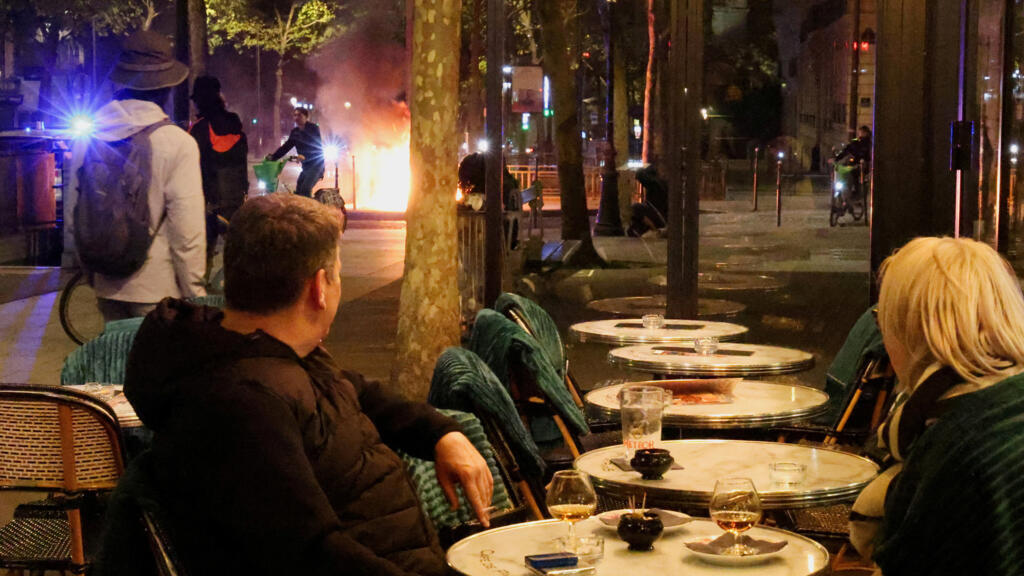
Following weekend protests and riots across the country, curfews have been imposed by the government in some parts of Paris and several cities in France. In Paris, the night passed without any disturbance as FRANCE 24's Emerald Maxwell reports. French Prime Minister Sébastien Lecornu said that local authorities can decide to extend curfews if necessary.
Across France, Italy, Spain, Portugal, Belgium and Albania, protests have erupted, each rooted in specific grievances but united by a shared crisis. Younger generations are at the forefront of these demonstrations, voicing dissatisfaction with school conditions, job prospects and the perceived failure of multiculturalism. These protests quickly expanded to encompass various societal groups, notably trade unions and those impacted by the cost-of-living crisis.
Economic challenges, including sluggish growth and the strain of rising energy prices, have fueled public discontent. This crisis is further complicated by electoral cycles, as political parties exploit the discontent to their advantage. In France, Italy and Spain, the political landscape is marked by ideological diversity, with coalitions ranging from liberal-centrist governments to far-right or left-wing parties.
The common thread among these protests is the realization that the problems cannot be attributed solely to left or right-wing policies. Each country grapples with unique issues: Spain's housing crisis, Italy's influx of international students, and Albania's concerns over corruption and economic hardship.
Amid these protests, European defense policy is also shifting. The EU's ReArm Europe/Readiness 2030 initiative aims to bolster defense capabilities, but students are protesting proposed cuts to education funding, questioning the allocation of resources. In Albania, the "Flamingo Revolution" highlights another set of grievances, with demonstrators rallying against government corruption and economic hardship.
Thus, while these protests share a common cause—unsatisfaction with the status quo—they are each a reflection of distinct political and economic realities. A deeper understanding requires examining these nuances, rather than attributing the unrest to a single, overarching issue.
Written by urgent.news from The Indian Express's reporting — not their text. Machine-written — may contain errors; check the original before relying on it.
This story
This is one outlet's version. Read the fullest account.
- France, Italy, Spain: Protests across Europe have a shared crisis, different contexts indianexpress.com
- M’sian students are safe amid protests in France, Italy, says Zambry freemalaysiatoday.com
- Protests in France: What to expect on Saturday, October 24th thelocal.fr