Delayed funding of judiciary means delayed justice – Dr Valentine Mensah
Dr Valentine Mensah, a fellow in public financial management and corporate governance, has warned that delays in funding and inadequate resources are undermining effective justice delivery in Ghana.
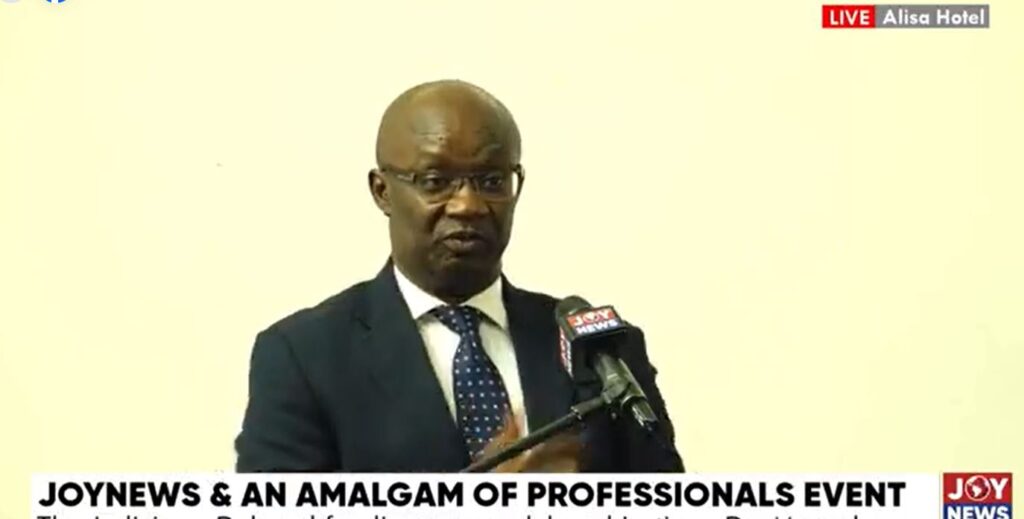
Dr. Valentine Mensah, a fellow at D&D focusing on public financial management and corporate governance, has cautioned that insufficient funding and resource shortages are hampering effective justice delivery in Ghana. At a recent JoyNews and An Amalgam of Professionals event, he emphasized the judiciary's need for dependable financial backing, adequate staffing, equipment, and essential facilities.
He stressed that accountability must be matched with the resources required for judges and court staff to carry out their duties. "We are paying people to work, but are we giving them the tools?" he questioned, highlighting the disparity between personnel spending and court operational needs. Dr. Mensah pointed out that while Parliament allocated GH¢945 million for the judiciary in 2024, only GH¢700 million was released.
Of the funds spent, 79% went to compensation, leaving only 21% for goods, services, and capital expenditure. In 2025, audited expenses surpassed GH¢1.6 billion, with compensation accounting for 87% and leaving just 13% for other operational requirements. This trend raises doubts about whether the judiciary possesses adequate resources to furnish necessary facilities and equipment for timely justice.
The judicial complex, unfinished for over a decade, exemplifies how inadequate planning and funding delays can leave vital infrastructure unused. Dr. Mensah also highlighted the Judicial Service's internal funds of GH¢151 million in 2025, representing about 15% of its budget. He advocated for sustainable funding methods, such as efficient fee collection and periodic court fee reviews, while safeguarding financially constrained individuals.
Regarding staffing, he cited the Judicial Service Staff Association of Ghana's reports indicating that over 130 courts were operating without magistrates. He emphasized the need for improved conditions of service, enhanced security, and prompt recruitment to attract and retain qualified personnel. The Chief Justice's report noted that 127 candidates had been interviewed but were awaiting clearance, causing serving officers to handle multiple courts.
Dr. Mensah urged authorities to refine staffing plans, establish deadlines for recruitment clearances, and provide explanations for any delays or denials. He stressed that judicial independence necessitates more than mere constitutional guarantees, arguing that judges require sufficient material support and tenure security to make decisions without political intimidation.
While accountability is crucial, he argued that procedures for removing judges should ensure fair hearings, impartial adjudication, and protection against political interference. The 1992 Constitution, in Articles 125 and 127, establishes the judiciary's authority and safeguards its independence, underscoring the necessity of institutional arrangements that enable the courts to perform their duties effectively.
Dr. Mensah noted that the judiciary's challenges mirror broader issues within Ghana's public sector, where salary payments do not always translate into providing the tools and facilities necessary for public service delivery. He called for all three branches of government to fulfill their constitutional duties, noting that the Executive enforces laws and policies, Parliament enacts legislation and holds the government accountable, while the Judiciary interprets the law, safeguards rights, and monitors public power use.
He emphasized that effective justice delivery is vital for protecting citizens from arbitrary power, enforcing contracts, and fostering an environment conducive to investment and national development.
Written by urgent.news from MyJoyOnline Ghana's reporting — not their text. Machine-written — may contain errors; check the original before relying on it.