AI adoption by industry shows what other sectors can learn
The current narrative around artificial intelligence in the workplace is largely driven by Silicon Valley. But treating the tech sector as an island misses the actual trends in technology adoption–tech is just the first industry in line. As generative AI and automation tools mature, the shifts currently reshaping software engineering and product management will inevitably…
The widespread adoption of artificial intelligence (AI) in the workplace, driven by the tech sector, is not unique to that industry. As AI and automation tools become more mature, shifts currently reshaping software engineering and product management will inevitably spread to other sectors such as healthcare, education, retail, and manufacturing.
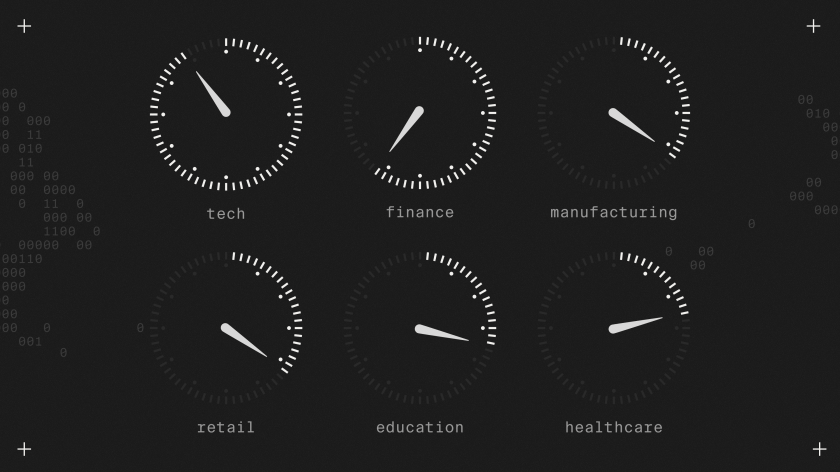
The rate of AI adoption varies depending on how quickly industries absorb new workflows. A survey by TripleTen reveals stark differences in AI adoption rates across various sectors.
Finance leads the way with 48% of finance workers using AI chatbots, and 32% being asked to automate parts of their workflow. In contrast, healthcare (18%) and education (25%) sectors show lower initial exposure. This difference can be attributed to the complexity of compliance-heavy or human-facing operations in these sectors, which necessitate a more deliberate pace of adoption.
Across all surveyed industries, 79% of workers are asked to learn at least one new skill they didn't previously possess. Some of these skills, while specific to tech, will translate to other sectors' frontline work, such as managing patient logistics in hospital systems and administrative reporting in school districts. One crucial skill that often goes unnoticed is judging whether AI output is correct, which has been ranked sixth among seven essential skills.
This skill is vital for identifying mistakes before they cause problems, and its importance will grow as AI tools become more prevalent across industries.
Early AI adoption offers professional advantages, with managers who learn new skills or automation processes from employees seeing an 88% success rate in implementing those innovations company-wide. Workers who identify repetitive administrative tasks and automate them using AI tools will hold a significant advantage as healthcare networks, educational institutions, and retail operations roll out AI-enabled software.
Being able to streamline administrative overhead can lead to better chances of retention, promotions, and wage growth.
However, non-tech industries face a resource gap in accessing quality training and development resources. Out-of-pocket investment in training varies significantly by industry, with tech workers spending the most ($1,758 on average), followed by finance ($1,664), healthcare ($990), and education ($883). Nearly half of healthcare and education workers spent no money on professional development last year. Tech workers also leverage a wider variety of learning channels, such as AI chatbots (48% vs. 27% for all workers).
The most effective way for workers to acquire new AI skills is through someone currently doing that job (31%), followed by AI tools (16%), official certifications (19%), and university professors (6%). In conclusion, the variation in AI adoption rates across industries is a timeline of technology diffusion rather than a story of success or failure.
Workers in healthcare, education, retail, and manufacturing can observe which skills generate real productivity gains and build those competencies before they become standard industry expectations.
Written by urgent.news from MIT Technology Review's reporting — not their text. Machine-written — may contain errors; check the original before relying on it.