The Long History of Underreporting Inflation
It’s infuriating with each inflation print: Some economist or strategist waves off the hot headline number, advising you to focus on the core. The most recent bout of innumeracy has been going on for four years, but it dates back to at least the 2000s (and beyond). There is a long — and… Read More The post The Long History of Underreporting Inflation appeared first on The Big Picture .
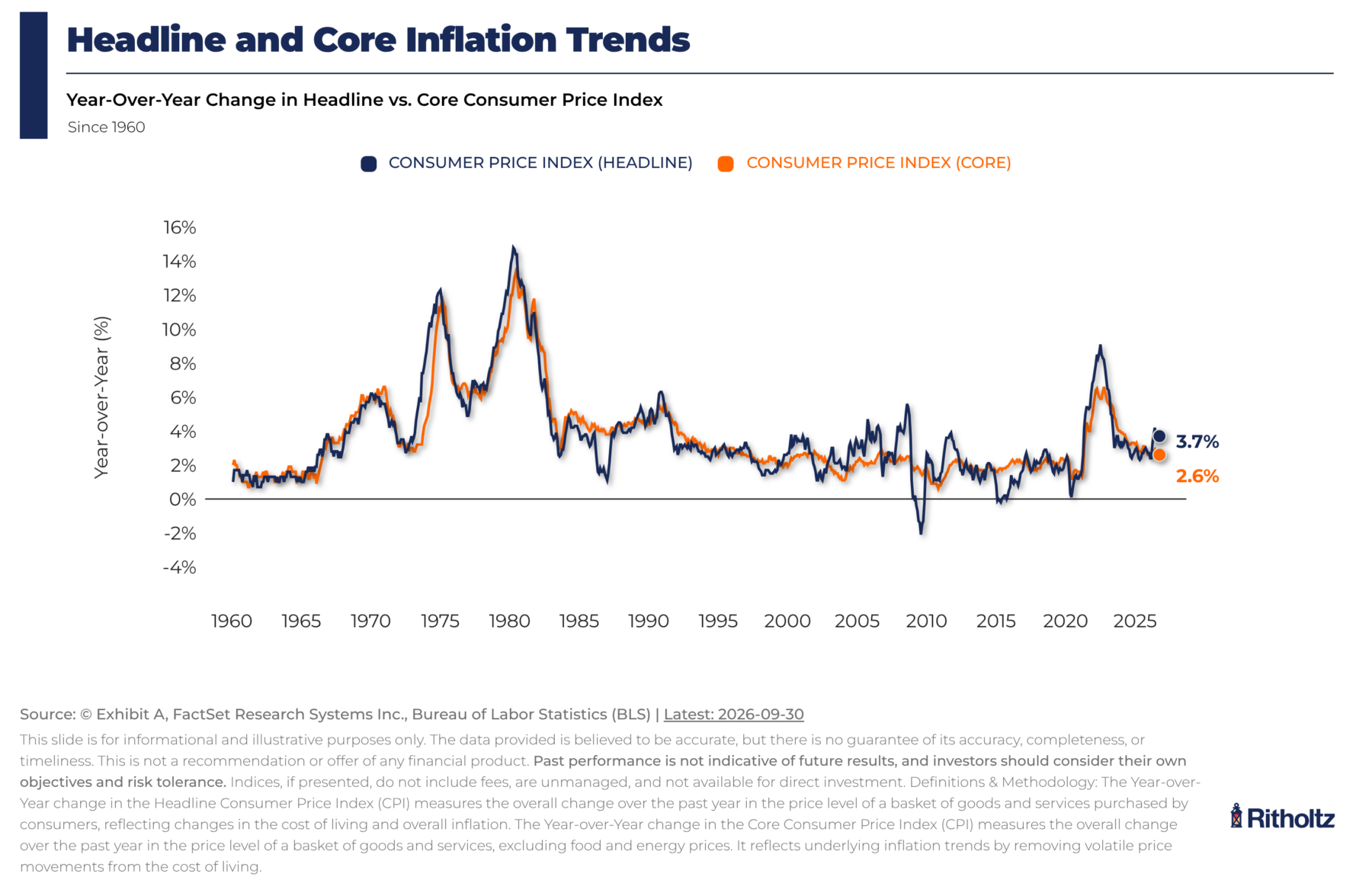
In the decades since World War Two, U.S. governments have consistently worked to underreport inflation data, often with disastrous consequences. The most recent efforts began in earnest during the 2000s but can be traced back to at least the 1950s. One of the earliest instances occurred in 1944-45 when the Mitchell Committee found that the Cost-of-Living Index (COLI) was understating wartime inflation by 4 percentage points between 1941-44. This led to the renaming of the data series as the Consumer Price Index (CPI) in 1945.
Throughout the 1950s and 1960s, the CPI underwent several revisions aimed at reducing the reported inflation numbers. In 1953, comprehensive revisions were made to rebuild the goods basket from an earlier 1950 survey. In 1961, the Stigler Committee recommended that the CPI be re-conceived as a cost-of-living index, incorporating several well-intentioned changes such as new-goods bias, quality change, substitution, and hedonic adjustments.
Fast-forward to 1972-75, and the Fed's attention shifted towards the "core" inflation series, stripping out food and energy prices to avoid political pressures. This practice continued through the following decades, with various alternative inflation measures being developed by different Federal Reserve branches. The 1983 introduction of owners' equivalent rent (OER) as a component of the CPI-U basket created perverse results, with homeownership being treated as an asset rather than a cost.
In 1995-96, the Boskin Commission concluded that the CPI overstated inflation by 1.1 points per year, but the political motivation behind the commission was to reduce cost-of-living adjustments (COLAs) and tax bracket creep, saving the federal government $1 trillion over a decade. The Chained CPI concept, first proposed by the Obama administration and adopted by the Trump administration, was implemented in the 2017 Tax Cuts and Jobs Act to further lower the inflation number against which the Fed judged its policies.
Written by urgent.news from The Big Picture's reporting — not their text. Machine-written — may contain errors; check the original before relying on it.