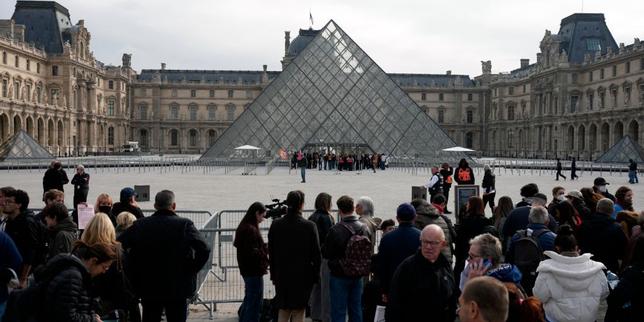
Nach Ausschreitungen: Ausgangssperren vor neuen Protesten in Frankreich verhängt
Nach Plünderungen und schweren Ausschreitungen in Frankreich kündigt die Regierung örtlich begrenzte Ausgangssperren an. Gleichzeitig rufen die Gelbwesten für Samstag zu neuen Protesten auf.
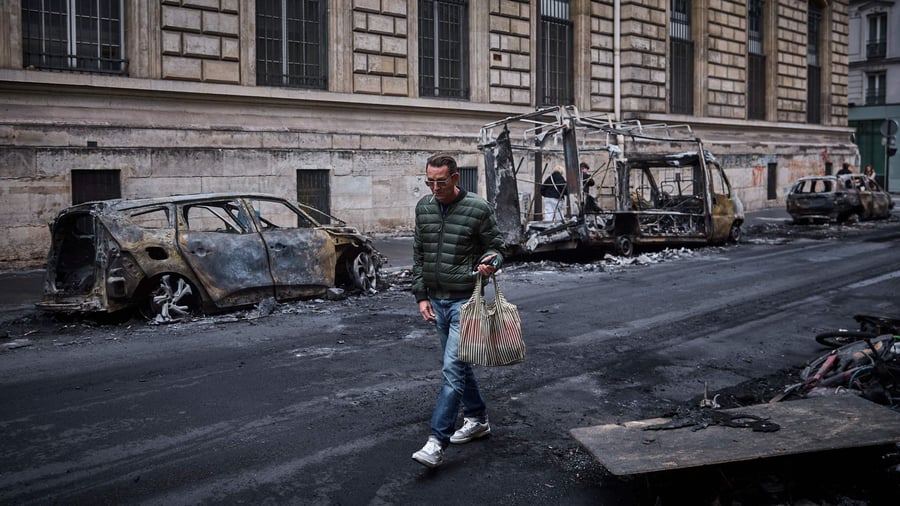
After the violent riots in France, the government announced localized curfews and increased police presence to prevent further unrest. Several cities, including Paris, implemented restrictions. The Yellow Vest protest movement called for more demonstrations on the upcoming Saturday. Organizer said that a "2nd wave" of protests would occur on October 24.
Protesters planned to demonstrate in dozens of locations again. The Yellow Vest movement's fight against high living costs and social injustice had gripped France since November 2018 until early 2019. The name originated from demonstrators wearing yellow safety vests. Ahead of the protest weekend, demonstrators were urged to revive the movement.
Localized curfews were announced after a government crisis meeting. Premier Sébastien Lecornu announced curfews in Paris, prohibiting any presence in areas around the central Place de la République and Les Halles district from Monday night at 11 p.m. to Tuesday at 6 a.m. Additionally, there were bans on meetings and demonstrations in certain neighborhoods of the metropolis.
The measures were necessary to restore public order. Demonstrations bans and curfews were also imposed in Lyon. There curfew was limited to nights on Tuesday when people could only remain on the streets if they provided predefined reasons. Night curfews were also established in Nice and northern French cities Lille, Douai, Wattignies and Denain.
President Emmanuel Macron had already announced on Sunday night that new demonstrations could be banned if necessary. "Given the current situation, prefects, in coordination with mayors, will decide to protect our cities, public buildings and businesses, and if necessary, even ban certain assemblies and take all necessary measures," Macron said in a televised address.
The weekend saw nationwide protests against high living costs in France, accompanied by violent riots and looting, even in the early hours of Monday. The Prime Minister stressed that the "chaos" was limited to city centers. The aim was to protect both people and property, especially shops. Lecornu said a state of emergency was not ruled out, but he currently believed it was not the right measure.
This was a serious measure, he said. The government did not rule out a state of emergency, but did not consider it the right tool at the moment, seeing curfews as more appropriate. Interior Minister Laurent Nuñez had offered his resignation following the chaotic images from several French cities. Macron rejected the resignation, stating that he was responsible for everything that happened.
He asked the interior minister to clarify shortcomings in planning and information gathering that led to the severe riots. In addition, Nuñez asked him to introduce new internal security measures as soon as possible to put an end to barricades and looting. Macron also said that rioters would be punished and held accountable. The interior minister acknowledged a lack of foresight in mobilizing the police force.
There was an imbalance between the police and the people on the streets, as well as a loss of control. Nuñez said everything would be done to ensure such incidents do not recur. In a televised address on Sunday night, Macron described the situation as an "extremely serious moment" and expressed sorrow over the rioting. He described the scenes as "unprecedented acts of violence" and called the "security fiasco" in Marseille, the second largest city in France.
"We are the shame of Europe today," said the mayor of Marseille, Benoît Payan. Police and demonstrators were portrayed as helpless victims.
Written by urgent.news from Handelsblatt's reporting — not their text. Machine-written — may contain errors; check the original before relying on it.
This story
This is one outlet's version. Read the fullest account.