📈 Monday data: Who won the trade war?
What eight years of tariffs actually did
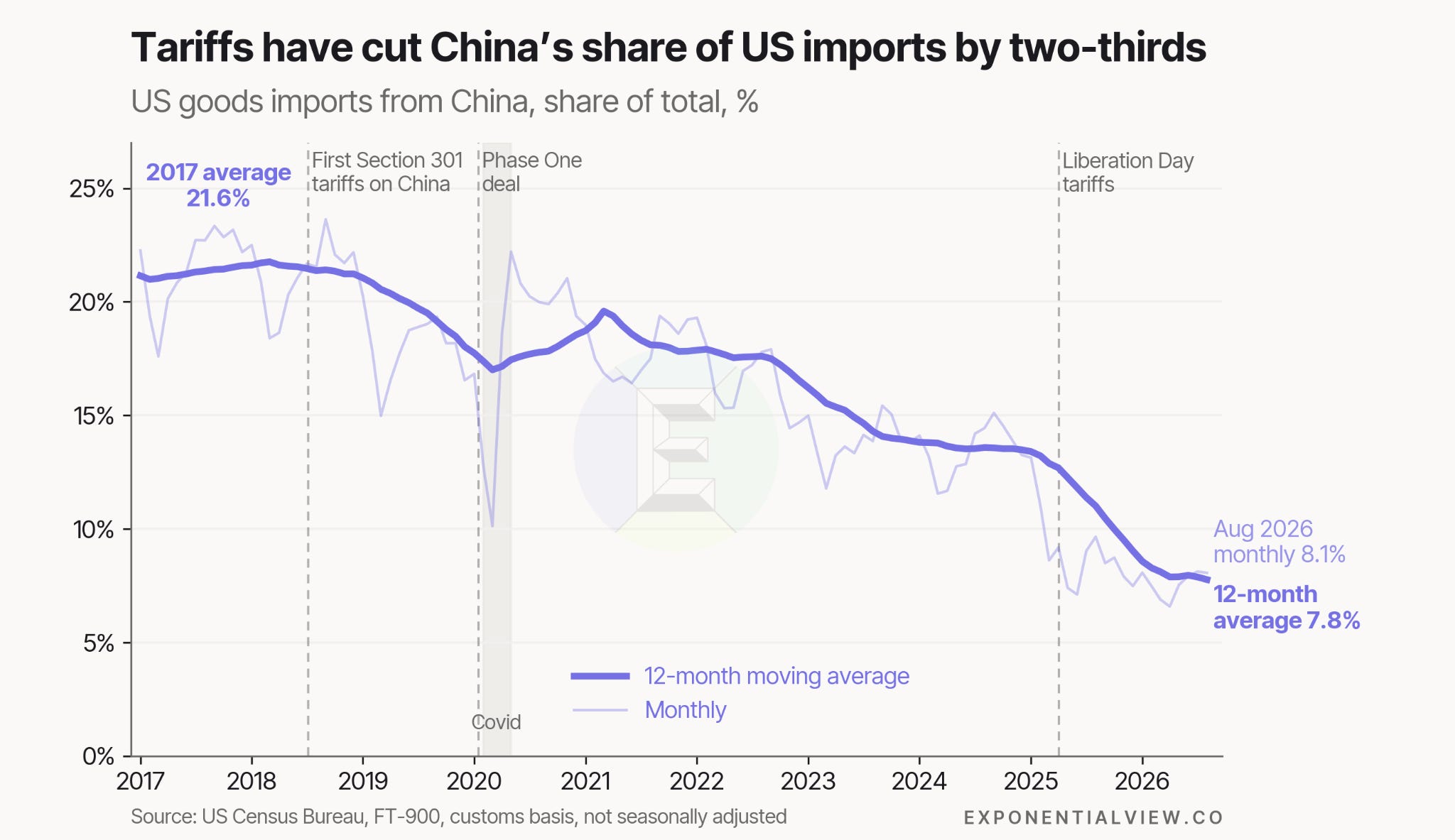
In the recent Monday data analysis, the trade war's effectiveness has come under scrutiny. Initially, tariffs were introduced by President Trump in January 2018, with China-specific ones following in July of the same year. The objective was to reduce the trade deficit, combat intellectual property theft, and lessen the US's dependence on China. However, upon closer examination, it becomes evident that the situation hasn't improved significantly.
China responded to the tariffs by shifting its production to other countries, a strategy known as tariff-jumping investments. This involved relocating factories or the parts required for production to nations like Vietnam or Mexico, which then exported the finished products to the US. As a result, the share of US imports from China dropped from approximately 21% in the mid-2010s to around 8% by summer.
Despite efforts to target Chinese intellectual property theft and reduce dependency on the country, China has continued to play a significant role in global trade. The US's supply chains have been remapped, but the trade war's impact remains mixed.
Written by urgent.news from Exponential View's reporting — not their text. Machine-written — may contain errors; check the original before relying on it.