Märkte: Warum europäische Aktien von der KI-Korrektur profitieren können
Oliver Schmidt, Investmentchef der Privatbank Metzler, sieht europäische Werte im Vorteil. Auch andere Profi-Investoren drängen auf mehr Diversifizierung.
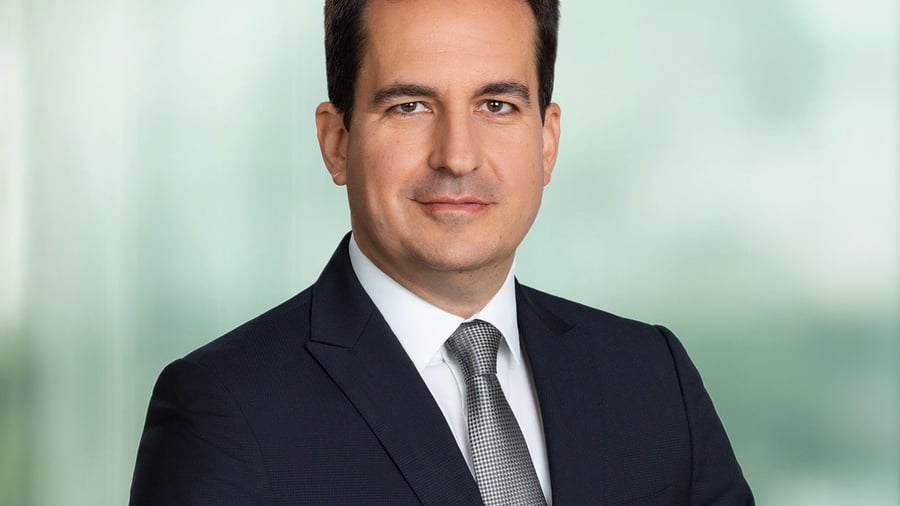
Despite rising risks in France, European stock markets could kickstart a new rally, believes Oliver Schmidt, Investment Chief at Metzler Bank. "The mood among companies and investors is turning positive again," Schmidt told the Handelsblatt. Several factors contribute to this shift. It's time for investors to diversify and focus on industries not directly related to the artificial intelligence (AI) boom.
Chipmakers, hyperscalers, data center operators and other companies involved in AI have been winners for a while. However, in recent weeks and months, periods of high volatility have scared investors. In the previous week alone, chipmakers and other AI companies experienced an unexpected downturn. Arm Holdings lost nearly seven percent, Applied Materials lost almost eight percent, Intel dropped around ten percent, and Coreweave fell 20 percent on a weekly basis.
This week represents the worst performance for the tech-heavy Nasdaq Index since the Liberation Day last year, when US President Donald Trump announced massive worldwide tariffs. This growing uncertainty about the longevity of the AI rally prompts investors to look for alternatives. Metzler is increasing its European equity exposure.
"The earnings dynamics in many European industries have intensified," Schmidt acknowledges. "We have therefore increased our equity allocation in Europe, and we have found that we are not alone in doing so." Investors are currently searching for less volatile options for their portfolios, Schmidt noted. These can be found in Europe.
Yves Bonzon, Investment Chief of Swiss Private Bank Julius Baer, advises combining AI bets with anti-AI bets in portfolios. The uncertainty surrounding the spread of AI in the economy and which companies will ultimately be the winners is unusually high. "I haven't seen investors ever stand before a wider range of possible outcomes," Bonzon said.
Therefore, investors should not bet against AI but should not put all their eggs in one basket. Schmidt identifies several industries as attractive in this phase. "With the high government investments in defense, electrification, and infrastructure, certain industries receive a boost and cannot vanish so quickly," Schmidt said. He invests in industrial values such as Siemens.
The Munich-based conglomerate has gained nearly twelve percent this year, outperforming the tech-heavy Dax, which only grew about four percent since January. Insurance companies are also attractive, Schmidt noted. They offer stable price gains, dividends, and share buyback programs. Amazon and similar technology stocks have achieved more than 20 percent total shareholder returns per year since the end of the financial crisis, while Munich Re has gained 15 percent but was much more stable.
Total Shareholder Return includes both price appreciation and dividends. Bank of America analysts recently noted how resilient European stocks have been, with the broad-stoke Stoxx Europe 600 index being just three percent from its August high. The risk premium for stocks, however, is near its lowest level in 20 years, driven by robust global growth and earnings revisions that continue to rise.
In the past week, the Dax rose by 2.1 percent, while the S&P 500 lost nearly two percent. Protests in France are a source of concern on both sides of the Atlantic. Over 1,800 people were arrested in Paris and other French cities on Saturday, raising fears of a nationwide outbreak that could discourage investors. Added to this is the concern over a potential Euro debt crisis.
French government bond yields reached their highest levels in decades, and the European Central Bank's Transmission Protection Instrument (TPI) could be activated if investors test the ECB on whether it will activate the program or not. Another factor increasing uncertainty is the recent rise in yields on US government bonds, which also increased anxiety in Germany.
Deutsche Bank analysts expect a positive effect similar to what they observed in the summer: strong corporate earnings have distracted investors from macroeconomic developments and driven stock prices. This could happen again, according to Maximilian Uleer, Head of European Equities at Deutsche Bank. After presenting their second-quarter results, companies' stocks rose by nearly two percent in the Stoxx 600 index.
This could happen again. Schmidt sees another positive effect: The European Central Bank's quantitative easing program could continue, supporting European stocks in the coming weeks.
Written by urgent.news from Handelsblatt's reporting — not their text. Machine-written — may contain errors; check the original before relying on it.