LPG stakeholders seek daily pricing amid soaring rates
ISLAMABAD: As liquefied petroleum gas (LPG) prices surge following the closure of the Rahimdad-250 border post, market stakeholders on Sunday urged the government to shift from monthly to weekly or daily pricing, in line with petroleum products, and delink rates from Saudi Aramco’s Contract Price (CP). The demand comes ahead of winter, when LPG consumption traditionally rises, increasing the risk…
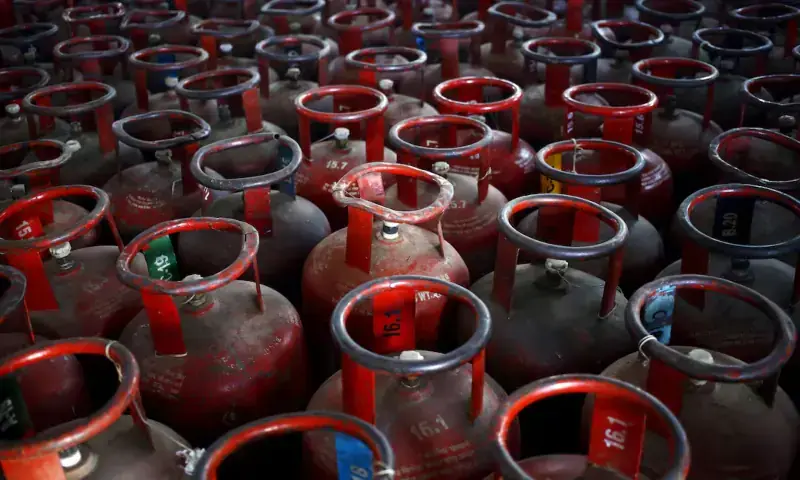
Liquefied petroleum gas (LPG) prices have been skyrocketing due to the closure of the Rahimdad-250 border post, prompting market stakeholders to call for a shift from monthly to daily pricing, similar to petroleum products. This change is needed to keep rates in line with market realities, as the current policy, unchanged for over a decade, fails to reflect the true costs.
The demand for this adjustment comes as winter approaches, when LPG consumption typically rises, increasing the likelihood of hoarding, blackmarketing, and artificial price hikes, especially in remote and mountainous regions. The LPG policy is said to be outdated and no longer aligns with current market conditions. While prices are benchmarked to Saudi Contract Price, most supplies actually come from Iran, Oman, the UAE, and Iraq, with Iranian LPG allegedly bypassing the official sea channels.
The Oil and Gas Regulatory Authority's advance monthly price notifications discourage major state-owned enterprises from importing LPG, leaving the market open to private importers and land-route suppliers due to weak enforcement. Recently, border closures and a string of policy moves have further disrupted LPG supplies, with over 4,500 tonnes reportedly stuck on the Iranian side.
Pakistan uses nearly two million tonnes of LPG annually, with 30% produced domestically and 70% imported. Out of the 1.2 million tonnes imported, roughly 250,000 tonnes come through Port Qasim, while around one million tonnes traverse Iranian routes, including Taftan, Mand, and Rahimdad-250. Taftan has been closed for nearly six months due to security concerns, while Mand experiences intermittent disruptions, increasing reliance on Rahimdad-250.
Mohammad Ali Haider, vice chairman of the LPG Marketing Association, representing more than 200 companies, revealed that prices surged by Rs100 per kilogram over the weekend following the withdrawal of the trade exemption and could soar further without prompt action. He noted that no imports are presently arriving at Saudi CP-based prices.
Before the war, Iranian-sourced LPG sold at the border for $100-150 per tonne below Saudi CP. Since the war began, insurance and freight premiums have pushed costs to about $300 per tonne above CP, making Ogra's benchmark increasingly irrelevant. Oil prices have switched to daily adjustments following the war, while LPG remains tethered to advance monthly notifications disconnected from actual costs.
Major consumers like SSGC, SNGPL, and Pak-Arab Refinery have avoided imports at notified rates due to fears of accountability investigations. This border turmoil has shifted pressure to Gwadar, raising freight costs from $60-80 to as high as $380 per tonne. Haider criticized the petroleum division's directive that required SOEs to auction LPG against signature bonuses, arguing that this system favors cash-rich companies and promotes potential money laundering and consumer exploitation.
The government was urged to review the LPG policy with stakeholders, revise the Rs35,000-per-tonne marketing margin established in 2016, digitally track imports and distribution, and publish daily prices on Ogra's website. Haider also questioned the use of a Rs4,690-per-tonne petroleum levy introduced in 2016 to protect consumers against price shocks, claiming it is not fulfilling its intended role.
Written by urgent.news from Dawn's reporting — not their text. Machine-written — may contain errors; check the original before relying on it.
This story
This is one outlet's version. Read the fullest account.