Indonesia Stock Exchange cuts its lower auto-rejection limit to 7pct from 15pct
JAKARTA: The Indonesia Stock Exchange said on Monday it cut its lower auto-rejection limit to seven per cent from 15 per cent, effective immediately and to be reassessed periodically.
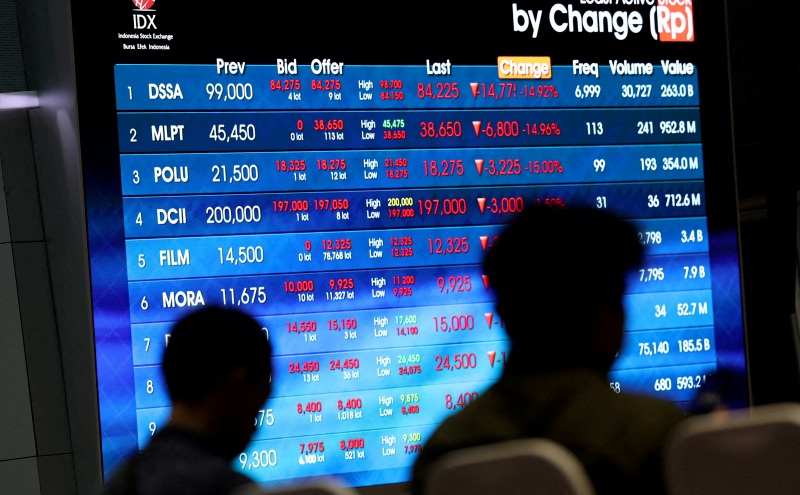
Indonesia's stock market experienced significant volatility recently, plunging 11.57% after MSCI proposed changing the country's classification from an Emerging Market to a Standalone Market. This move led to a trading halt. Prior to this, MSCI's earlier warning about ownership transparency and suspected coordinated trading caused a 16.7% drop over two days in January.
Since then, Indonesian regulators have implemented various reforms to boost market confidence. However, despite these efforts, the market now confronts more severe challenges.
While Indonesia's reforms have indeed enhanced transparency and regulation, their effects are limited by concentrated ownership, insufficient institutional demand, and uneven liquidity. These structural issues cannot be rectified merely by stricter rules. MSCI's suggested downgrade could unfairly treat diverse companies similarly. To truly address these concerns, Indonesia requires robust enforcement and tailored treatment of securities, complemented by ongoing efforts to expand the market.
Since January, key institutions like the Financial Services Authority (OJK), Indonesia Stock Exchange (IDX), and central securities depository (KSEI) have taken steps to improve transparency. These actions include disclosing shareholdings exceeding 1%, refining investor classifications, implementing the High Shareholding Concentration (HSC) framework, and setting a roadmap to increase the minimum free float from 7.5% to 15%.
While these measures have increased investor access to information and the ability to detect ownership concentration and potential risks, their impact is still limited. MSCI still highlights investor worries about possible coordinated trading and the lack of compelling evidence of effective enforcement. The OJK's October 16th announcement of sanctions against beneficial owners and others associated with shares of three listed companies represents a significant step, but lasting confidence necessitates persistent enforcement rather than sporadic actions. Ultimately, mere disclosure cannot compensate for genuine efforts to combat misconduct.
Written by urgent.news from The Jakarta Post's reporting — not their text. Machine-written — may contain errors; check the original before relying on it.
This story
This is one outlet's version. Read the fullest account.
- Has Indonesia’s stock market really changed? thejakartapost.com