I ditched $20 ChatGPT subscription and made Claude and Gemini work together for better results
What happens when you stop asking one AI to do everything and let two models collaborate?
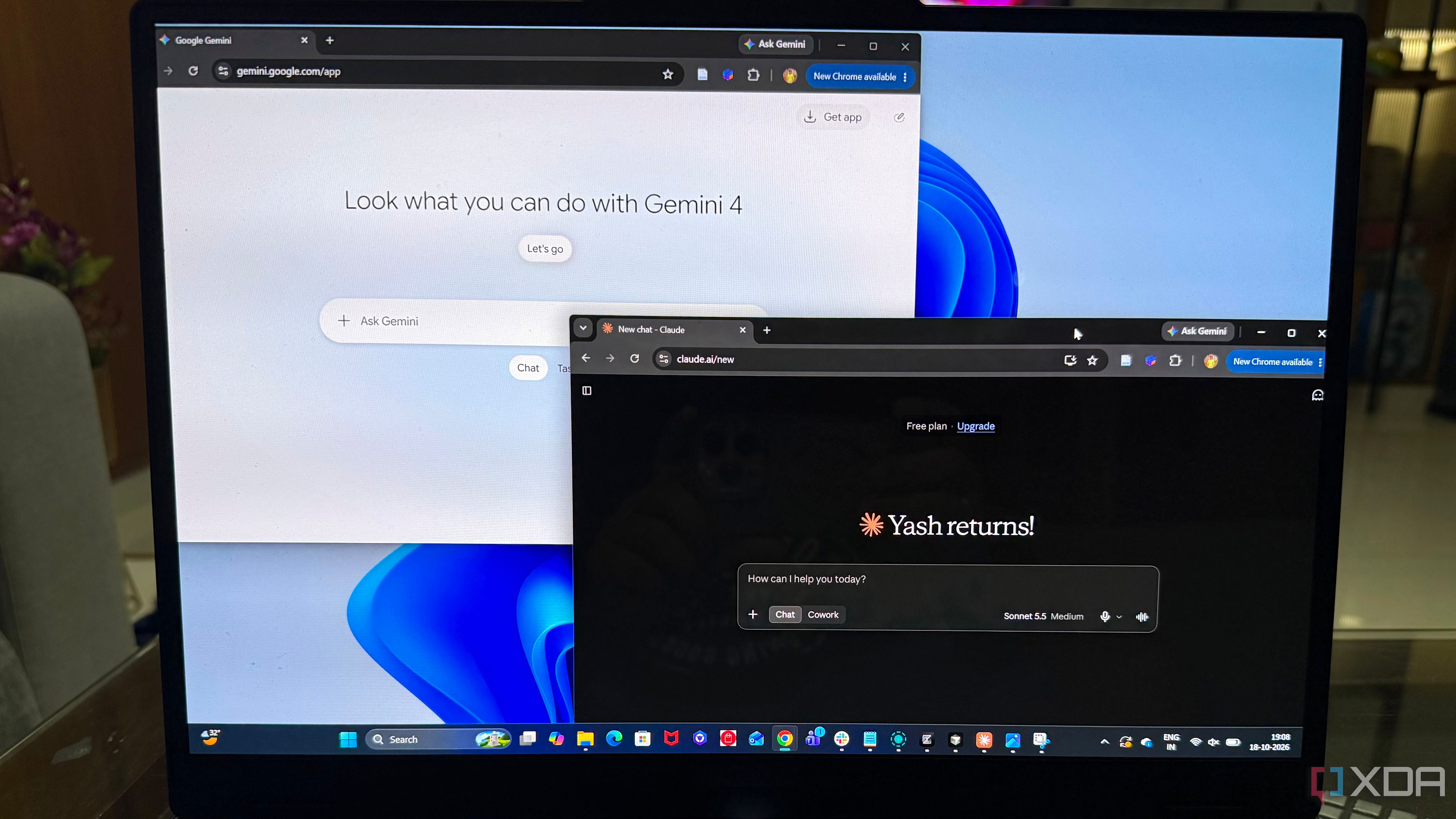
I used to pay $20 monthly for ChatGPT, but I started questioning whether relying on a single AI tool was necessary. Instead, I experimented with utilizing Claude and Gemini jointly. The concept was straightforward: employ both models to achieve superior outcomes without incurring extra subscription fees.
What astonished me was the practicality of this method for my work. Rather than accepting the initial answer provided by an AI, I began treating the models as collaborators. One could aid in refining the process, while the other could offer a novel viewpoint on the task.
I didn't anticipate such a significant difference from this simple modification. It introduced a fresh approach to AI-assisted work, eliminating dependence on a single tool. I no longer spent considerable time crafting an ideal prompt from scratch. Instead, I began with a basic concept, even if the instructions were not particularly detailed.
I then asked Claude to transform this idea into a more precise and useful prompt, identifying missing context, vague instructions, and potential pitfalls that could lead to subpar responses. I also requested Claude to make the requirements more specific and well-organized, enabling the other model to comprehend my exact needs.
The advantage of this approach is that I could concentrate on articulating my actual objective rather than worrying about every minor detail in the prompt. Claude assisted me in refining the instructions before proceeding further. Once satisfied, I moved on to the next stage.
After finalizing Claude's revised prompt, I copied it into Gemini and entrusted it with handling the actual task. I used Gemini 3.1 Pro for this purpose, as I wanted to observe its performance when given clear instructions instead of a concise, loosely written request. I included any relevant context or reference material pertinent to the task, then let Gemini generate its response.
At this point, I refrained from interfering too much with the process. I aimed to see how well it adhered to the instructions and the nature of the output it produced. The primary difference I observed was a more structured starting point. Gemini had a clear objective, specific requirements, and a defined direction to follow. I didn't need to add instructions or rectify the same misunderstandings through multiple follow-up messages.
Of course, a detailed prompt doesn't guarantee a perfect answer. Gemini could still miss critical points or make errors. That's why I didn't consider its first response as the final product. Instead, I used it as the foundation for the subsequent phase of my workflow. After Gemini generated its response, I returned the entire output to Claude for review.
This time, I asked Claude not to rewrite everything or make the content sound better. Instead, I wanted it to act as a critic, identifying gaps in reasoning, overlooked details, unclear explanations, and anything that failed to meet the original requirements. I also asked Claude to flag claims that needed verification, rather than assuming everything Gemini wrote was correct.
Once Claude completed its review, I took its feedback back to Gemini. I instructed Gemini to address valid criticisms, correct weaknesses, and enhance the original response without losing useful information. I found this stage beneficial as it provided another round of scrutiny before I deemed the output ready. However, I didn't blindly accept every suggestion Claude proposed.
I reviewed the feedback myself and allowed Gemini to work with the points genuinely improving the result. The final version still required my own judgment before usage.
I've also realized that an AI response's quality isn't solely determined by the chosen model. The way I structure the task and review the output plays a crucial role. A robust first draft is essential, but having another model challenge it can reveal weaknesses that might otherwise go unnoticed. Of course, I still need to verify important facts and make final decisions independently.
AI models can also concur on incorrect information. For me, the true benefit lies in having a workflow that fosters better results instead of simply accepting the first convincing answer.
Written by urgent.news from XDA Developers's reporting — not their text. Machine-written — may contain errors; check the original before relying on it.