I de-Googled my life for a week, and this is the local setup that replaced search, photos, and documents
Taking a break from the company that controls half of my digital existence
For the average person, Google plays a significant role in their digital tools and workflows. The term "Google it" became commonplace, turning the brand into an everyday verb. This trend exemplifies a proprietary eponym, where a brand name becomes a verb due to its widespread use. While this phenomenon is not new, it can feel uncomfortable knowing that much of our data resides in a single location, beyond our control.
In a bid to understand the extent of digital life without Google, the author decided to de-Google their life for a week. Email was not an option due to the need to update contact details with various organizations. However, the rest of the digital life was open for exploration. The author had already established a personalized calendar system using Claude, leaving calendar management unaddressed.
Among the main areas affected by de-Google were Photos, Search, and Docs. Fortunately, several private alternatives exist for these domains. Google searches typically yield various answers, ranging from straightforward inquiries to explanations that often require verification through AI summaries. These searches now go through local Large Language Models (LLMs) with web access, providing direct answers along with sources.
While local models offer sufficient assistance for older facts or general explanations, they may lack the necessary web access for more specific queries. The author employs two primary routes for web searches: Brave Search MCP in LM Studio and the Web MCP in Jan. They recommend Qwen 3.5 9B or 4B as the ideal models for web access, depending on the VRAM capabilities of the device.
However, using a local LLM for searches still results in sending requests to the PC, which then communicates with Brave or Exa instead of the original Google account. Google Maps, a crucial tool for navigation, was not available during this experiment. While web searching with a local LLM consumes more tokens, it encourages more deliberate and thorough prompt formulation, akin to traditional methods.
Google Docs, known for its clean interface and reliable formatting, was replaced by OpenKnowledge, a locally-run WYSIWYG markdown editor. It supports existing Obsidian vaults and provides a seamless markdown editing experience with live AI assistance from Claude. Additionally, version history and undo functionality are managed through Git, a process that does not require manual Git commands.
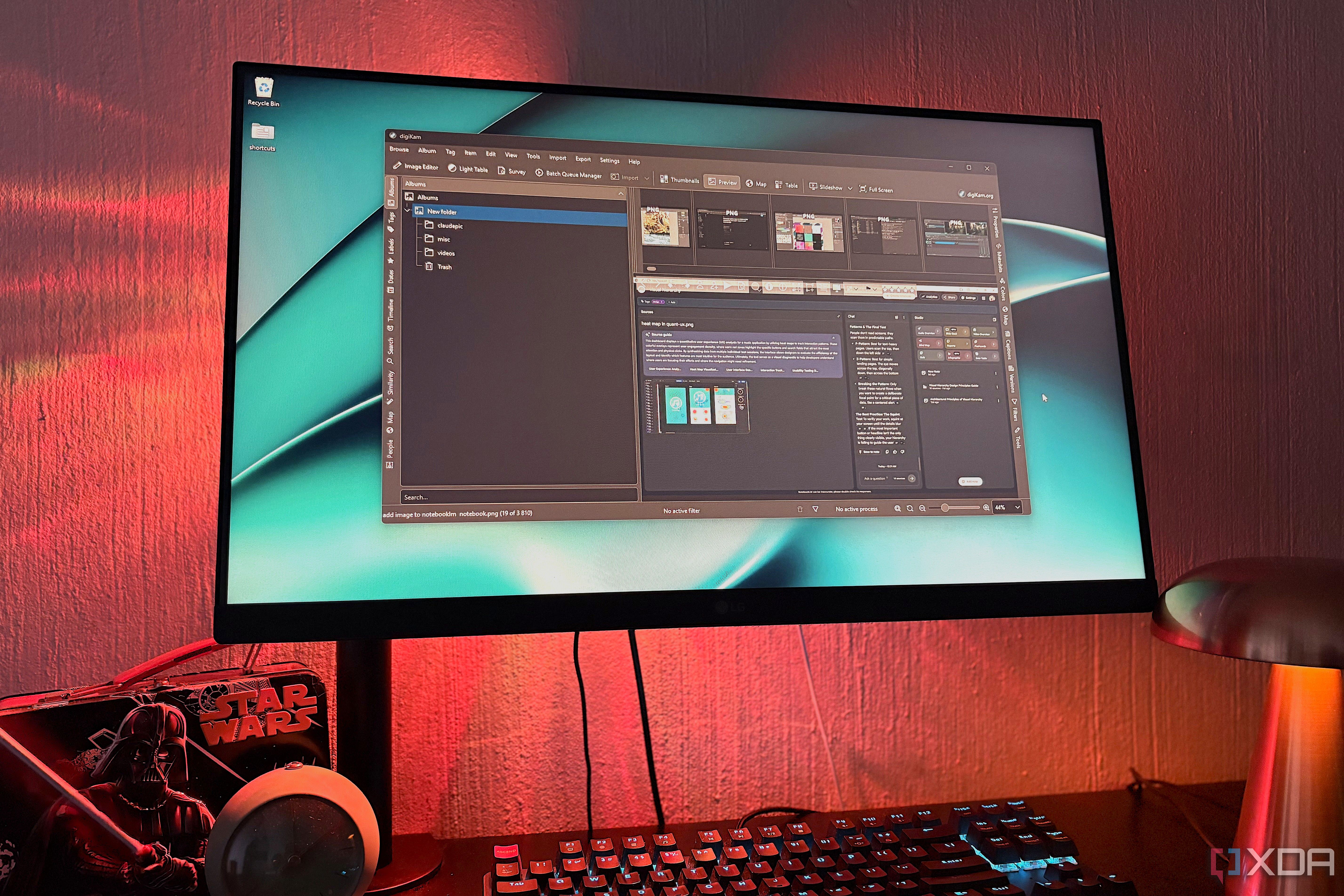
For Google Photos alternatives, options such as Immich and PhotoPrism are commonly suggested. However, DigiKam, a free open-source desktop application, was chosen for this experiment. DigiKam indexes photos from specified folders without transferring any data, offering features like face recognition, auto-tagging, duplicate finder, and a built-in editor.
While it lacks automatic phone backup capabilities, the manual process of importing photos into the app is manageable. Overall, the author acknowledges that a week is insufficient to fully transition away from Google and acknowledges that their Google account will remain active, with these alternative tools coexisting on their personal computer.
Written by urgent.news from XDA Developers's reporting — not their text. Machine-written — may contain errors; check the original before relying on it.