How Kim Jong Un’s state is taming trade outside North Korea’s general markets
Where do North Koreans buy their food and daily necessities in 2026? Most still go to the general markets that have anchored the country’s private economy for two decades. A growing share of trade, however, now happens outside their gates: in state-run grain stores, private shops, wholesale warehouses and even over the phone. North Korea’s […]
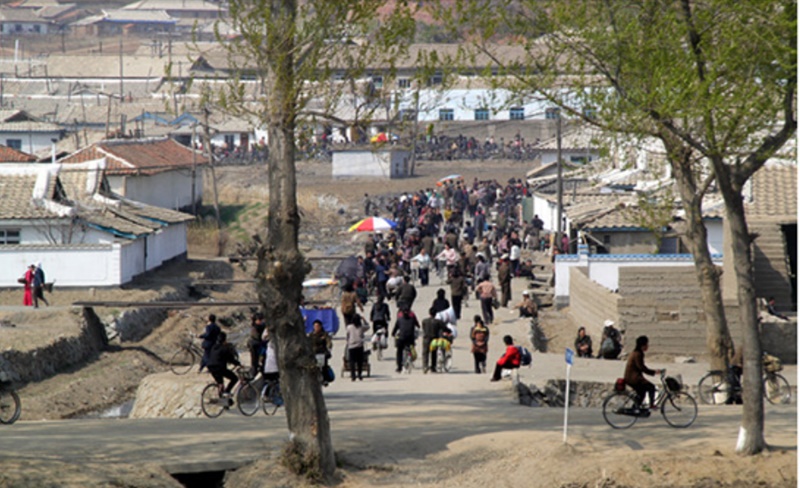
In 2026, most North Koreans continue to purchase food and daily necessities at general markets, which have long been the backbone of the country's private economy. However, a growing portion of trade is now transpiring outside these markets, with state-run grain stores, private shops, wholesale warehouses, and even over-the-phone transactions contributing to the distribution of goods.
North Korea's Socialist Commerce Law, revised in 2021, treats general markets as an "auxiliary space for socialist economic management," emphasizing the role of state-sanctioned commercial networks in regulating goods from production to consumers.
Despite the expansion of private trading spaces, general markets remain central to how North Koreans acquire goods. In Sinuiju, North Pyongan province, roughly 70% of daily necessities are bought at general markets, while about 30% are obtained from private shops. For food, 60% of shoppers rely on general markets, with 40% sourcing from state-run grain stores. A similar pattern has emerged in Pyongsong, South Pyongan province, where general markets continue to be the primary destination for daily necessities.
The evolution of trading methods in North Korea signifies a broader shift toward a wider array of trading spaces and methods. A report by Daily NK in June 2025 revealed that soaring market taxes in Sariwon, North Hwanghae province, pushed some merchants to abandon their general market stalls. Instead, these entrepreneurs turned to selling from their homes, taking phone orders, and delivering goods by bicycle.
Despite this trend, the grain trade has been gradually pulled away from private markets and placed under state control through the expansion of grain stores. Prices in these stores are about 5% to 10% lower than at the market, attracting more customers from struggling households.
Written by urgent.news from Daily NK's reporting — not their text. Machine-written — may contain errors; check the original before relying on it.