Frankreich: Premier Lecornu ordnet nach Ausschreitungen lokale Ausgangssperren an – Louvre bleibt geschlossen
Frankreichs Innenminister Nuñez räumt einen „Kontrollverlust“ ein und bietet seinen Rücktritt an. Doch Präsident Macron lehnt ab. An den Finanzmärkten sorgen die Unruhen für Nervosität.
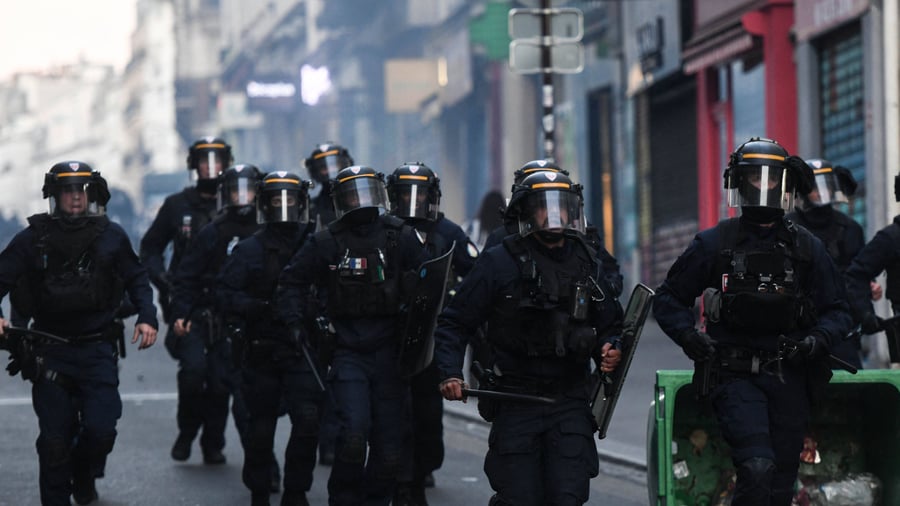
In the wake of violent riots across France over the weekend, Prime Minister Sébastien Lecornu has issued limited lockdowns in specific cities to prevent further outbreaks of disorder. On Monday, Lecornu instructed regional prefects to enforce "very limited" and "local" curfews in affected areas to stave off additional violence and looting.
Following a high-level government crisis meeting, the premier defended the police response against violent groups, stating that "no deaths occurred on Saturday despite the severe scenes of violence and extensive property damage, which is a miracle." The previous Interior Minister, Laurent Nuñez, tendered his resignation the day before, but President Emmanuel Macron declined to accept it, citing the need for continuous leadership in maintaining order under current circumstances.
Macron asked Nuñez to clarify the shortcomings in foresight and information gathering that led to the violent protests, urging the minister to introduce new internal security measures as quickly as possible to stop barricades and looting. Nuñez acknowledged a lack of "proactive action" in mobilizing law enforcement and noted an imbalance between authorities and protesters, as well as a loss of control.
Justice Minister Gerald Darmanin suggested that the riots had exposed weaknesses in the security apparatus, particularly in dealing with far-left demonstrators. In Marseille, authorities imposed a curfew from noon to 8 PM on Monday following violent protests and looting. Meanwhile, France's leading index, the CAC 40, fell by 1.4%, while the yield on 10-year French government bonds rose by 11 basis points to 4.89%, widening the risk premium against the German benchmark bond, which remained at 3.41%.
Analysts pointed out that the protests exposed the government's struggles to reduce the high fiscal deficit, especially ahead of the 2027 election. Jim Reid, an expert from Deutsche Bank, noted that the weekend's events added another layer of political risk to an already challenging fiscal situation with the upcoming election. Nationwide protests against high living costs, social inequality, public spending cuts, and inflation erupted over the weekend, with more than 2000 people arrested and over 600 officers injured.
The police used tear gas and water cannons to disperse the crowds. The Louvre, a world-renowned art museum, temporarily closed its doors due to student-led protests opposing the ongoing school strikes. French unions, including the CGT, supported the strikes while asking for the museum's closure until noon. Similar protests took place in Italy over the weekend, where demonstrators clashed with police, threw stones, and looted shops in Milan.
Italian Prime Minister Giorgia Meloni condemned the violence and called for a government meeting on Monday to discuss the situation. Italian elections are scheduled for next year.
Written by urgent.news from Handelsblatt's reporting — not their text. Machine-written — may contain errors; check the original before relying on it.