Experts call for community action, stronger regulation to safeguard Ghana’s blue economy
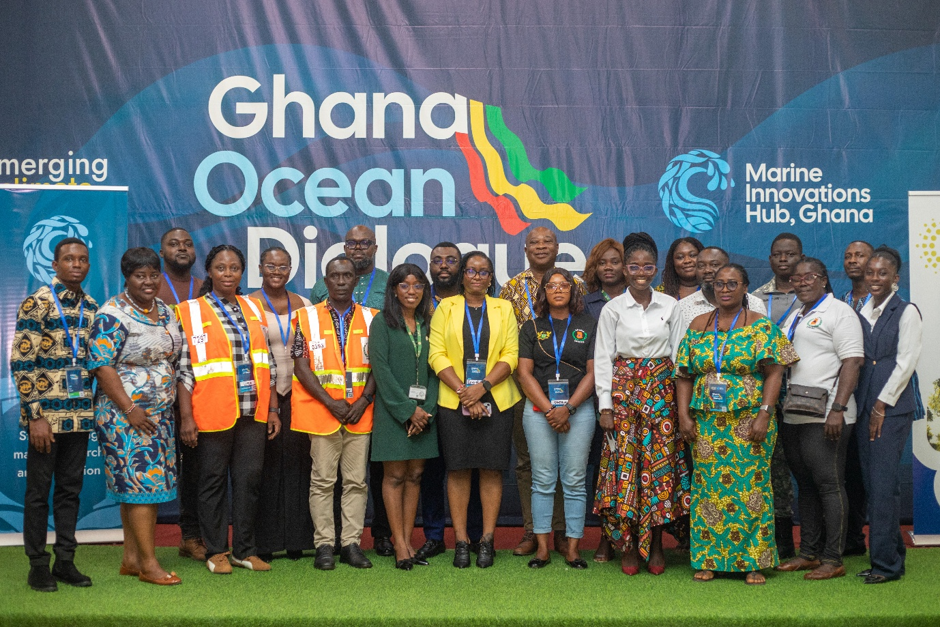
Participants also pointed to illegal small-scale mining (galamsey), which discharges heavy metals and silt into rivers that empty into the sea, as well as the use of banned chemicals such as DDT and re-labelled toxic agrochemicals in fishing. Other threats discussed included shoreline erosion and sea-level rise, which are sweeping away homes, heritage sites and landing beaches, and overfishing.
In Kumasi, a customer waits for an electronic payment system to function while at a diagnostic centre, medical images await transfer to a specialist. An engineering firm is delayed by a lack of timely design file transfers. These real-world scenarios illustrate the impact that connectivity issues have on businesses and their customers. Greater reliability is essential for these enterprises to thrive.
The National Communications Authority has taken steps to facilitate a more competitive 5G market by revoking exclusive wholesale 5G rights for Next Gen Infraco Limited. Simultaneously, this action preserves the licence and spectrum assignment of the company. This change creates opportunities for other operators to deploy 5G services.
In October, MTN Ghana secured spectrum in the 700 MHz and 3 GHz bands, with a total value of US$202 million for 15-year licences. Meanwhile, Telecel received three lots in the 2.3 GHz band. However, the award of spectrum is just the beginning; operators must still install the necessary infrastructure, acquire compatible equipment, and activate the service for customers. Reporting on these stages is crucial for businesses to plan accordingly.
The cost of 5G deployment encompasses both capital expenditure for radios, transmission infrastructure, and power systems, as well as recurring energy, maintenance, and operating costs. Customers must also factor in equipment and installation charges, subscription fees, and usage charges. These costs should be weighed against the improvements in work and earnings.
Coverage and capacity are not synonymous. Coverage refers to the availability of a connection, while capacity pertains to the network's ability to handle traffic. Lower-frequency spectrum, such as 700 MHz, can extend coverage and penetrate buildings, while wider mid-band allocations offer greater capacity, contingent on bandwidth activation, antenna configuration, interference, and user conditions.
Despite being within a coverage area, a business may still experience slow data transfers during peak demand periods. This highlights the need for accurate performance assessments.
Wireless broadband, in particular, requires robust capacity and dependable installation. Fixed wireless access can serve as an alternative when fibre installation is impractical. However, shared radio capacity with mobile users can impact performance, making it necessary to test reception and select suitable installations.
Written by urgent.news from MyJoyOnline Ghana's reporting — not their text. Machine-written — may contain errors; check the original before relying on it.
This story
This is one outlet's version. Read the fullest account.