These 19th-century selfies might just be the most important photographs you’ve never heard of
In 1898, American photographer F Holland Day starved himself, grew his hair and photographed himself as Christ on the cross.
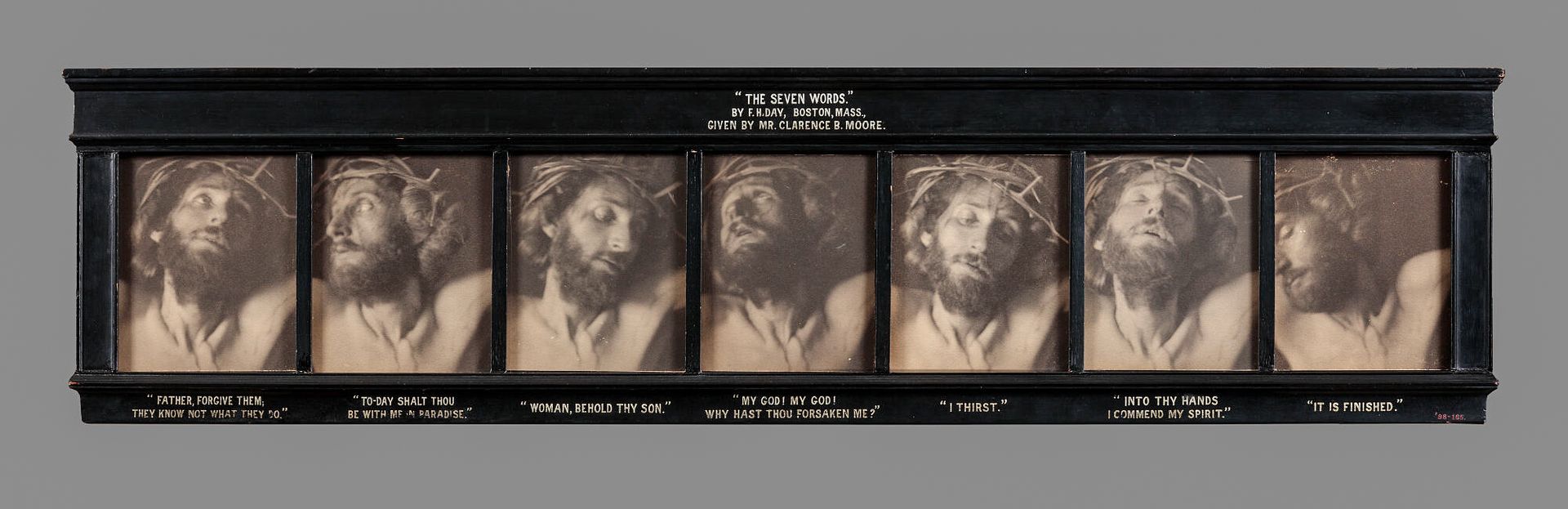
It's a common assumption that the selfie is a contemporary invention, born out of smartphones and social media. However, the practice of self-portraiture has been around since the very beginning of photography. A prime example of this is a series of photographs from 1898 created by a wealthy Bostonian photographer named F. Holland Day.
Day pointed his 10x8in glass-plate camera at himself, checked his reflection in a mirror, and captured seven close-up platinum prints. Each image depicts Day in his final moments on the cross, embodying the seven last words of Jesus. These photographs, known as "The Seven Words," faced controversy upon their debut due to the depiction of such a sacred subject. Despite this, some religious leaders found the work to be spiritually profound.
Today, only three original prints of "The Seven Words" are known to exist. One of these prints has been acquired by the Toledo Museum of Art in Ohio, its director expressing excitement over this lesser-known yet significant photograph. The Toledo Museum of Art is set to display "The Seven Words" in autumn 2027 when it reopens its reinstalled permanent collection galleries.
Written by urgent.news from Digital Camera World's reporting — not their text. Machine-written — may contain errors; check the original before relying on it.