The butterfly effect: one man’s mission to help nature and communities coexist
Hong Kong’s next phase of development should make room for both butterflies and buildings, conservationist Dr Yau Wing-kwong has said, arguing that biodiversity can be incorporated into parks, schools and neighbourhoods without holding back the city’s growth. Yau, founder of Environmental Association Limited, has spent nearly three decades promoting community-based conservation. He is a finalist…
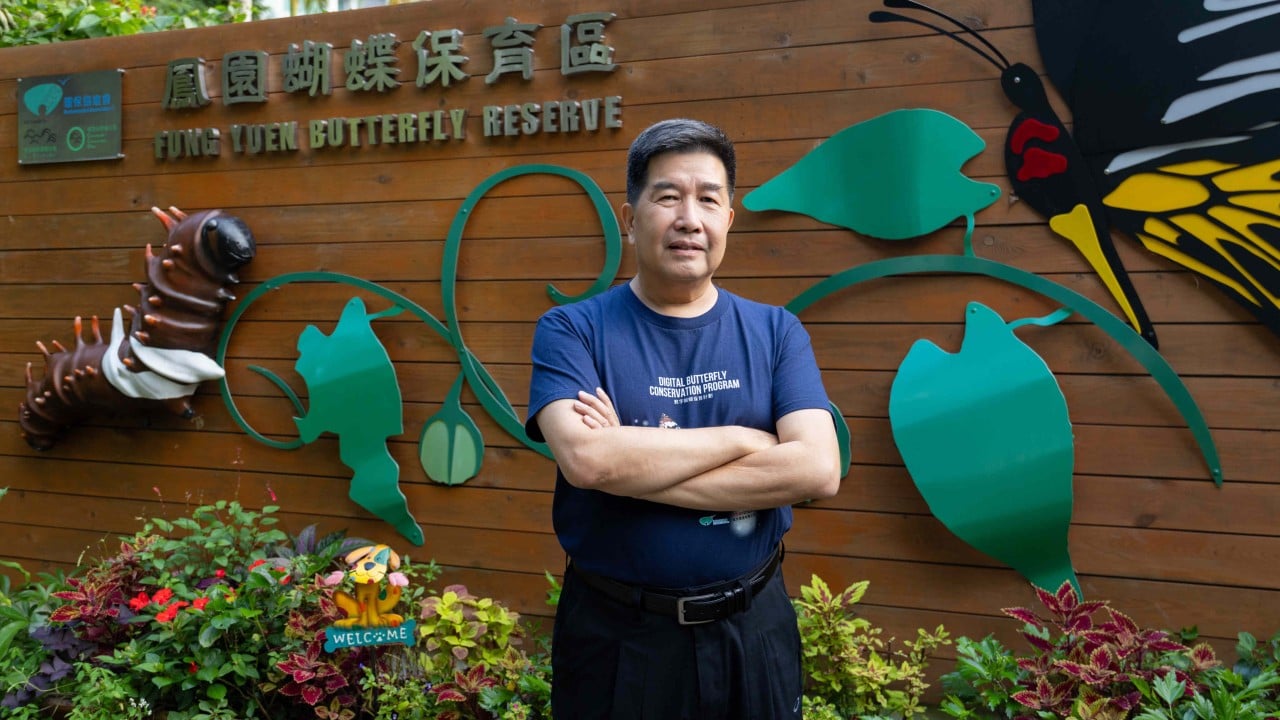
Conservationist Dr Yau Wing-kwong believes that Hong Kong's future development must incorporate both nature and urban growth. As founder of Environmental Association Limited, Dr Yau has spent nearly three decades advocating for community-based conservation. His most notable project, the Fung Yuen Butterfly Reserve in Tai Po, aims to protect butterfly habitats without hindering the city's expansion.
This reserve, established as a response to collectors and disturbances, became an early example of managing ecologically valuable private land.
In 2004, Hong Kong introduced its New Nature Conservation Policy, and Fung Yuen was among the first sites selected for a pilot management agreement scheme. This allowed a non-profit organisation to collaborate with private landowners, with government funding, to manage the land for conservation. Dr Yau emphasized that this model was almost volunteer-driven, with many volunteers and friends contributing to its success.
Community participation has always been crucial to Fung Yuen's operations. Volunteers assist in planting, weeding, and path maintenance, while university students serve as interns. Retired teachers, civil servants, and others also contribute to various roles. Dr Yau noted that volunteers occasionally receive an unexpected reward, such as observing a butterfly flying past or landing on their shoulder, which they interpret as a thank you from the creature.
The reserve conducts monthly ecology surveys, with about 90% of Hong Kong's butterfly species recorded within its boundaries. Dr Yau mentioned the discovery of seven new butterfly species not previously identified in the city, some associated with warmer areas further south. These sightings may provide insights into climate change, though longer-term data is necessary for definitive conclusions.
Conservation efforts can start with simple household habits. For over a decade, Dr Yau's association has collected discarded citrus trees after Lunar New Year, as their leaves serve as food for butterflies. Surplus trees are distributed to farmers, preventing landfill and giving them a new purpose. Dr Yau believes this approach can be replicated as Hong Kong develops, advocating for new parks and open spaces to incorporate wildlife habitats instead of ornamental greenery alone.
Dr Yau's vision extends beyond Fung Yuen, aiming to connect habitats through butterfly migration routes. After learning of a butterfly marked in Japan being found in Hong Kong after a 2,500km journey, he proposed the "point, line and surface" concept, which involves creating individual butterfly gardens as points, connecting them with flight routes, and eventually forming a citywide network.
Schools in Hong Kong have joined the Butterfly Garden Certification Programme, and similar initiatives have been established in Shenzhen, Macau, and other Asian countries.
Written by urgent.news from South China Morning Post's reporting — not their text. Machine-written — may contain errors; check the original before relying on it.