Preiskampf am chinesischen Automobilmarkt: Mit welchen Tricks die Regierung die Hersteller zwingen will, die Produktion zu drosseln
Chinas Autokonzerne bringen in immer kürzerer Zeit neue Modelle auf den Markt. Nun wollen die Behörden die Zulassung von Gimmicks wie versenkbaren Türgriffen, Sprachsteuerung und faltbaren Bildschirmen verschärfen – und damit die Produktzyklen verlängern.
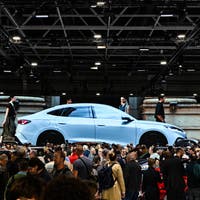
China's automobile market is witnessing a fierce pricing war, with the government seeking to compel manufacturers to slow down production and extend product cycles. The Chinese government has been intervening to prevent the devastating price competition among auto makers, including taking over financially unviable companies and pressuring local administrations to close down loss-making firms.
Despite these efforts, more than 100 manufacturers are still flooding the market with 282 new or revised electric and hybrid models in the first six months of the current year, averaging 11 per week. The competition for market share is ruthless, with entry-level cars now available for less than 5000 Swiss francs. Chinese consumers are becoming increasingly unable to afford cars, leading to a 22% year-on-year decline in passenger car sales during the first nine months of the current year, with September alone seeing a 28% drop.
Manufacturers continue to produce vehicles despite the market challenges. Beijing is now implementing stricter regulations to force car companies to release fewer new models, closely monitoring the equipment and reducing the product cycles. The government is particularly targeting features popular among Chinese customers, such as retractable door handles, voice control systems for window operation, and foldable LCD displays for watching movies.
The new rules require new electric and hybrid models to pass 30,000 test kilometers before receiving approval, a requirement that has only been met by half of the current models. Earlier this year, three students died in a Xiaomi sports car when the vehicle's battery caught fire, and the automatic locking system failed, preventing passengers from exiting the burning vehicle.
The Chinese government claims that these new measures are solely aimed at enhancing vehicle safety and protecting consumers, but critics argue that the government has historically shown little concern for consumer protection.
Written by urgent.news from NZZ Wirtschaft's reporting — not their text. Machine-written — may contain errors; check the original before relying on it.