Planting hope along Selangor's fragile coast
MANGROVES do more than line the edges of Malaysia’s coast. Their tangled roots help hold shorelines together; their dense habitats shelter marine life and their ability to store carbon makes them an important part of the fight against climate change.
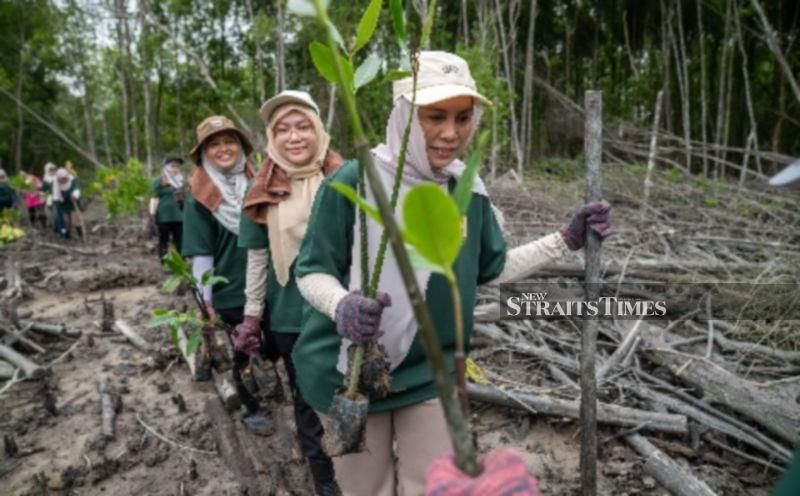
Mangroves play a vital role in protecting Malaysia's coastal areas. Their intricate root systems stabilize shorelines, serve as habitats for marine life, and contribute to the global fight against climate change by sequestering carbon. Recently, 40 employees from Hektar REIT's asset and property management companies participated in a mangrove planting project at Kuala Selangor Nature Park, guided by the Malaysian Nature Society (MNS).
This effort aimed to rehabilitate degraded areas and contribute to the broader conservation of a fragile ecosystem essential to coastal biodiversity and marine life. Mangroves are valuable for reducing coastal erosion, providing breeding grounds for fish and marine species, and supporting fisheries that sustain coastal communities.
Additionally, they are highly effective carbon sinks, storing up to four times more carbon per hectare than most tropical forests. While the 200 saplings planted represent a small part of the larger conservation effort, their survival and growth will determine their long-term environmental impact. MNS will monitor and care for the trees to ensure the planting translates into lasting benefits.
Zainal Iskandar, executive director of Hektar Asset Management, emphasized the importance of turning sustainability commitments into practical action. The initiative aligns with three United Nations Sustainable Development Goals: Climate Action, Life Below Water, and Life on Land, highlighting the interconnectedness of climate resilience, marine health, and biodiversity conservation.
For Hektar REIT, the activity is part of its environmental, social, and governance agenda, while the park focuses on ensuring the young mangroves take root and contribute to a healthier ecosystem.
Written by urgent.news from New Straits Times's reporting — not their text. Machine-written — may contain errors; check the original before relying on it.