Phantom-Verträge und falsche Unterschriften: Ein Milliardenskandal erfasst die Rohstoffbranche
Schweizer Handelshäuser und Finanzinstitute sind von einem mutmasslich globalen Betrugsfall betroffen. Ein Bankangestellter in Singapur schöpfte Verdacht und ging damit zur Polizei.
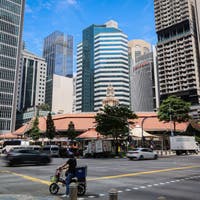
A vast fraud scandal has engulfed the global commodities industry, involving Swiss trading houses and financial institutions. A bank employee in Singapore, suspecting foul play, reported his findings to the police. Amidst the glass skyscrapers of Singapore's business district stands a historic 19th century market hall, which houses the offices of Radiant World, a leading player in the sector.
Near Radiant's premises are the offices of Eisenerzhändler Radiant World, a company once considered one of the world's largest in the industry. However, little is known about its founder, Pinkesh Nahar, who has been accused of the fraud and denies the allegations. Radiant and Nahar both claim innocence, with court documents mentioning fictitious invoices totaling up to one billion dollars.
According to a lawyer representing one of the plaintiffs, this may be the largest fraud scandal in the commodities industry since the collapse of the American energy company Enron in 2001.
Located in Switzerland, Radiant had a branch in Geneva's prestigious Rue du Rhône, and just a short walk away is the headquarters of another major business partner, the trading house Vitol. Despite this, Radiant's connections in Switzerland are extensive, involving firms like Glencore in Zug and several Swiss financial houses. Court records also reference the coordinates of the Zurich Cantonal Bank on a document for a $18 million wire transfer in May.
The case now involves courts worldwide, with proceedings ongoing in London, Singapore, and Geneva. Local Swiss commodity giant Trafigura faced a similar fate, losing several hundred million dollars in nickel-related scams. Similarly, Radiant is accused of falsifying transaction documents as collateral for funding. These practices, enabled by personal connections and reliance on paper-based documentation, make the industry vulnerable to fraud.
Indians Pinkesh Nahar founded Radiant, capitalizing on the insatiable demand for resources from China, the world's largest importer of iron ore. Iron ore is transported thousands of kilometers from mining sites in Australia to processing facilities, before being transformed into steel and used in Chinese construction or residential projects.
Funding for these transactions is facilitated through bank loans and intermediaries like Radiant. In March, an employee at the Italian bank Intesa Sanpaolo in Singapore stumbled upon falsified trading records when investigating transactions with Radiant for Chinese delivery of iron ore. In May, Deutsche Bank detected discrepancies between Radiant's documents and those of Vitol and Glencore.
On August 4th, Vitol confirmed that three contracts worth $48.6 million had not been signed by their alleged signatory, Pinkesh Nahar. Radiant is alleged to have presented "fake and/or manipulated invoices, contracts, courier notes, emails, and purchase confirmations" to secure nearly $114 million in funding, according to Deutsche Bank's legal documents.
Glencore also played a role in the investigation, with a Mizuho banker questioning the Swiss company over multiple transaction documents in early August. On August 11th, Glencore confirmed that no records of their transactions matched those provided by Radiant's internal system, which includes details like date, shipping name, and amount.
In total, more than one billion dollars in claims have been made against Radiant, Glencore, Intesa Sanpaolo, and Deutsche Bank. Following the indications of fraudulent behavior by the Radiant management, Judge Kristy Tan issued a compulsory liquidation order for Radiant in Singapore.
Written by urgent.news from NZZ Wirtschaft's reporting — not their text. Machine-written — may contain errors; check the original before relying on it.