Peering through the heart of a dying star, photographer Kfir Simon found a host of distant galaxies hiding in plain sight
The Helix Nebula is 650 light years away, but this shot reveals galaxies far beyond even that
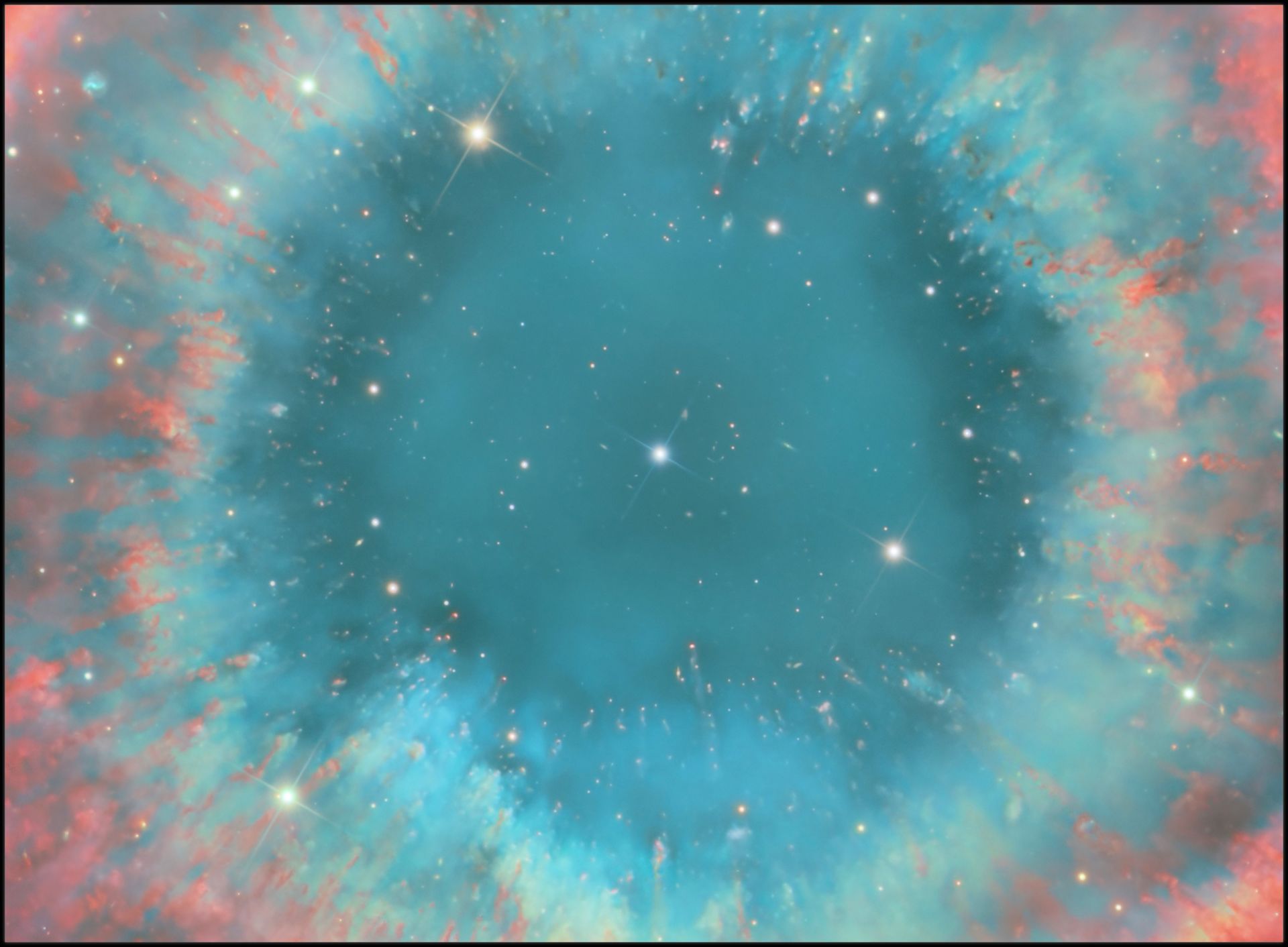
In a stunning image named runner-up in the Stars and Nebulae category of the ZWO Astronomy Photographer of the Year 2026, Israeli astrophotographer Kfir Simon peered through the heart of a dying star and discovered a multitude of distant galaxies hiding in plain sight. The photograph, titled "Beyond the Wormhole," showcases the center of the Helix Nebula (NGC 7293), located around 650 light years away in the constellation Aquarius.
The bright star in the center is a white dwarf, the remnants of a star that shed its outer layers thousands of years ago and formed the nebula.
Simon explains that this image reveals the galaxies situated many millions of light years beyond the nebula, seemingly seen through a wormhole. He was surprised by the sheer number of galaxies hidden within the nebula. The captivating image was captured in June 2025 at Tivoli Southern Sky Guest Farm near Windhoek, Namibia, which is renowned for having one of the least light-polluted and darkest night skies on Earth. The artificial light pollution increases natural sky brightness by only about 2%.
To capture the scene, Simon used a Moravian Instruments C3 Pro camera, equipped with a 61MP, full-frame Sony IMX455 sensor. The telescope employed was an ASA 600 telescope, featuring a 600mm (24 inches) main mirror with a 4,200mm focal length, enabling extraordinary reach. Each pixel in the image records a patch of sky as wide as a penny seen from 23km away, making it possible for galaxies just a few pixels across to be visible.
By cropping the image, Simon transformed the nebula from a foreground subject into a frame for the galaxies. The gas in the nebula appears like the walls of a tunnel, with the white dwarf at its center serving as a beacon, drawing the eye through and out into the vast universe. The photograph, which occupies a patch of sky roughly the width of the full Moon, highlights the Helix Nebula as one of the largest nebulae in our sky.
The ZWO Astronomy Photographer of the Year competition currently features Simon's work and other shortlisted images at the National Maritime Museum in Greenwich.
Written by urgent.news from Digital Camera World's reporting — not their text. Machine-written — may contain errors; check the original before relying on it.