Pakistan has enough energy supplies to last through November, planning for winter spike: Aurangzeb
Finance Minister Muhammad Aurangzeb on Saturday told AFP that Pakistan had so far withstood the shock from skyrocketing energy prices due to the US-Israeli war on Iran , but that attacks on infrastructure in Saudi Arabia and other Gulf countries were “worrying” for the country’s longer-term economic outlook. In an interview on the sidelines of the International Monetary Fund (IMF)-World Bank…
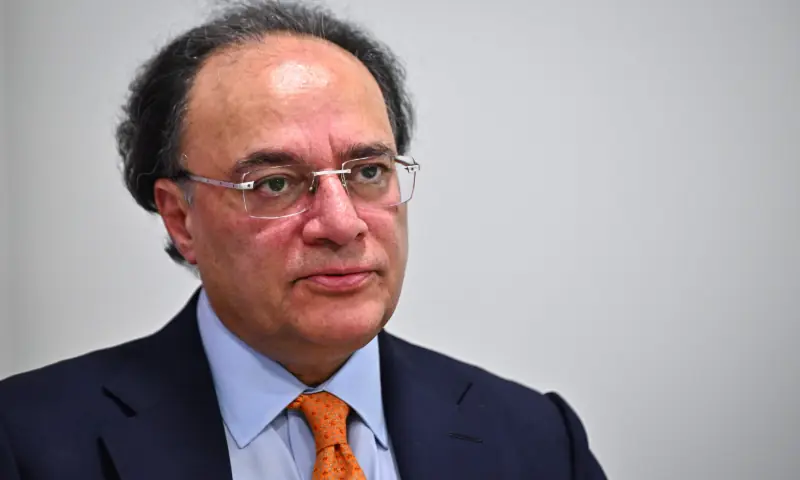
Finance Minister Muhammad Aurangzeb stated that Pakistan currently possesses sufficient energy supplies to endure until November, despite the recent surge in energy costs triggered by the conflict between the US and Israel. However, he expressed concerns over the impact of attacks on energy infrastructure in Saudi Arabia and other Gulf nations, which he deemed "worrying" for the country's long-term economic outlook.
During an interview at the International Monetary Fund (IMF)-World Bank Annual Meetings in Bangkok, Aurangzeb revealed that Pakistan had procured ample energy supplies for the months ahead, but was now focusing on preparations for the winter season, when household energy demands often peak. He assured that the nation had managed to avoid energy shortages, long gas station queues, and potential social unrest.
Aurangzeb added that unless the government deemed it absolutely necessary, they would refrain from procuring spot cargoes of liquefied natural gas (LNG), which tend to be significantly more expensive than previously contracted shipments. The escalation of conflict in Iran has led to a rise in global energy prices, as Tehran retaliates against Western allies in the region, thereby disrupting oil and gas supplies.
Additionally, the ongoing civil war in Yemen has resulted in repeated attacks on Saudi infrastructure, including energy facilities and airports, by the Houthi rebels. Aurangzeb warned that damage to these energy facilities could hinder the country's return to economic stability, as the recovery process would be prolonged if the infrastructure continues to be targeted.
Pakistan has a history of frequent interactions with the IMF, the lender of last resort for countries facing financial crises. Currently, it is in its 25th program with the Fund, with 11 of these being outright bailouts, since obtaining independence in 1947. The IMF has urged all economies to implement fiscal consolidation measures to prevent potential crises, given the high levels of global debt stocks.
Aurangzeb noted that Pakistan has been following a path of fiscal consolidation for some time, resulting in a significant increase in tax revenues. He also mentioned the government's efforts to combat tax evasion by private businesses, which accounted for billions of dollars annually. Despite facing resistance from various industry and vested interests, the government has continued its reform agenda.
Aurangzeb is currently representing Pakistan at the IMF and engaging in high-level discussions with international financial institutions, finance ministers, policymakers, and investors. He recently met World Bank Group President Ajay Banga at a dinner hosted by the Thai prime minister during the annual meetings, providing an opportunity for informal interactions alongside formal engagements.
Pakistan remains under an $7 billion Extended Fund Facility (EFF) and a $1.4 billion Resilience and Sustainability Facility (RSF) agreement with the IMF, which qualified the country to draw approximately $1.2 billion from the Fund's resources.
Written by urgent.news from Dawn's reporting — not their text. Machine-written — may contain errors; check the original before relying on it.