Expert says bus model involved in deadly Calgary crash considered ‘extremely safe’
A chain-reaction crash happened when a transit bus hit several vehicles before rear-ending a parked bus, igniting an explosion that left three dead and more than a dozen injured.
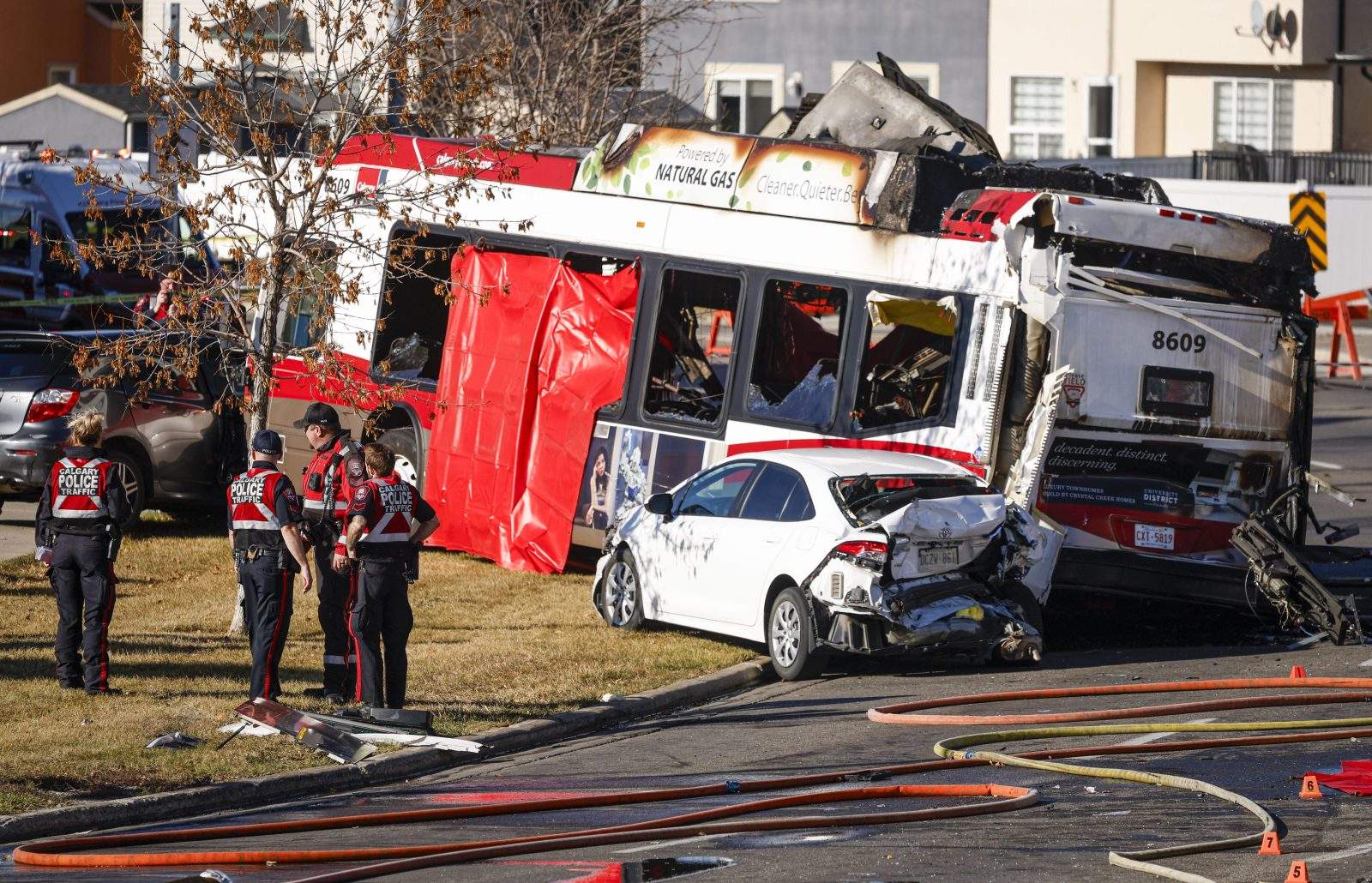
An expert on low-carbon transportation in Canada asserts that the approximately 1,000 compressed natural gas (CNG) buses operating nationwide remain "extremely safe" despite a recent fatal crash in Calgary. The incident, which occurred on Thursday and resulted in the deaths of three people and over a dozen injuries, involved a chain-reaction crash where a CNG-powered bus collided with several vehicles before rear-ending a stationary bus, igniting an explosion.
Josipa Petrunic, president and CEO of the Canadian Urban Transit Research and Innovation Consortium (CUTRIC), emphasizes that CNG buses are recognized as a highly safe technology. She urges a thorough investigation to uncover what led to this particular event. CUTRIC, a non-profit organization focused on low-carbon transit research and planning, states there are currently 958 CNG-powered buses in operation across Ontario, Alberta, and British Columbia.
Several safety mechanisms, including advanced tools and technologies to manage leakage and reduce fire risks, are incorporated into these buses. Their tanks are designed to withstand significant impacts. However, according to Petrunic, the most dangerous aspect is often the absence of seatbelts in buses, a common issue across public transportation.
Nova Bus, the manufacturer of the rear-ended bus in the Calgary crash, confirmed the ownership and stated that the matter is "premature" to speculate on the cause pending a comprehensive investigation. The company, in cooperation with Calgary Transit and relevant authorities, is committed to ensuring safety remains their top priority.
Calgary Transit procures its buses from manufacturers requiring them to pass the Altoona testing, a rigorous certification process evaluating a new bus model's durability and reliability before it enters their fleet. The agency operates nearly 250 CNG buses, constituting around 20% of its total fleet, with plans to add about 150 more this year to replace diesel-powered buses.
While the investigation into the crash's cause continues, Petrunic and industry leaders will examine the factors contributing to the collision, recognizing that multiple events must align for such a catastrophic outcome, emphasizing the tragic nature of such incidents in transit.
Written by urgent.news from CityNews's reporting — not their text. Machine-written — may contain errors; check the original before relying on it.
This story
This is one outlet's version. Read the fullest account.
- Bus model involved in deadly Calgary crash considered ‘extremely safe,’ expert says winnipegfreepress.com
- Expert says bus model involved in deadly Calgary crash considered ‘extremely safe’ toronto.citynews.ca
- Expert says bus model involved in deadly Calgary crash considered ‘extremely safe’ globalnews.ca