Energía en tiempos de guerra
Blindar el suministro frente a ataques físicos y digitales exige sustituir las defensas aisladas por una protección integrada y escalonada
The current era teaches a crucial lesson: issues once thought overcome by humanity remain ever-present. Conflicts in Europe and the Middle East serve as stark evidence. All share a common pattern: energy and communications become top priorities from the earliest stages of conflict. Both are critical services and vital backbones for modern societies' cohesion and growth.
The pressure on strategic routes in the Persian Gulf, the volatility of supply in Ukraine, and the exposure of critical assets in these and other conflict zones have made energy security a central concern for the international community, directly impacting our economy and daily life. In this context, safeguarding energy infrastructures is no longer just a defensive matter, but a comprehensive resilience one, involving the ability to predict, withstand, and recover operations from any incident.
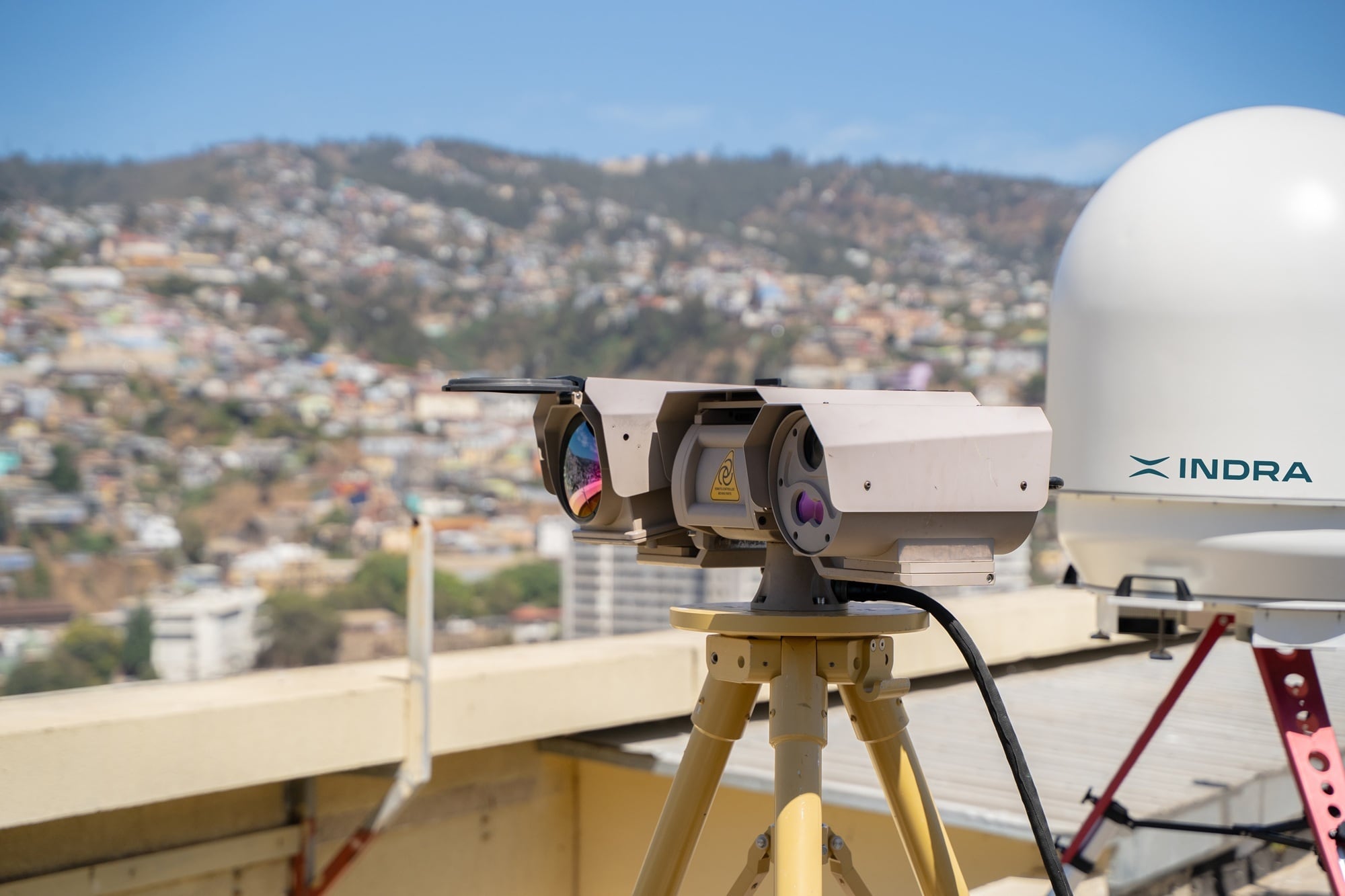
Energy resilience can be seen as a system of complementary layers, each with specific functions but interconnected. The first line of defense is physical protection against direct attacks, achieved through technologies like anti-drone systems that enable real-time detection, identification, and neutralization of aerial threats. Intelligent cameras, radar systems, computer vision, and the Internet of Things (IoT) allow for continuous surveillance of critical facilities and early anomaly detection.
In highly digitalized energy environments, reusing and extending existing capabilities becomes key. Systems initially designed for other purposes can be adapted to new security scenarios. For instance, wildlife monitoring systems or fire detection systems in power plants can be retrained using artificial intelligence to identify and manage threats like drones, optimizing investment and accelerating deployment.
Beyond physical protection, the heart of the energy system lies in operational environments (OT), where critical processes are controlled via supervisory control and data acquisition (SCADA) centers that enable real-time monitoring and management of critical facilities and infrastructure. Resilience in this second defense layer involves continuous operation capability, redundancy in control centers, and rapid recovery capacity in case of failures.
A typified example is a control center with redundant architecture (active-active in two geographic locations) capable of maintaining operations even if an installation is attacked and becomes unavailable. The third line of defense resides in applications supporting daily functioning (IT systems), essential for energy assets' management, planning, and maintenance.
Here, resilience relies on geographically distributed backup centers, duplication or tripling of systems, and agile disaster recovery plans. While less visible, these systems are critical for global service continuity. In current conflicts, physical threats are combined with cyberattacks targeting critical infrastructures. The fourth resilience layer, integrating OT and IT environments, requires continuous monitoring, early anomaly detection, and proactive risk management.
Consider a network control system attack, where real-time detection of abnormal behaviors allows isolation of the affected system and prevention of a widespread supply interruption. Finally, integrated resilience for anticipating, managing, and responding to attacks is required. The current context demands moving beyond fragmented models towards a holistic, unified approach.
Advanced technologies, particularly artificial intelligence, enable correlating information from multiple layers, predicting risks through predictive analysis or simulation, and optimizing response to incidents. Gems of digital technology, integrating sensor, operational system, and cyber security data to anticipate network failures, prioritize critical assets, and optimize incident response, represent a market trend all companies are heading towards.
Energy is an essential resource, driving social cohesion, economic growth, and geopolitical balance. In an uncertain environment, energy resilience cannot be approached from a single angle; it requires an integral approach combining physical protection, operational robustness, cyber security, and advanced digitalization. For failure in any of these aspects is not just to stop a tool, but to compromise the ability to anticipate, coordinate, and sustain a fundamental service.
Written by urgent.news from El Pais Economia's reporting — not their text. Machine-written — may contain errors; check the original before relying on it.