A Giant, Ancient, and Rare Flower Is Accidentally Discovered in Colombia
A coincidence allowed scientific knowledge and the ancestral wisdom of Indigenous peoples to come together to produce one of the most important botanical discoveries in Colombia: the discovery of a water lily (also known as a nymphaea or water lily) that is as rare as it is short-lived. It all began five years ago, when […]
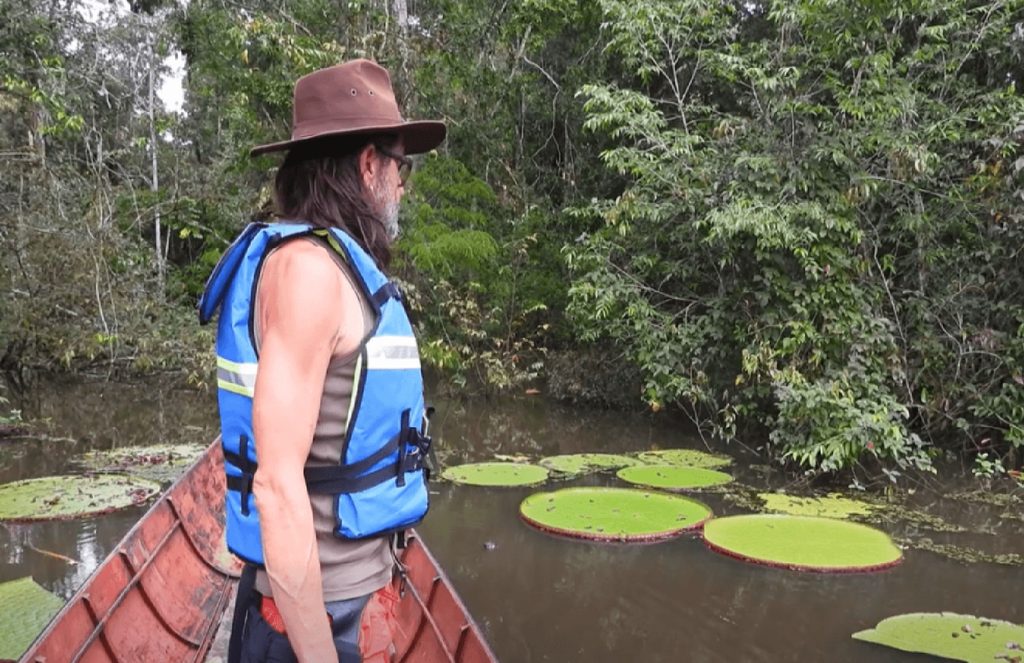
In a remarkably serendipitous discovery, an ancient and exceedingly rare water lily, dubbed Victoria colombiana, has emerged from the depths of Colombian rainforests. This botanical marvel, part of the Victoria genus which includes three other known species, was accidentally unearthed by a confluence of scientific curiosity and indigenous wisdom.
The journey began five years ago when a renowned horticulturist, Carlos Magdalena, from the Royal Botanic Gardens, Kew, stumbled upon images of an enigmatic plant on Instagram. The photographs, taken by American carnivorous plant enthusiast Jeremiah Harris, showcased what he presumed to be a Victoria amazonica. Intrigued by the absence of any recorded presence of Victorias in the Orinoquia region of Colombia, Magdalena embarked on a quest for scientific validation.
This led to a multi-layered research expedition, intertwining advanced technology with the ancestral insight of local communities. Satellite imagery facilitated the identification of Victoria plants near the Inirida River, while Magdalena’s collaboration with the Jose Celestino Mutis Botanical Garden in Bogota provided access to experts well-versed in cultivating Victoria species since the 1970s.
Integral to this discovery were the local Indigenous communities, who shared their intimate knowledge of the region. Figures such as Nilo Rodriguez, Jaime Hernandez, and Gustavo Melo, who operate a nature tourism company, facilitated the researchers' journey along the Inirida and Guaviare rivers. Initially, the team encountered only two flowering specimens, insufficient for the botanical description.
However, the decisive moment arrived when, just before dawn, the team located five additional plants, including a flowering one. This culminated in the documentation of a total of seven Victoria colombiana plants across two lakes. The plant gains its name from its colossal leaves, which can stretch up to three meters in diameter, embodying Brazil’s most significant aquatic flora.
With only an estimated 30 to 50 individuals remaining in the wild, the rarity of Victoria colombiana underscores the urgent need for conservation. The researchers are actively pursuing an official assessment by the International Union for Conservation of Nature (IUCN) Red List, aiming to secure its status. Proposed conservation strategies include establishing a naturalized population in a more accessible lake within Indigenous territory, a move poised to bolster both the species' protection and promote community-based ecotourism.
Magdalena’s reflections encapsulate the essence of this extraordinary discovery: “This is one of those extraordinary stories in which Indigenous and horticultural knowledge (with the help of social media and technology) came together to reveal a truly exceptional botanical achievement.”
Written by urgent.news from Colombia One's reporting — not their text. Machine-written — may contain errors; check the original before relying on it.