5 Years Later, One Game’s Blood Sacrifice Mechanic Still Haunts Me
Five years on, Inscryption’s blood sacrifice mechanic, from one squirrel to a pair of pliers, still shows how little convincing it takes.
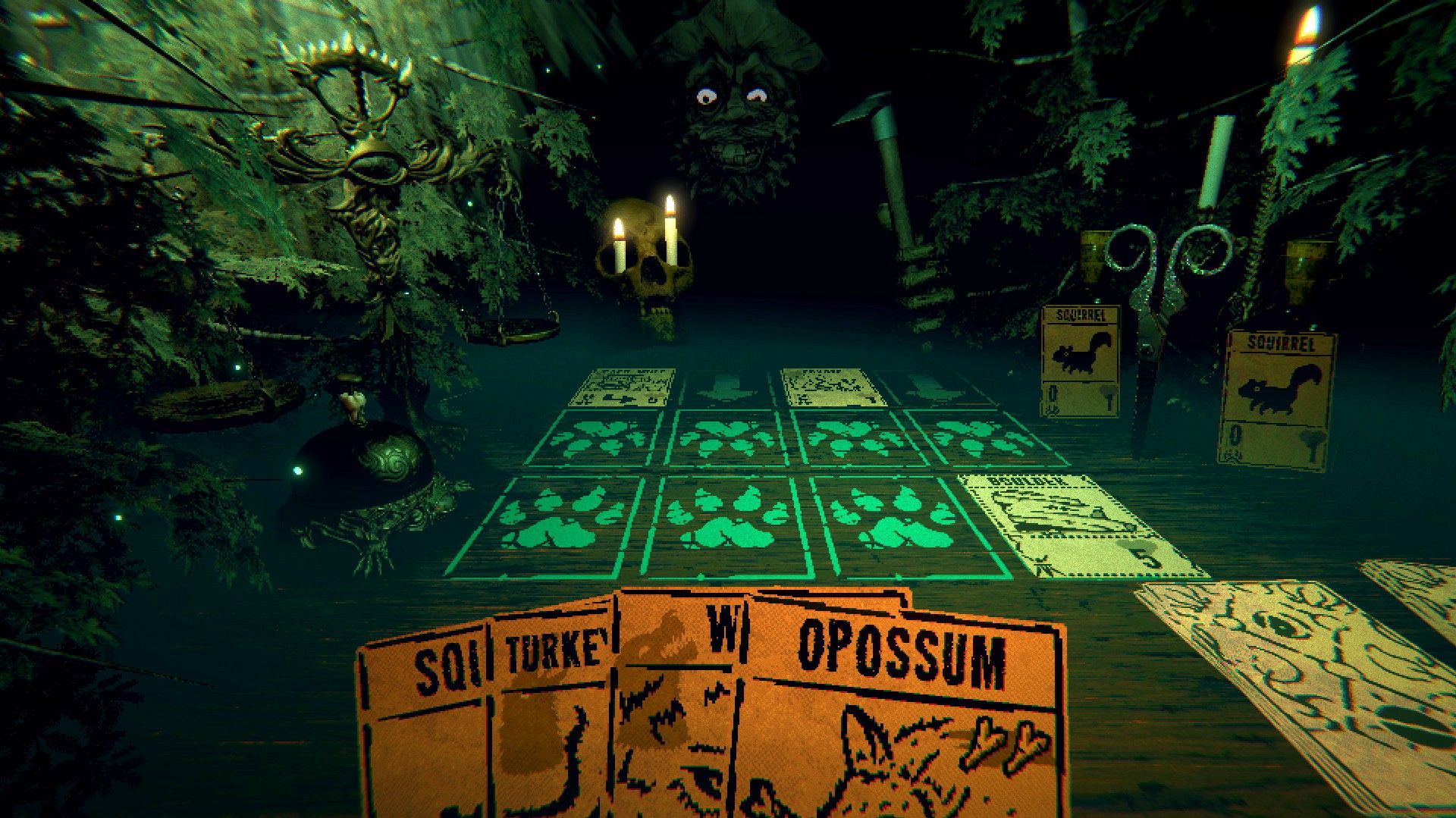
Five years have passed since the release of Inscryption, a haunting card game that continues to leave a lasting impression on players. In this chilling horror experience, the player finds themselves seated across a table from a shadowy host, who presents them with a card and demands a blood sacrifice, specifically a squirrel. The game's unique concept immediately sets it apart from traditional card games, as the stakes are no longer limited to money or bragging rights. Instead, players must sacrifice their own well-being to progress through the game.
The game begins with simple gameplay, as players battle against the forest-dwelling hermit, Leshy, using a series of creature cards. Each card has an attack and health stat, and players must strategically place their cards on the board while attempting to ring the bell and deal damage to Leshy's creatures via an ominous scale. The cards are acquired by sacrificing creatures from a separate squirrel deck, which quickly become a nuisance as players play through the game.
The escalating difficulty gradually introduces more extreme sacrifices, such as teeth, knives, and even eyeballs. Players soon realize that the game's escalating demands are not just limited to in-game objects but also extend to their own bodies. Inscryption masterfully demonstrates how easily players can be coerced into making seemingly unreasonable sacrifices, as the lines between game and reality blur.
As players progress, the game transforms into a pixel-art adventure and even a factory setting, with increasingly unhinged demands placed upon the player. Despite the game's unnerving nature, it remains a captivating and immersive experience that leaves a lasting impact on players, a testament to its innovative gameplay and design.
Written by urgent.news from Polygon's reporting — not their text. Machine-written — may contain errors; check the original before relying on it.