Women see five or six doctors to figure out menopause symptoms. A top Novartis exec says AI could finally connect the dots
At Fortune’s MPW Summit, top health care leaders said midlife care is too fragmented, and AI could help women put the pieces together.
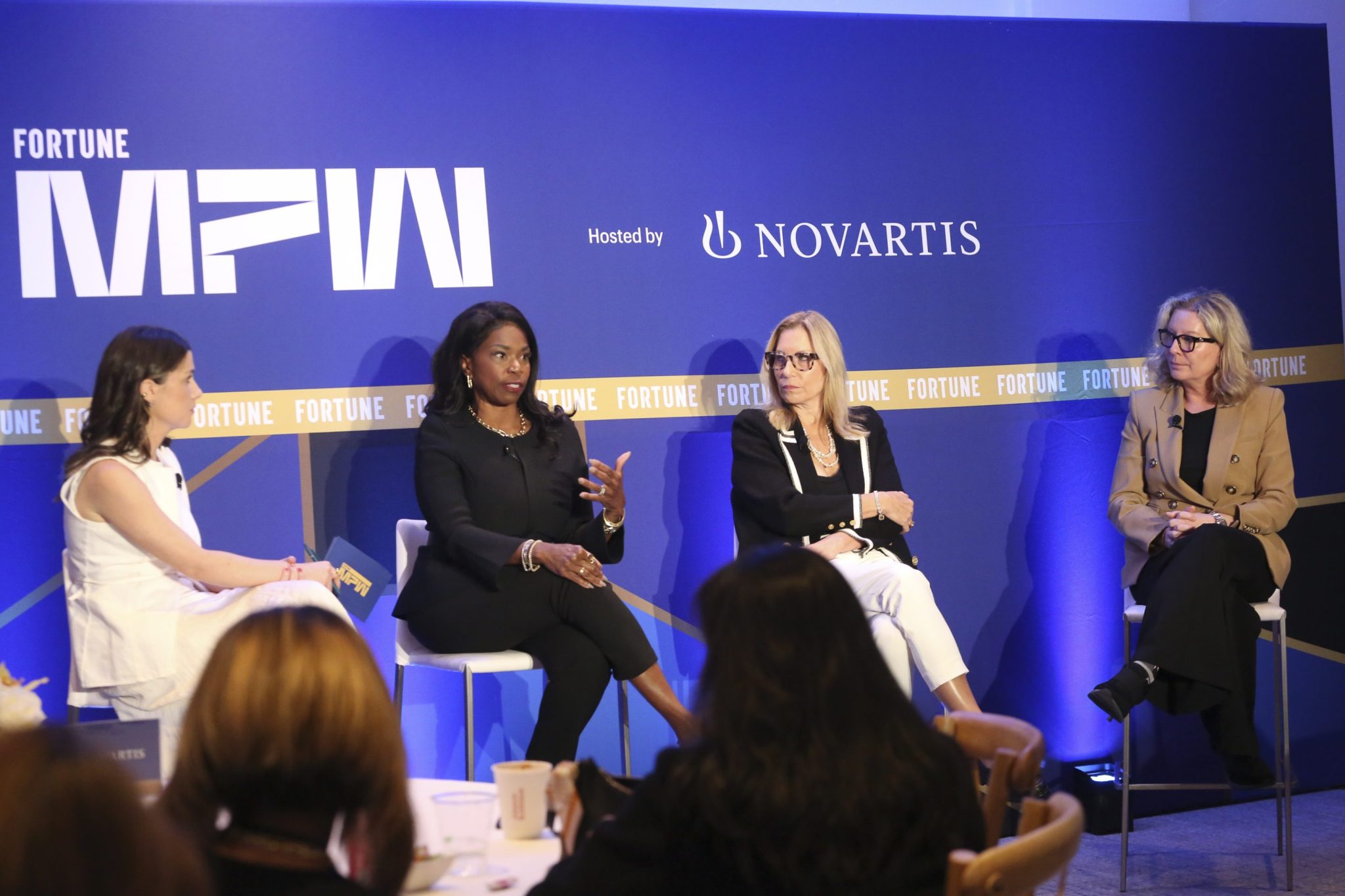
For many women, menopause symptoms like sleep problems, joint stiffness, and hot flashes don't prompt just one doctor's visit. Instead, they often consult five or six doctors to unravel the various issues affecting their bodies, according to Paula Schneider, CEO of the Institute Advancing Women's Health. She lamented that this fragmented approach lacks holistic care.
Reshema Kemps-Polanco, executive vice president and chief commercial officer of pharmaceuticals company Novartis US, sees artificial intelligence (AI) as a potential solution to connect these disjointed dots. "One of the greatest things I think that AI can do in healthcare is to help connect the dots and help connect the dots sooner," she said at a panel sponsored by Novartis.
AI could enable better, faster, and more cost-effective solutions by integrating care across various sectors, including government, AI companies, and the industry, she added. However, the issue extends beyond menopause, Kemps-Polanco pointed out. Many women face a series of symptoms requiring them to see different doctors, with each condition treated in isolation.
Autoimmune conditions, for instance, can affect up to 80% of women in some cases, leading to significant delays in diagnosis. Novartis is working on autoimmune conditions like Sjögren's disease, where patients typically wait four years before receiving a diagnosis. Kemps-Polanco highlighted the potential of AI to bridge these gaps.
A patient might see multiple specialists and find it challenging to coordinate their records, leading to missed connections. She recounted her own experience of using an AI tool in an emergency room, which prompted her to seek further diagnosis and treatment. Wendy Barnes, president and CEO of GoodRx, cautioned that while AI can be beneficial, it should complement, not replace, human clinicians.
She emphasized the importance of clinical evidence and human oversight in evaluating new health platforms.
Written by urgent.news from Fortune's reporting — not their text. Machine-written — may contain errors; check the original before relying on it.