Why running up ₹35 lakh in unpaid challans makes business sense: The perverse unit economics of India’s trucking mafia
A Gurugram truck with 242 pending challans worth ₹35.43 lakh exposes gaps in overloading enforcement. Why freight competition, accumulated penalties and cross-state enforcement challenges raise questions about whether India’s trucking rules are strong enough to deter repeat violations.
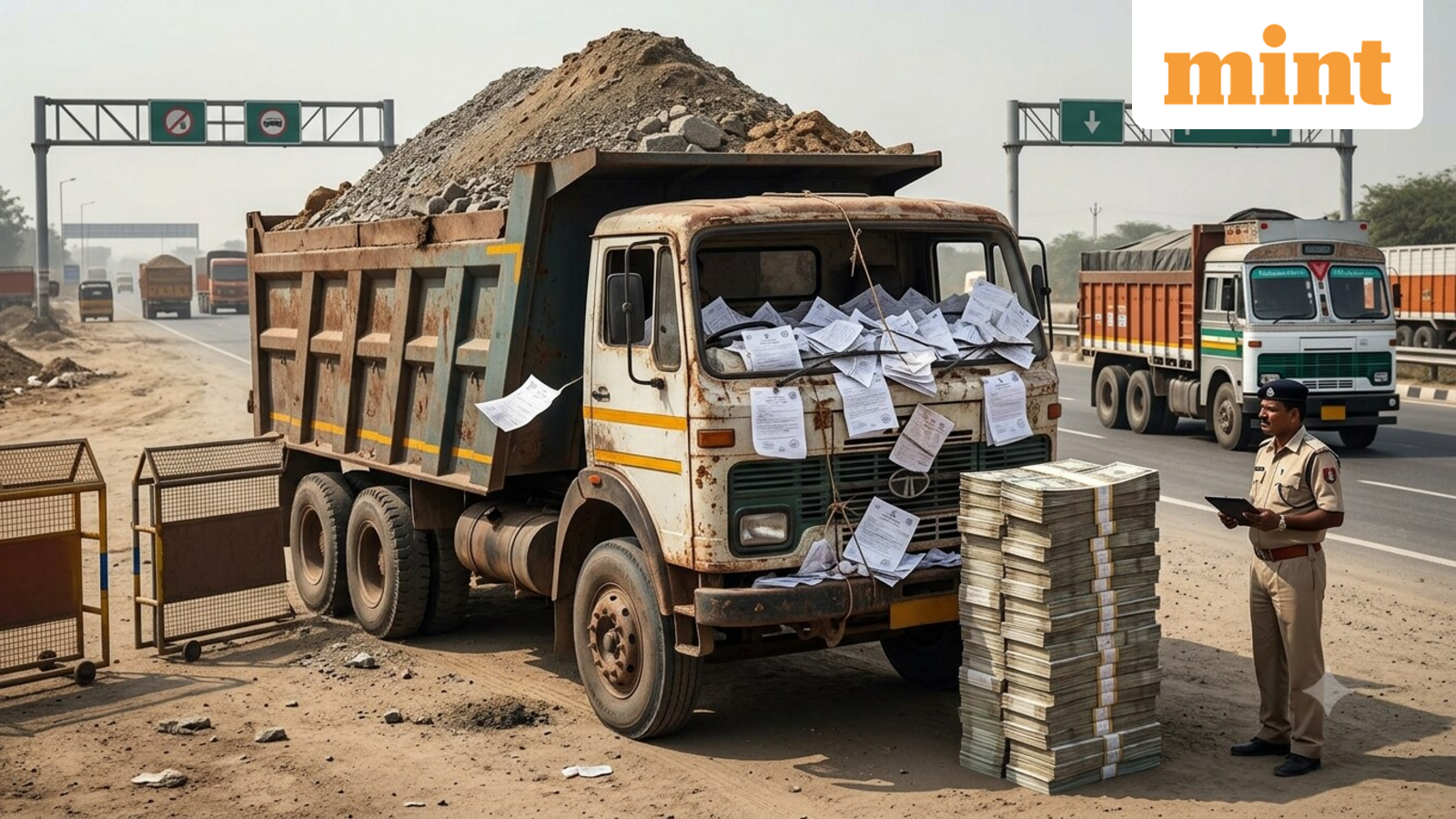
India's trucking industry grapples with enforcement issues, particularly regarding weight limits. A truck seized in Gurugram with ₹35.43 lakh in unpaid challans demonstrates how penalties can accumulate over time. The truck had 242 pending challans over three years, most of which were related to overloading. This case prompts a question: are fines strong enough to deter repeat violations when they can surpass a truck's value?
If a used 10-wheel dumper is worth ₹8–12 lakh, a ₹35.43 lakh penalty burden is roughly three to four times its value. This financial mismatch between vehicle value and accumulated penalties, rather than deliberate abandonment, raises concerns about the effectiveness of enforcement. The Ministry of Road Transport and Highways' study on the economics of the trucking industry highlights overloading as a persistent problem and identifies shortcomings in penalty implementation.
Intense competition in the freight market pressures operators to offer low prices, leading some to adopt illegal practices like overloading. While overloaded trips may generate higher freight margins, evidence is lacking. The Gurugram case also reveals gaps in enforcement, as unpaid challans across four states remain unpaid, and enforcement mechanisms are questioned.
The government's 2026 revised rules on National Highway user fees impose stricter penalties for overloading, but their effectiveness hinges on consistent enforcement and recovery. The Gurugram case underscores the need for timely enforcement and recovery of unpaid challans to deter violations and ensure the viability of the trucking industry.
Written by urgent.news from Live Mint's reporting — not their text. Machine-written — may contain errors; check the original before relying on it.