The Leap Second Is No More
The metric might not mean much to laypeople, but leap seconds have been a source of contention in the timekeeping community for years. Now, they’re dead.
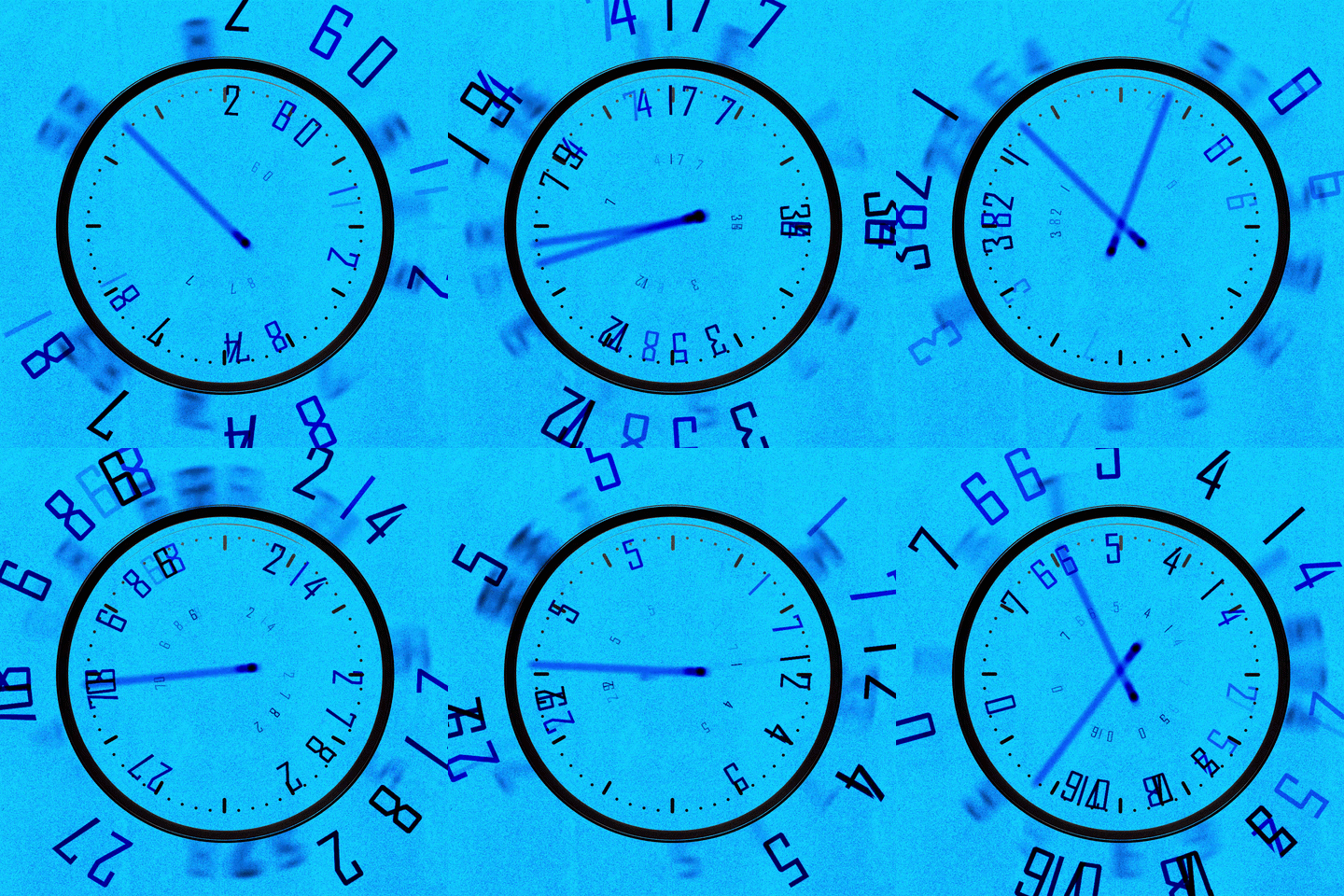
The International Bureau of Weights and Measurements (BIPM) has officially ended the controversial practice of adding leap seconds to Coordinated Universal Time (UTC). This change, announced on Thursday, will come into effect in May 2027, after 32 leap seconds have been added since 1972. Leap seconds were introduced to align atomic time with the Earth's rotation, which has been slowing down due to factors like tidal friction and the gravitational influence of the moon.
However, the irregular intervals of leap seconds have caused numerous issues for technology reliant on UTC, forcing companies to implement workarounds or suffer system failures. The most recent leap second was added in 2016, and while it has become increasingly challenging to manage, the risk of a negative leap second—a scenario where UTC would need to be set back by a second—has led BIPM to discontinue the practice altogether.
This decision was prompted by concerns that a negative leap second may have been required as soon as 2029 due to the Earth's increasing rotational speed, potentially exacerbated by climate change. BIPM's decision to implement the change on May 20, 2027, coincides with the anniversary of the signing of the Metre Convention, marking the start of BIPM itself.
The move is expected to simplify life for technology users, as atomic time and astronomical time will no longer need to be synchronized through leap seconds. However, this does not mean that the discrepancy between these two timekeeping systems will cease; BIPM will continue to monitor the growing gap and may introduce a leap hour in the future, though this remains a distant prospect, with hundreds of thousands of leap seconds passing by then.
Written by urgent.news from Wired's reporting — not their text. Machine-written — may contain errors; check the original before relying on it.
This story
This is one outlet's version. Read the fullest account.
- The Leap Second Is No More wired.com