The House’s right to act and the political agenda of 2029
The controversy over Gibran’s credentials is no longer just about a diploma: It is a defining test of whether the national legislature still checks executive power or merely bows to it.
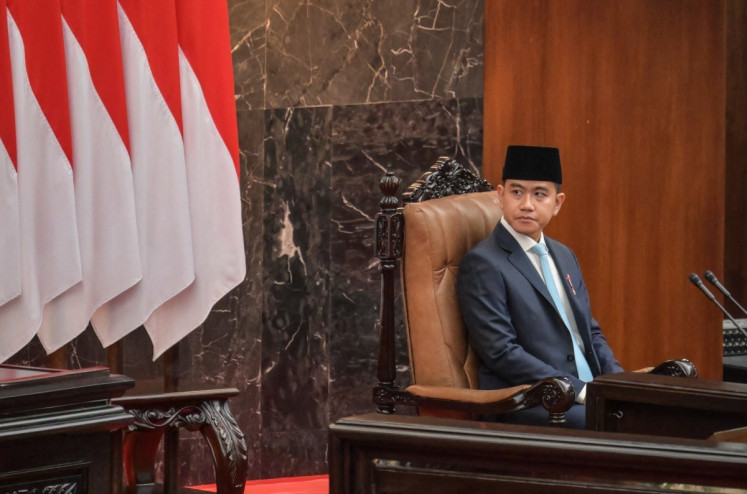
The Constitutional Court's ruling on Vice President Gibran Rakabuming Raka's educational qualifications has sparked a debate about the balance between executive power and legislative oversight in Indonesia. The court did not find that Gibran lacked a high school education, but its decision has not resolved the controversy surrounding his legitimacy.
The House of Representatives should step in to conduct a special inquiry committee (Pansus) to investigate the unresolved issues, clarify constitutional implications and ensure transparency and accountability.
The current hesitation to take action comes from the powerful coalition supporting President Prabowo Subianto. With most legislative factions belonging to the governing camp, legislative oversight has become secondary to maintaining coalition unity. This situation is reminiscent of a soccer match, where a video assistant referee (VAR) has signaled a potential violation, but no player is taking responsibility to enforce the penalty.
The court's ruling must not be misconstrued as a definitive verdict that Gibran lacks a high school education. The controversy still persists, and it falls upon the House of Representatives to take the lead. By establishing facts, delineating institutional responsibilities, and providing transparent answers to public concerns, the legislature can assert its authority and ensure that matters of genuine importance receive appropriate attention.
Written by urgent.news from The Jakarta Post's reporting — not their text. Machine-written — may contain errors; check the original before relying on it.