Scientists find 'gemstones' in atmosphere of bizarre, scorching-hot 'marshmallow' exoplanet
Using data from the James Webb Space Telescope, astronomers have unravelled some of the secrets of a bizarre, blisteringly hot exoplanet that has the consistency of marshmallow.
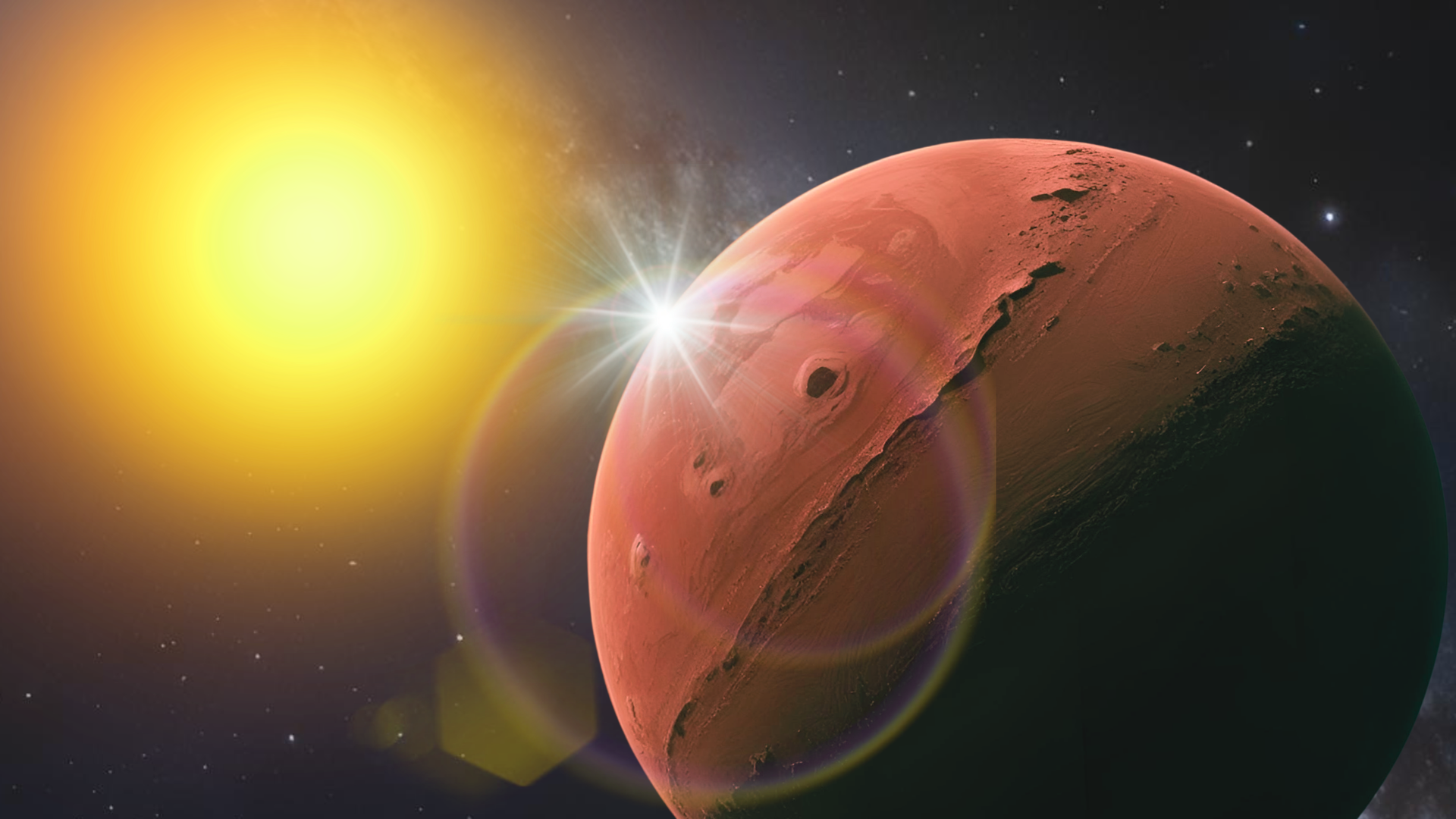
Using the James Webb Space Telescope, researchers have peered into the atmospheric mysteries of a bizarre, scorching hot world resembling a marshmallow in consistency. This extrasolar planet, known as WASP-17b, resides around 1,300 light-years away and is approximately twice as wide as Jupiter. The planet orbits its parent star in under four Earth days, causing it to become a "super-puff" exoplanet with temperatures soaring due to its proximity to the star.
A new technique called transmission strings has allowed scientists to map the contours of WASP-17b's peculiar atmosphere. They found that the atmosphere resembles a ring with prominent gems rising from it—a striking visualization of this unique planetary feature. Dr. Hannah Wakeford of the University of Bristol expressed excitement over the structured and dynamic picture the data provided, despite the extreme conditions facing the exoplanet.
Given its close proximity to its star, WASP-17b is tidally locked, with one side perpetually facing the star and the other in perpetual darkness. The dayside of the planet is constantly bombarded with stellar radiation, while the nightside remains perpetually cool. By utilizing the transmission strings technique, researchers were able to create comprehensive 3D views of the exoplanet's atmosphere, revealing how chemical composition and temperature vary between the dayside and nightside.
This innovative method outperforms traditional approaches, which only map an average light composition across the entire limb. By tracking the planet as it transits in front of its star and capturing the composition of light at the edge of its atmosphere from different angles, the team was able to gather more accurate data. This breakthrough has implications for the modeling of the atmospheres of the over 6,000 exoplanets cataloged by NASA, confirming that these celestial bodies are indeed three-dimensional objects.
Written by urgent.news from Space.com's reporting — not their text. Machine-written — may contain errors; check the original before relying on it.