SC questions ‘lofty expectations’ in criminal cases
ISLAMABAD: The Supreme Court has taken exception to a prevalent practice in criminal trials which, it said, defied normal human capability and natural perception, and observed that eyewitness accounts should reflect genuine human observation rather than physically impossible details concerning firearm incidents. “To expect mathematical precision regarding the number of firearm shots or the exact…
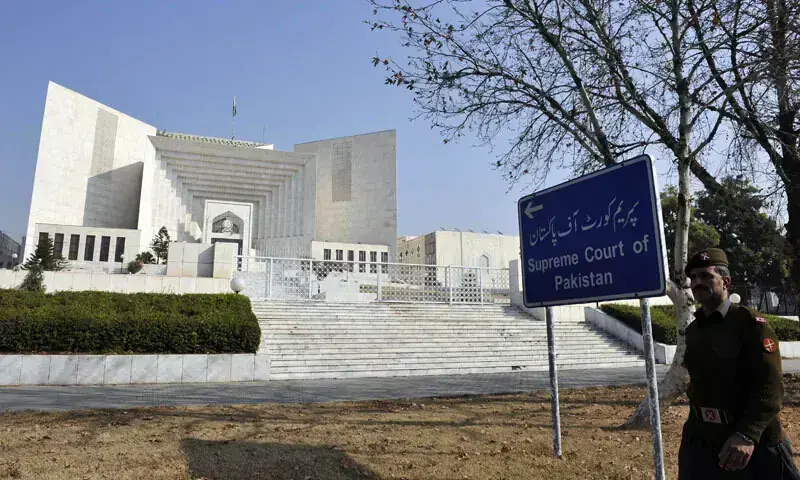
The Supreme Court has expressed concerns over the unrealistic expectations placed on eyewitness accounts in criminal trials, deeming them unnatural and impractical. Justice Ishtiaq Ibrahim, who penned the judgment, contended that eyewitnesses should describe events with humanly attainable accuracy, rather than fixating on minute details that may be physically impossible.
This judgment followed a challenge to a Lahore High Court ruling from September 13, 2021, which had convicted Muhammad Azhar for the 2017 murder of Sakhian Bibi. The Supreme Court upheld Azhar's conviction, rejecting the appeal. The incident in question occurred on January 11, 2017, when the defendant entered the victim's home with a .30-bore pistol, seeking the complainant's uncle in a civil litigation dispute.
After being informed that the uncle was not at home, the defendant opened fire, firing five shots that hit the victim in the chest, abdomen, and right arm. The additional sessions judge sentenced Azhar to death, with Rs200,000 in compensation to the victim's legal heirs. The Lahore High Court later reduced the death sentence to life imprisonment, leading to appeals both by the defendant and the state seeking a harsher penalty.
The Supreme Court's judgment emphasized the difficulty of eyewitnesses accurately recalling events in traumatic situations characterized by shock and fear. It highlighted the cognitive phenomenon known as "attentional tunnelling," where witnesses tend to focus almost exclusively on the weapon, limiting their ability to process or recall other details.
The judge urged lower courts to consider the unique circumstances of each case and evaluate all evidence collectively, rather than in isolation, when assessing eyewitness accounts.
Written by urgent.news from Dawn's reporting — not their text. Machine-written — may contain errors; check the original before relying on it.