Run today, pay later? What the haze does to runners
Poor air quality can increase exposure to fine particles, potentially reducing the benefits of exercise and putting extra strain on the lungs and heart.
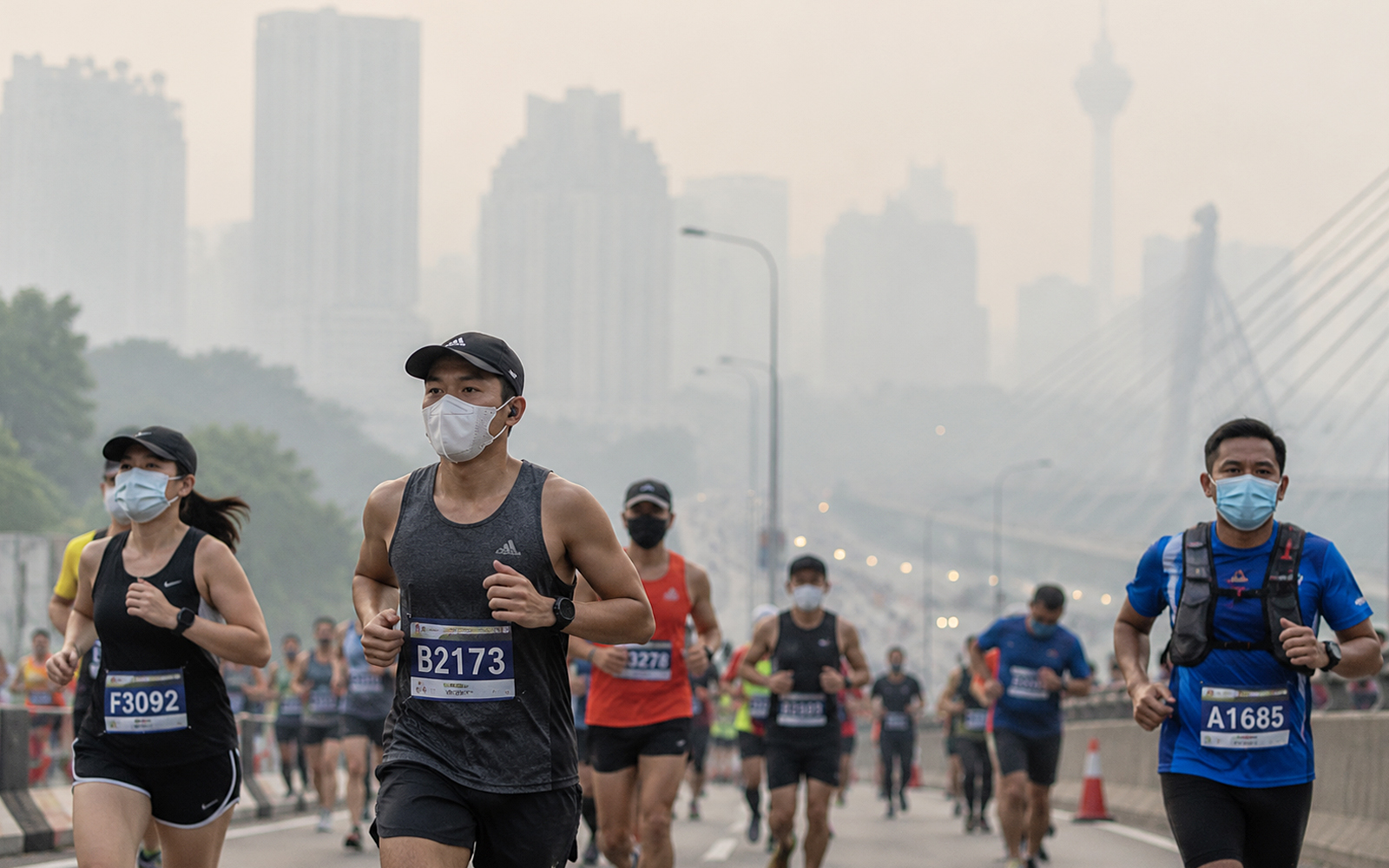
Running amidst haze conditions means inhaling more polluted air while the body is at peak exertion, heightening exposure to fine particles like PM2.5. In recent days, the sky has assumed a pallid grey hue, and a faint smoky odor permeates the air, yet runners persist on their jogging tracks. As races and training continue during the haze season, it is prudent to consider whether striving for fitness might entail greater risks than anticipated.
Vegetation fires give rise to PM2.5 particles, measuring 2.5 micrometres or less - roughly 30 times thinner than a human hair. These particles can penetrate deep into the lungs and reach the alveoli, where oxygen transitions into the bloodstream. Running elevates this exposure since we breathe more swiftly and deeply than at rest.
The greater the duration and intensity of the effort, the more polluted air is inhaled, making prolonged outdoor exercise especially worrisome under poor air quality. Haze exposure can trigger coughing, wheezing, irritated eyes, and shortness of breath, and can exacerbate asthma and other respiratory ailments. Children, older adults, pregnant women, and individuals with existing heart or lung conditions are particularly susceptible, though healthy runners are not entirely immune.
A London study involving 119 adults aged 60 and above, comprising both healthy individuals and those with chronic lung or heart disease, provides a pertinent illustration. After completing two two-hour walks - one along Oxford Street, a traffic-prone route, and the other in Hyde Park, with cleaner air - lung function generally improved and blood vessels exhibited reduced stiffness in the latter scenario, with some benefits persisting for up to a day.
Conversely, the street walk typically yielded smaller improvements, albeit effects varied among the measured parameters. Those with lung disease reported increased wheezing and phlegm after the polluted walk, while individuals with heart disease experienced heightened coughing. Healthy participants might not feel adversely affected, yet breathing tests revealed diminished lung function improvement and suboptimal arterial relaxation compared to the park walk.
While the study utilized traffic pollution rather than haze, and involved walking instead of running, the underlying principle remains relevant: one's perception of well-being does not always align with the internal impact of polluted air. Over the long term, particle pollution is linked to heart disease, stroke, chronic lung disease, and lung cancer.
One hazy run will not result in a lifetime ailment, and scientific projections cannot quantify the extended risk from a solitary race - yet recurrent training in polluted air contributes to cumulative exposure. Therefore, knowing when to shift workouts indoors is imperative. Before heading out, check the Air Pollutant Index (API) at the nearest station.
When air quality deteriorates, a mask can mitigate outdoor exposure, yet limiting strenuous activity and reducing time spent in polluted air remains crucial. The health ministry recommends avoiding outdoor activities when the API exceeds 100, a level deemed unhealthy. Individuals with asthma or current respiratory symptoms should exercise greater caution and may need to remain indoors until readings improve further.
On hazy days, opting for an easy treadmill session, stationary cycling, or strength training in a space with cleaner, filtered air can maintain fitness levels without adding unnecessary exposure. Indoor air quality also matters, so keep windows closed during poor outdoor conditions, utilize an air purifier with efficient particle filtration, and refrain from smoking or using candles or incense indoors.
Air quality fluctuations throughout the day may warrant waiting for more favorable conditions. Malaysia's intermonsoon period and the advent of the northeast monsoon may bring shifting winds and increased rainfall, but clearer skies are not assured. If coughing, wheezing, chest tightness, or unusual breathlessness occurs during exercise, cease and seek cleaner air.
Persistent or severe symptoms necessitate medical evaluation. Race organizers bear a responsibility in this regard. In 2019, the health ministry suggested that outdoor sports events should be postponed when the API surpasses 100. A viable haze policy should outline postponement criteria prior to race day, monitor local readings before and during the event, and empower medical teams to make informed decisions.
Runners should also receive prompt updates, have viable withdrawal or deferral options, and be provided with clear emergency plans encompassing participants, volunteers, and spectators. Procrastinating a run or postponing a race is not relinquishing; it is training judiciously. A healthy running ethos acknowledges that endurance is vital, but it also recognizes that air quality can become an integral component of the risk.
Written by urgent.news from Free Malaysia Today's reporting — not their text. Machine-written — may contain errors; check the original before relying on it.
Also reported by 1 other outlet
- Run today, pay later? What the haze does to runners freemalaysiatoday.com