Reviving spirit of Korea's traditional dress in heart of Seoul
On any given afternoon near Gyeongbok Palace, the stone plazas resemble an immersive historical pageant. Swirling skirts, delicate silk ties, and vibrant embroidered waistcoats move against centuries-old timber pillars as thousands of visitors step out in "hanbok," the traditional dress of Korea. Rooted in the Joseon Dynasty (1392 to 1897) and refined over more than a millennium, the classic…
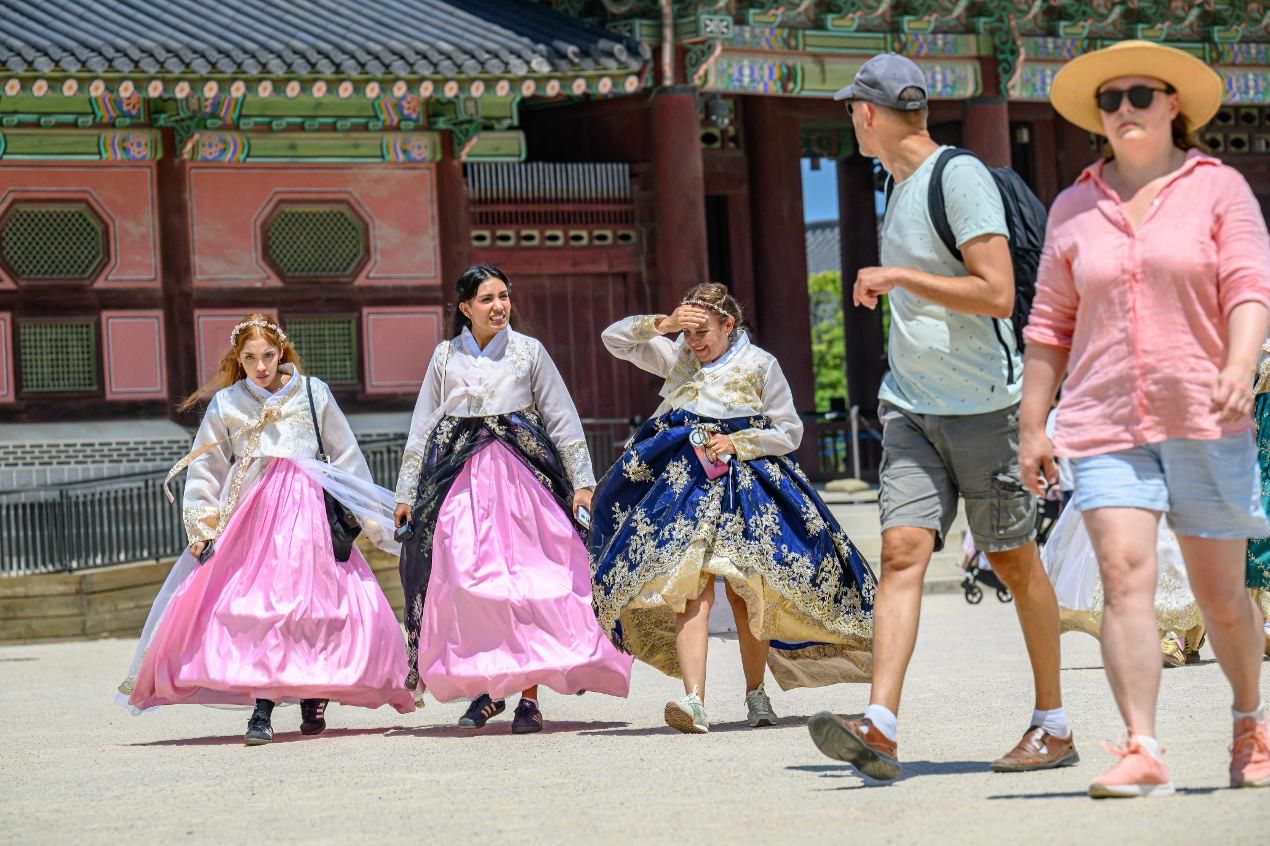
Amidst the stone plazas surrounding Gyeongbok Palace in Seoul, an immersive historical pageant unfolds on seemingly ordinary afternoons. Thousands of visitors don the traditional Korean dress known as hanbok, comprising swirling skirts, delicate silk ties, and vibrant embroidered waistcoats. Originating from the Joseon Dynasty (1392 to 1897) and refined over millennia, the classic attire showcases structured yet fluid silhouettes.
Women typically wear a curved jeogori (jacket) paired with a sweeping chima (skirt), while men opt for roomier baji (trousers) with a matching jeogori. Historically tailored from materials like hemp, ramie, or fine silk to denote social status and adapt to seasons, the garments are now celebrated for their understated elegance and architectural harmony.
The global fascination with period dramas and modern pop culture has propelled renting hanbok from a niche cultural pursuit to an essential experience for both domestic and international travelers seeking to explore Seoul’s historic heart. However, as the number of costumed crowds has surged, there has been a rise in concerns regarding the proliferation of cheap synthetic imitations and glittering plastic adornments that threaten to undermine the authenticity and craftsmanship of this revered cultural heritage.
Written by urgent.news from The Korea Times's reporting — not their text. Machine-written — may contain errors; check the original before relying on it.
Also reported by 1 other outlet
- Reviving spirit of Korea's traditional dress in heart of Seoul koreatimes.co.kr