No relief in sight – what's driving pricier taxi and ride-hailing fares
The latest figures show that the price of point-to-point (P2P) transport services were 12.3 per cent higher in August 2026 than in August 2025. Fuel and Certificate of Entitlement (COE) costs are certainly to blame, but are operators also doing more to justify the higher prices?
In August 2026, point-to-point (P2P) transport services were 12.3% more expensive compared to August 2025. The main culprits for this price hike are fuel costs and Certificate of Entitlement (COE) fees. However, some operators might be justifying the higher prices by charging more, rather than passing on the increased costs to consumers.
A few years ago, woodlands resident Intan McCallum used to pay around S$25 (US$19) for a ride-hailing trip into town. Now, she pays between S$30 to S$40 for similar journeys. Ms McCallum, a 20-year-old student, finds it hard to use ride-hailing services regularly due to the increasing costs, which eat into her weekly allowance.
Kelvin Ong, a Yishun resident, also observes a similar trend. Two years ago, the fares from his home to his workplace in Bugis cost about S$24 during off-peak hours. Now, they are around S$28. While Ong believes the price increase is reasonable due to the Middle East's oil prices, he thinks that private-hire platforms may not be as pressured to keep fares low as they were earlier.
Transport economists and analysts argue that the affordability of P2P services is crucial as the sector complements public transport, providing transport options in areas not well-served and during off-hours. However, as P2P prices are determined by the open market, the government is unlikely to step in with subsidies if fares continue to surge, says Walter Theseira from the Singapore University of Social Sciences.
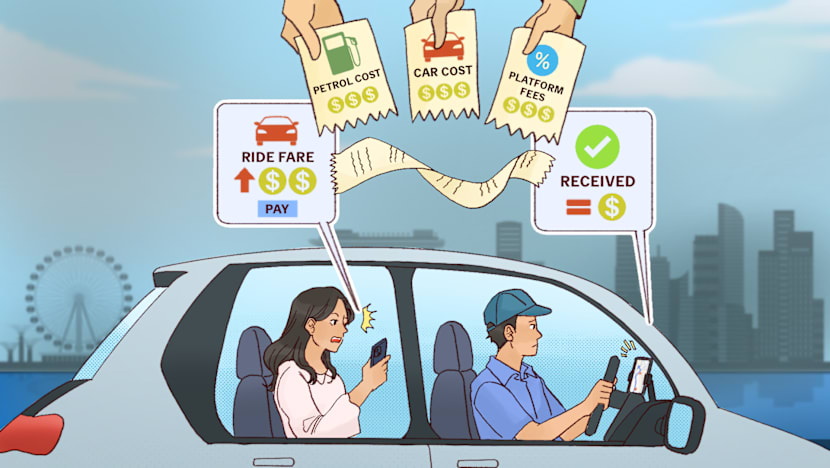
Drivers also complain that rising fares do not necessarily translate into higher incomes. Although their incomes have risen or remained stable since the COVID-19 pandemic up to 2025, they claim that rising costs are affecting them harder this year. Fuel costs and platform commission fees have significantly increased, leaving little room for increased earnings.
These increased costs are not reflected in the headline fare, but in hidden expenses such as rental or vehicle financing, fuel, platform commissions, insurance, and other operating expenses.
Written by urgent.news from Channel News Asia's reporting — not their text. Machine-written — may contain errors; check the original before relying on it.