How does the new Tesla Roadster 'fly', and is it dangerous to be around its thrusters?
Tesla has shown off a flying car that can do flips and rolls, but it's unlikely to ever become road legal.
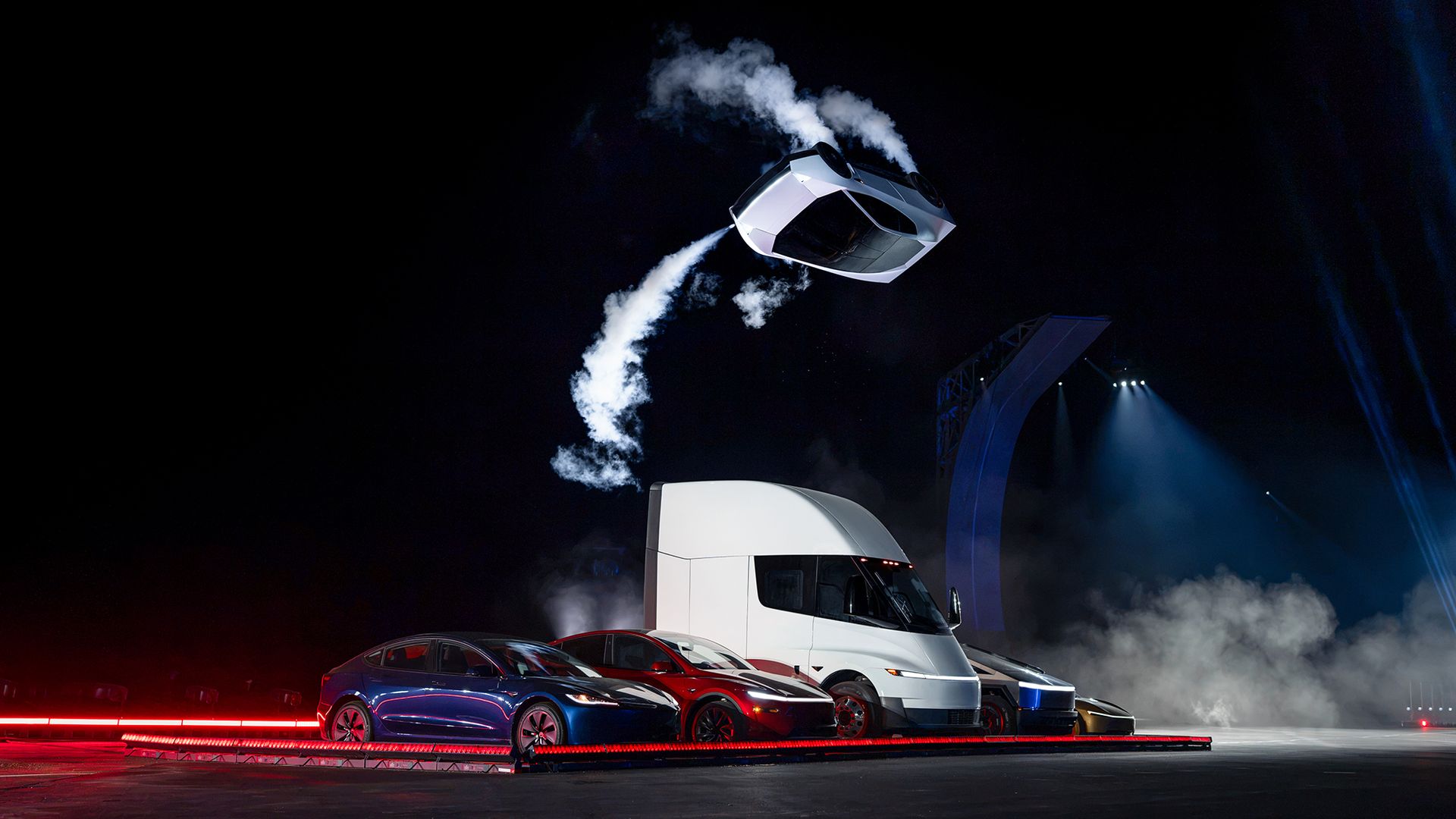
The Tesla Roadster is an innovative vehicle that can perform stunts like flying and hanging upside down due to its rocket thrusters, which are borrowed from SpaceX. These thrusters use compressed air tanks, called carbon fiber overwrapped pressure vessels (COPVs), to propel the car in the opposite direction. The Roadster's thrusters are packed into every available space, with a maximum of 600 liters for the Rocket variant.
While the car can perform impressive stunts, it is not designed for safety on public roads. The force produced by the rear thrusters alone is equivalent to being hit by a 9-ton weight, which poses significant risks to both the driver and other vehicles. Additionally, the gas escapes at supersonic speeds, creating potential hazards.
Currently, the Roadster is not road legal, with only the cheaper Thrust version and the non-flying Performance version intended for public use. It appears that the flying Roadster is more of a stunt car for now, with further details to be revealed at upcoming demonstrations.
Written by urgent.news from TechRadar's reporting — not their text. Machine-written — may contain errors; check the original before relying on it.